
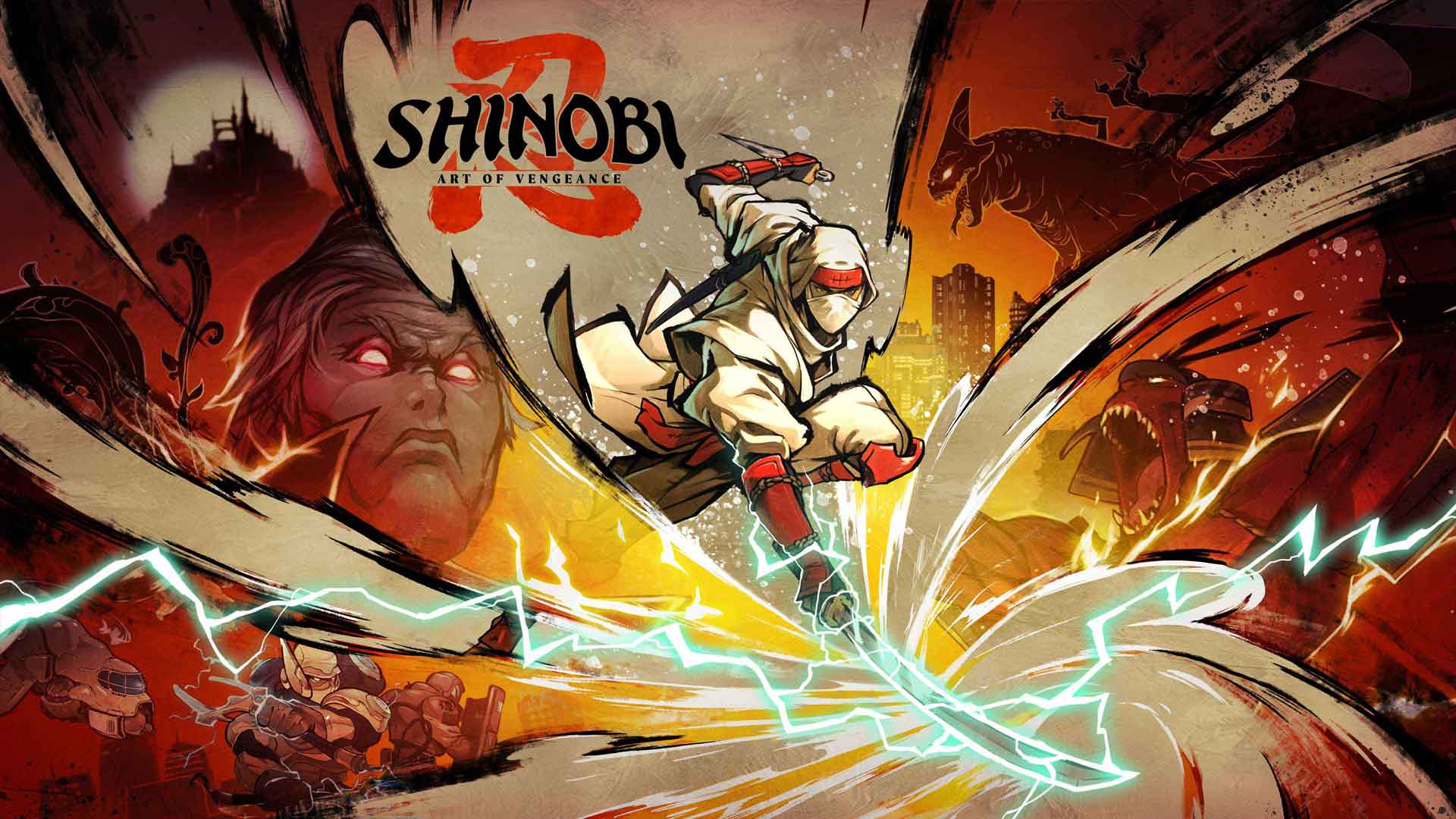
Shinobi: Art of Vengeance: Shinobi: Art of Vengeance is a stylish and confident revival that understands what made the series special while embracing modern action game design. Lizardcube trades old-school frustration for fluid combat, rewarding exploration, and a satisfying sense of mastery without sacrificing challenge for those who seek it. A few repetitive level ideas and an occasionally overpowered Ninpō system keep it from true greatness, but its gorgeous art direction, exceptional soundtrack, and addictive combat make Joe Musashi's return a triumph. Whether you're a longtime fan or a newcomer to the series, this is one of SEGA's strongest modern revivals. – NikolaOtasevic
I grew up thinking Joe Musashi was the cool uncle of action games—the guy who barely spoke, moved like lightning, and quietly dismantled anyone foolish enough to stand in his way. So when Lizardcube and SEGA announced Shinobi: Art of Vengeance, I was equally excited and nervous. Streets of Rage 4 proved that Lizardcube knew how to revive a classic, but Shinobi is a very different beast.
After spending around 18 hours with the PS5 version, rolling the credits, reaching 91% completion, and losing far too much sleep in Boss Rush mode, I can confidently say this is a bold revival that values fluidity and player expression over old-school cruelty.
And yes, I completely lost track of time more than once in that familiar “just one more collectible, just one more attempt” kind of way. My very first session somehow turned into a four-hour blur.
What stuck with me wasn't the story—a fairly standard revenge tale told through fully voiced dialogue and stylish cutscenes—but the way the game feels. Joe's jumps have just enough float, dash cancels have a satisfying snap, and the simple act of throwing a kunai produces a wonderfully crisp sound effect that had me smiling before I'd unlocked half the game's abilities.
It feels like someone took the spirit of the 16-bit classics, added a touch of the faster 3D Shinobi games from the PS2 and 3DS era, and rebuilt everything as a modern 2D action game.
By the second mission, my brain had already nicknamed it “Shinobi May Cry,” and honestly, that feeling never went away.
First Impressions – Flow Over Frustration
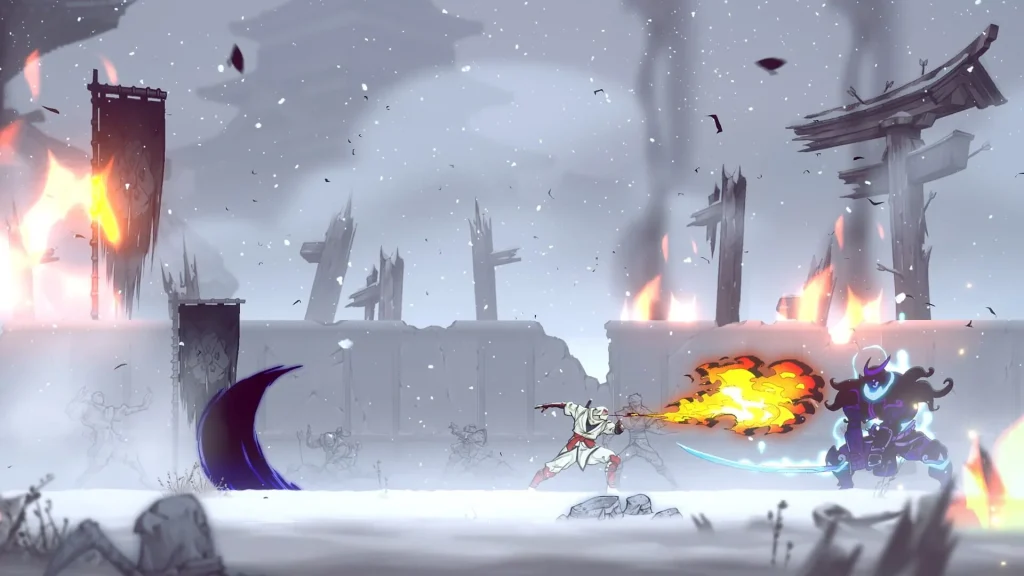
By the end of my first evening, one thing was obvious.This Shinobi isn't obsessed with killing you. It wants you to feel like a master. That doesn't mean it's easy. Optional challenge rooms and elite enemies can absolutely punish sloppy play, but the default difficulty is surprisingly welcoming. Checkpoints are generous, statues act as save points and fast-travel locations, and the main path rarely relies on cheap traps or surprise deaths. The nastiest platforming sections are entirely optional, usually hiding treasure chests or Talisman fragments that make the risk feel worthwhile. My inner completionist kept whispering, “You can make that triple air dash into a wall run and grapple.” After several failed attempts, I had to admit that voice was right. This friendlier approach could have reduced the tension, but it doesn't because the real thrill comes from the game's incredible sense of flow. Combat follows the same philosophy as modern DOOM. The toolset is relatively small but incredibly refined, enemy types are clearly defined, and success comes from understanding patterns rather than memorizing endless button combinations. Your arsenal is simple.A sword. Kunai. Ninpō. The depth comes from how you combine them. Mastering cancels, invincibility frames, and movement options creates a combat system that's deeply satisfying.
When everything clicks, it's pure adrenaline. When it doesn't, the game puts you back into the action within seconds.
Combat – A Small Moveset with Endless Possibilities
I'm the kind of player who spends time practicing mechanics until muscle memory takes over. Thankfully, Shinobi rewards that mindset. Joe's sword combos are easy to understand but difficult to master. Attack cancels feel reliable, while his aerial movement lets you hover above danger just long enough to set up another attack. Kunai fit naturally into the combat rhythm. They extend combos, pressure distant enemies, and remove shields without breaking your momentum. Then there's Ninpō. It's powerful. Perhaps too powerful. I initially saved these abilities for bosses and elite encounters, but once I started using them during normal fights, entire rooms simply disappeared. The Talisman system became one of my favorite mechanics. Some Talismans activate after reaching combo thresholds, others improve survivability or provide unique passive bonuses. My favorite encouraged aggressive play by rewarding long combo chains with noticeable visual and audio feedback. That constant loop of sight, sound, and impact pushed me toward cleaner, more stylish play rather than simply waiting for cooldowns. Enemy variety strikes a nice balance. There aren't dozens of enemy types, but there don't need to be. The challenge comes from how they're mixed together. The first time a fast melee fighter flanked me while a sniper controlled the center of the room and a mage covered the floor with area attacks, I had to completely rethink my strategy. It's not quite as punishing as Ninja Gaiden at its toughest, but smart decision-making matters. Poor play feels like your mistake, not the game's.
Exploration and Structure
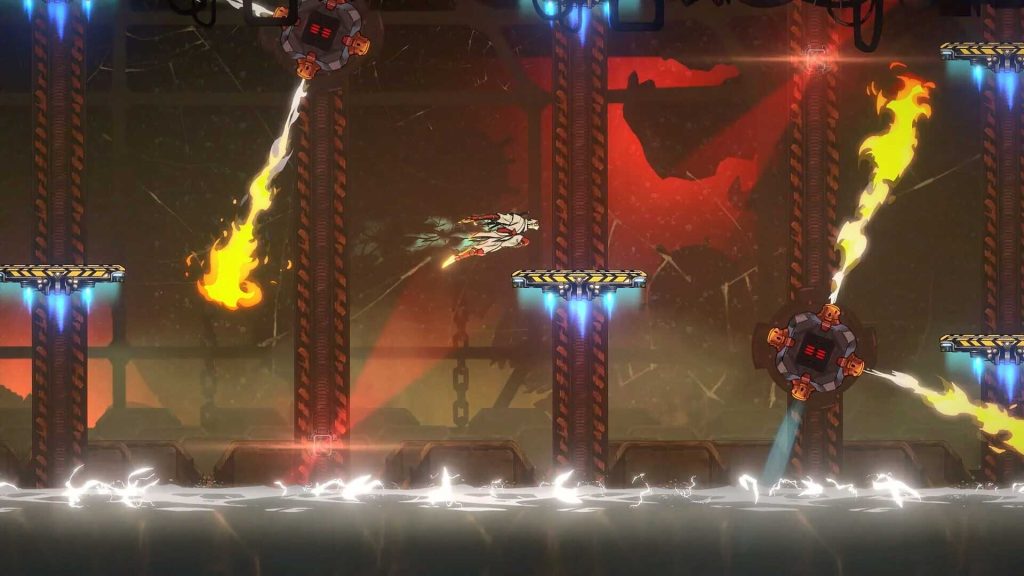
Shinobi has never been a Metroidvania, and Art of Vengeance doesn't suddenly become one. Still, it borrows just enough ideas to make exploration rewarding. Every stage hides optional routes leading to treasure rooms, challenge arenas, and clever movement puzzles. A merchant allows you to exchange collectibles for new techniques, and I frequently revisited earlier levels after unlocking new traversal abilities. Fast travel between discovered statues makes completionist runs far more enjoyable. The biggest issue is repetition. After about ten hours, I started noticing familiar room layouts and recurring ideas. It's not that Lizardcube ran out of creativity.
Rather, they found a handful of mechanics that worked well and leaned on them a little too heavily. Thankfully, the beautiful art direction keeps things visually fresh, and the final stages introduce enough surprises to finish strong.
Run-and-Gun Sections
Occasionally, the game shifts perspective and transforms into a run-and-gun sequence. These moments are charming callbacks to the series’ history and look fantastic.
However, they tend to overstay their welcome by a minute or two. Fortunately, failures carry almost no penalty, and these sections serve as nice palate cleansers between more demanding levels. I wouldn't remove them, but I'd happily shorten them.
Plenty of Content for Longtime Fans
This is easily the most content-rich Shinobi game I've ever played. Adventure Mode forms the core experience, offering story missions, exploration, collectibles, and progression systems. Arcade Mode transforms the game into a high-score challenge where every mistake matters. Boss Rush quickly became my late-night obsession.
The boss patterns are fair and readable, but fighting them back-to-back exposes weaknesses in your fundamentals. My first successful clear felt strangely like a graduation ceremony. SEGA has also announced post-launch DLC featuring crossover bosses from other franchises, beginning with Dr. Eggman. It's exactly the kind of playful idea this reboot deserves.
Art and Sound – Lizardcube's Magic Touch
I expected the game to look good. I didn't expect it to spoil me. Lizardcube's hand-drawn visuals aren't just beautiful. They're functional. Strong silhouettes and smart color contrasts make chaotic combat easy to read. Backgrounds constantly animate with small details and stylish futuristic influences. Combat effects are equally impressive. Every strike, parry, and special move carries satisfying visual impact. The soundtrack is exceptional.Tee Lopes delivers the energetic melodies fans expect from his SEGA projects, while Yuzo Koshiro's influence can be felt throughout the score. Several times I intentionally kept a single enemy alive just to hear more of the music. Sound design completes the package with satisfying blade impacts and clear audio cues for enemy attacks.
Difficulty Philosophy
Let's be honest. Classic Shinobi games could be brutally difficult. Art of Vengeance takes a friendlier approach, and I think that's exactly the right decision for modern audiences. If you want a challenge, optional encounters, Arcade rankings, Boss Rush, and harder objectives provide it. If you simply want a stylish action game that lets you feel powerful, Adventure Mode delivers. As someone who usually demands tougher games, I appreciated that the difficulty came from mastery rather than frustration.
Final Verdict
Somewhere around the halfway point, while standing beside a teleport statue deciding whether to tackle another optional challenge room, I realized I'd stopped comparing Art of Vengeance to older Shinobi games.It had earned its own place.Flow is the star. The power fantasy feels carefully balanced.
The generous checkpoint system encourages experimentation instead of punishing curiosity. I would have liked more variety during the second half and a slightly less dominant Ninpō system, but those are relatively small complaints against such strong foundations. Beautiful presentation, incredible music, rewarding combat, and a promising roadmap for future content make this one of the best revivals SEGA has produced in years.
Ako tražite povoljnije cene za igre, DLC-ove i druge digitalne proizvode, posetite Eneba i pogledajte aktuelnu ponudu.
Pre kupovine obavezno unesite naš promo kod BUFFGAMING i ostvarite dodatnih 5% popusta.
Kupi igre, poklon-kartice i dopune povoljnije