
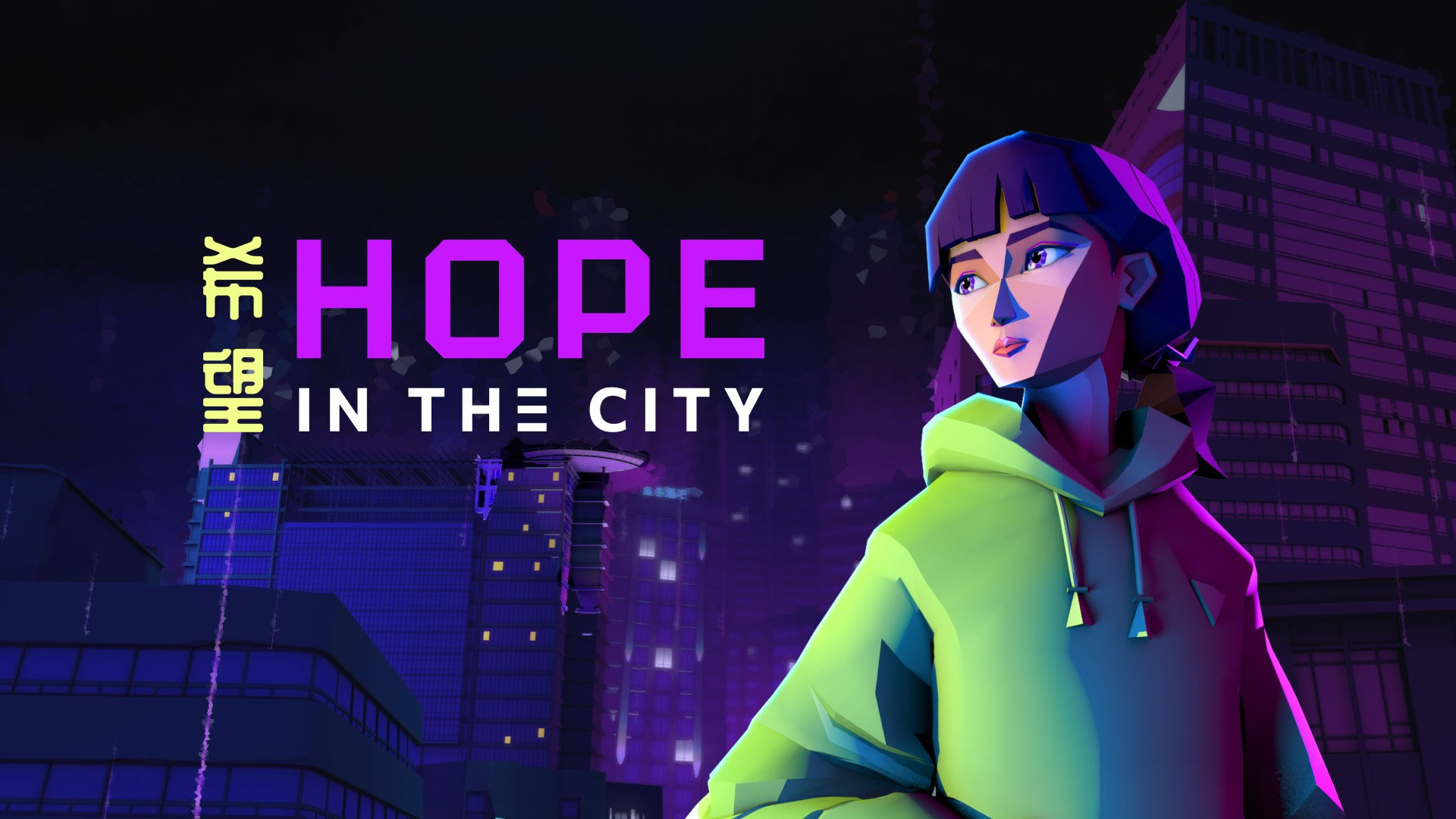
Hope in the City is a narrative adventure that puts us in the shoes of Hope Song, a seventeen-year-old girl whose life takes an unexpected turn when she returns home to find her apartment ransacked and her parents nowhere to be found. With no explanation and no clear leads, what begins as a search for answers soon turns into a much bigger mystery, one rooted in the seemingly ordinary everyday life of Shenyang, a city in China. Developer Lofty Sky Entertainment takes a slightly different approach to the detective genre, as Hope isn't a professional investigator but a young artist whose attention to detail and talent for drawing become her most valuable tools.
The story is easily the game's biggest strength. Rather than relying on familiar detective tropes, Hope in the City tells its story through the perspective of a teenager facing serious problems for the first time. Hope is an interesting protagonist precisely because she isn't portrayed as someone who always knows what to do. Her reactions, insecurities, and attempts to make sense of the world around her give the narrative a sense of authenticity. As we dig deeper, her parents’ disappearance gradually becomes just the beginning of a much larger mystery, and each new discovery changes how we look at the people and events surrounding her. The narrative offers enough intriguing moments to keep us invested until the end, although players shouldn't expect a complex story filled with branching paths and wildly different outcomes. This is a carefully paced, largely linear experience that finds its greatest strength in atmosphere and the gradual uncovering of the truth.
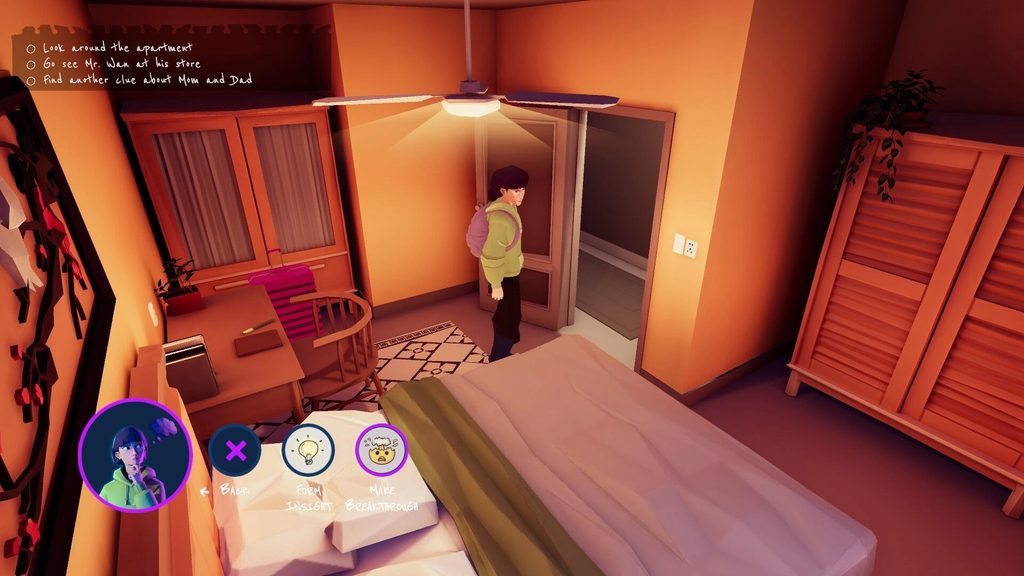
Gameplay is fairly straightforward, but it features one particularly interesting idea that helps Hope in the City stand out from similar narrative adventures. Most of our time is spent exploring different parts of Shenyang, talking to locals, and examining objects that might help with the investigation. Hope doesn't have a police badge, professional equipment, or traditional detective tools. Instead, she relies on her ability to notice details that other people tend to overlook. Everything she considers important goes into her sketchbook, where drawings serve as the foundation for connecting different pieces of information. The central mechanic, known as the Thought Web, allows us to combine the observations we've collected and turn them into new deductions. Finding the right connections unlocks Insights and Breakthroughs, giving us new leads and allowing the investigation to move forward. It's an interesting concept because it attempts to recreate the process of putting together a puzzle rather than reducing everything to finding objects and clicking on clearly marked spots. There's also room to experiment with different combinations, including those that don't directly advance the investigation but reveal more about Hope's personality. Unfortunately, the system never becomes complex enough to offer a truly challenging detective experience. At times, it feels more like trial and error than actual deduction, while exploration mostly revolves around collecting clues and talking to people. Fans of more elaborate detective games may find this a little disappointing, but the accessible design makes it easy to pick up even if you're not particularly familiar with the genre. The inclusion of different difficulty options is also a nice touch, allowing players to tailor the experience to their preferences.
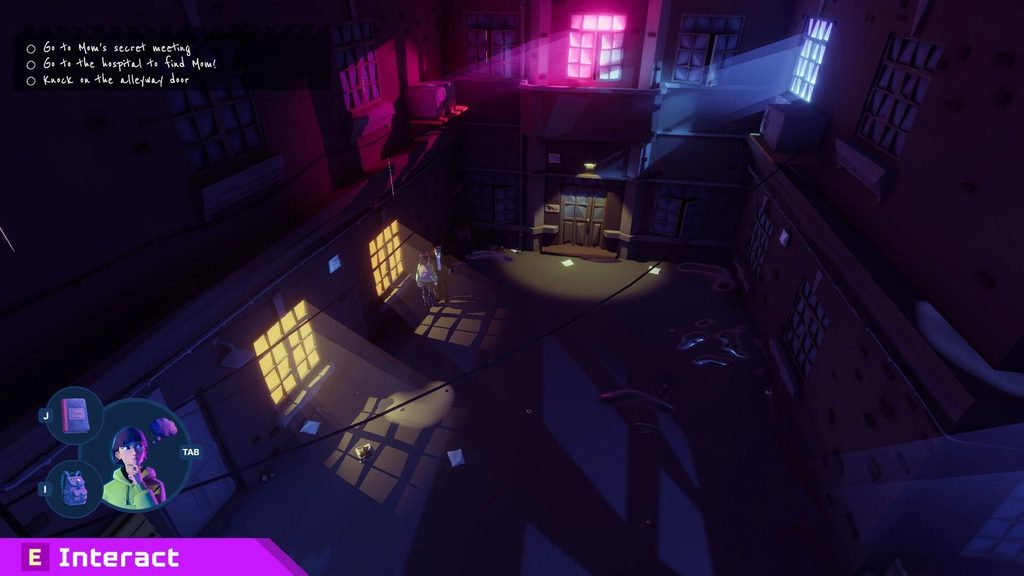
One of the game's most interesting aspects is the way it portrays Shenyang itself. The city isn't simply a backdrop we move through on our way to the next objective; it's an important part of the game's identity. Its streets, shops, apartment buildings, and various urban locations create the atmosphere of a modern Chinese city, something we don't get to see all that often in video games. Exploration isn't particularly complex, and interactions with the environment are mostly limited to objects and characters relevant to the story. Still, the variety of locations and the gradual unveiling of the mystery do a good job of keeping things interesting. I would've liked to see a little more freedom and perhaps some additional activities unrelated to the main investigation, as they could have made the city feel like a more living, breathing place. As it stands, exploration occasionally feels like a way of getting from one narrative sequence to another. That's not necessarily a major issue for this type of adventure, but it does limit the gameplay's overall potential.
Visually, Hope in the City has a very distinctive art direction. Its stylized graphics, bold geometric shapes, and colorful environments create a world that looks different from most narrative adventures. Shenyang is particularly interesting at night, when neon signs, illuminated storefronts, and darker streets help establish an atmosphere that fits the central mystery perfectly. However, the most interesting visual element isn't necessarily the environment itself, but Hope's sketchbook. Its hand-drawn illustrations are an important part of the game's identity and help us understand how the protagonist sees the people and events around her. They're more than just decorative elements or a convenient way to display collected information; they feel like an extension of Hope's personality and artistic perspective. The graphics may not impress players looking for high-end technical realism, but the art direction is distinctive enough to make up for the limitations of the visuals and character models.
The sound and music do a good job of supporting the overall atmosphere. The soundtrack is subtle and generally knows when to stay in the background, allowing conversations and important story moments to take center stage. Ambient city sounds also help create a sense of place, while the voice acting adds personality to the characters and their relationships. That said, the quality of the performances isn't always consistent, and some dialogue scenes don't carry the same impact as the more important narrative moments. This doesn't ruin the experience, but the differences become noticeable when comparing the stronger performances with some of the weaker ones. Overall, the audio design gets the job done, complementing the visuals and storytelling without trying to steal the spotlight.
As for the PC version, Hope in the City doesn't aim to be a technically demanding production. The interface is designed around exploration and working with the sketchbook, while the gameplay unfolds at a relaxed pace without time limits or pressure to react quickly. Following its release, the developers also rolled out a patch that improved interface readability, increased the size of certain text elements and icons, and introduced additional audio and subtitle adjustments. The biggest limitation, however, remains the game's length. This is an adventure that can be completed in just a few hours, which might be a dealbreaker for players expecting a more substantial investigation and a wider range of detective activities. On the other hand, its shorter runtime has one notable advantage: the story doesn't try to artificially extend itself by making players repeat the same activities over and over. Still, there's a lingering feeling that the world could have benefited from a little more content.
Hope in the City isn't trying to reinvent the detective genre or deliver a sophisticated investigation system. Its greatest strengths lie in its story, atmosphere, and the creative idea of turning art into a tool for solving a mystery. Hope is an engaging protagonist, Shenyang provides a refreshing setting, and the sketchbook's clue-combination system serves as the foundation of the entire experience. On the flip side, the gameplay is rather simple, exploration lacks depth, and the short runtime leaves us wanting more.
Even so, Lofty Sky Entertainment has delivered a charming, atmospheric adventure that manages to tell its story without unnecessary complications. Hope in the City may not offer enough depth in its detective mechanics to satisfy fans of more complex mystery games, but it has plenty of personality, emotion, and creativity to leave a positive impression. Those looking for a shorter narrative adventure with an intriguing story and a different approach to investigation should definitely give it a shot.
Ako tražite povoljnije cene za igre, DLC-ove i druge digitalne proizvode, posetite Eneba i pogledajte aktuelnu ponudu.
Pre kupovine obavezno unesite naš promo kod BUFFGAMING i ostvarite dodatnih 5% popusta.
Kupi igre, poklon-kartice i dopune povoljnije