


Review: LEGO Batman: Legacy of the Dark Knight: LEGO Batman: Legacy of the Dark Knight successfully combines the atmosphere of the Arkham games with classic LEGO humor in a way that works surprisingly well. Gotham is fantastic to explore, the combat system feels fluid and satisfying, and the more focused character roster gives the gameplay far more purpose than in older LEGO titles. While the lack of online co-op remains the game’s biggest drawback, Legacy of the Dark Knight easily stands among the best and most ambitious LEGO games released in recent years. – NikolaOtasevic
It’s been a long time since Batman properly stepped back into the world of video games. And while LEGO Batman: Legacy of the Dark Knight is not a new Arkham title, it strangely feels very familiar — in the best possible way. It’s as if Traveller’s Tales looked at what made the Arkham franchise so successful and layered its signature LEGO charm on top of it. It’s time to become vengeance.
LEGO Batman: Legacy of the Dark Knight
While many previous LEGO games inspired by movies mostly followed their source material very closely, LEGO Batman: Legacy of the Dark Knight takes a completely different approach. Instead of simply retelling Robert Pattinson’s Batman or The Dark Knight trilogy, the game attempts to tell the ultimate Batman story by combining iconic moments from decades of Batman movies, TV shows, comics, games, and the wider DC universe.
Everything begins at the very start, with a young Bruce Wayne training to become a member of the League of Shadows, before the story gradually moves through key moments that eventually lead to his transformation into the Caped Crusader.
That means players get to experience multiple eras of Batman media, all connected into one massive narrative. And honestly, I’m completely on board with that idea. Blending modern Batman scenes with classic moments works surprisingly well.
What I especially liked is how the developers managed to include so much lore while still maintaining that unmistakable LEGO tone.
If you’re familiar with Batman lore, you know how dark and serious it can often become, which might not seem like the best fit for a LEGO game. Thankfully, there’s no need to worry — the classic LEGO humor is everywhere. From bats repeatedly “bombing” you above the Batcave, to the Twin guards throwing fish at your face while trying to convince you that this definitely isn’t a secret nightclub, but simply a normal fish market. It’s absurd, chaotic, and exactly the kind of humor you’d expect from a LEGO title.
For the sake of the review, I won’t dive too deeply into specific story details because the game genuinely feels like a celebration of everything Batman represents. Hardcore fans will especially enjoy the hidden Easter eggs and references to lesser-known corners of the Batman universe.
The main story takes around fifteen hours to complete, but not once did I feel like the game overstayed its welcome. Every chapter introduces new mechanics and fresh story elements, keeping the pacing consistently strong throughout the campaign.

LEGO Batman Meets Arkham
Whenever I think about Batman games, my mind immediately goes to Batman: Arkham and Rocksteady Studios. While playing this LEGO Batman, I constantly felt my old Arkham muscle memory kicking in, especially during combat.
For a LEGO game, the combat system is surprisingly deep. Alongside standard attacks and gadgets, the game also introduces dodge and parry mechanics that activate through timed button prompts.
The result is a very fluid combat flow where I was constantly leaping over enemies, throwing Batarangs, chaining melee attacks, and activating special abilities once my energy meter filled up.
That fluid style of combat strongly resembles the way the Arkham games handled their combat system, and honestly, I was surprised by how successfully the developers translated that feeling into a LEGO format.
Of course, the game is still primarily aimed at younger audiences, so players shouldn’t expect a high level of difficulty. Still, it’s refreshing to see that the developers clearly studied what worked in previous Batman games before adapting those ideas into the LEGO universe.
But the game isn’t focused solely on combat. When you’re not fighting criminals, you’ll spend time investigating Gotham and searching for clues through detective sequences. The puzzle sections are not especially difficult and mostly revolve around building LEGO structures to progress, but that detective-style pacing between action scenes fits the Batman universe perfectly.
Gotham Feels Alive
Then we come to the open-world aspect of the game.
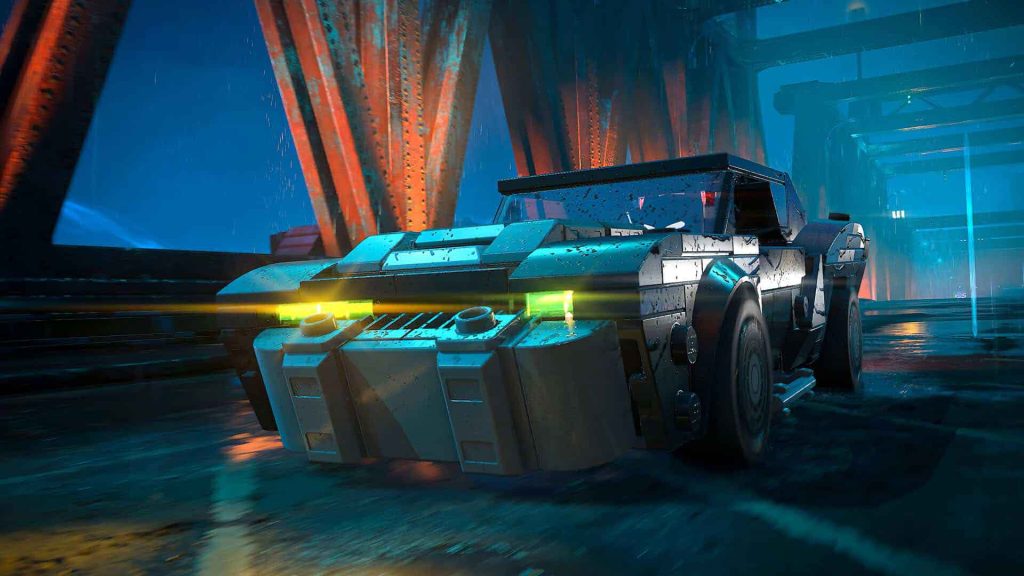
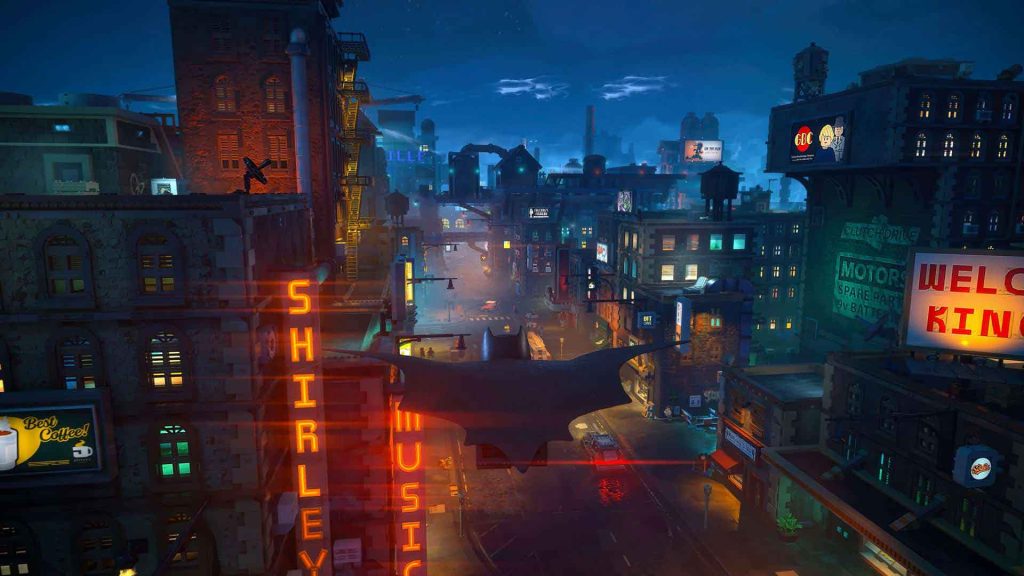
Gotham is divided into four distinct districts that players can freely explore, while rain constantly pours down across the city, maintaining that iconic dark Batman atmosphere. And honestly, it looks phenomenal. Dividing Gotham into smaller open-world zones allowed the developers to make the city feel far more alive than in previous LEGO games.
Beyond the main missions, the city is filled with side activities, crimes, collectibles, vehicles, and NPC encounters that constantly create the feeling that something is happening around you. Several times I found myself gliding above Gotham or driving the Batmobile when suddenly hearing a distress call. Naturally, like any proper vigilante, I immediately stopped what I was doing and went to help.
That may sound like a small detail, but moments like those truly sell the fantasy of being Batman inside a LEGO world.
What impressed me most is that Gotham never feels like a simple hub area between missions. The city genuinely feels like a place you want to explore. Around almost every corner there’s something interesting — a hidden collectible, a small criminal encounter, a rooftop perfectly positioned for another glide across the skyline, or a side activity waiting to be discovered.
The open world may not be the game’s primary selling point, but it definitely wasn’t included as an afterthought.
Traversal also feels heavily inspired by the Arkham games. Using Batman’s cape to glide across Gotham or relying on the grappling hook to move between rooftops feels incredibly natural. I ended up spending far more time exploring Gotham than I originally expected. We’ve had open-world LEGO games before, but this version of Gotham genuinely pushes the concept to another level and delivers something I honestly didn’t expect to work this well.
A Smaller Roster, But Better Focused
One of the things people usually expect from LEGO games is a massive roster of playable characters. Legacy of the Dark Knight takes a slightly different approach and chooses quality over quantity.
At first glance, that might seem like a strange decision for a LEGO title, especially since part of the fun has always been unlocking bizarre side characters and forgotten DC villains. However, the more I played, the clearer Traveller’s Tales’ intentions became.
Instead of offering an enormous roster where half the characters feel like simple reskins, the game focuses on a smaller cast where every hero serves a meaningful gameplay purpose.
Naturally, Batman is the centerpiece and comes equipped with all the gadgets fans would expect:
- Batarangs for stunning enemies
- Explosive gel for destroying weak walls
- Batclaw for pulling objects and enemies
- Grappling launcher
- Cape glide traversal system
Batman essentially functions as a complete package and performs well in nearly every situation, which makes perfect sense considering this is ultimately his story.
What surprised me most is that the supporting characters never feel like filler content.
Robin is significantly more acrobatic, using his staff and cable launcher in ways that make him much faster and more playful during gameplay. Nightwing feels like a more mature evolution of that concept, equipped with electric gadgets capable of redirecting power or stunning enemies.
Batgirl introduces hacking mechanics through her technology-based gadgets, allowing her to control systems and unlock locations inaccessible to other characters.
Jim Gordon might initially seem like an unusual playable choice, but even he receives unique police gadgets such as ricocheting projectiles and foam devices used to stop criminals or disable machinery.
Catwoman is naturally far more agile thanks to her whip, claws, and stealth-focused movement system, while Talia al Ghul brings a much deadlier assassin-style approach that immediately distinguishes her from the rest of the Bat-family.
Because of that, switching between the seven playable characters feels far more meaningful than I originally expected. It’s not just about who looks coolest during cutscenes — it’s about choosing the right hero for specific gameplay situations.
If you need to hack a system, Batgirl is the obvious choice.
If you need rapid rooftop traversal or cable movement, Robin and Nightwing have the advantage.
And if you simply want to smash through walls, glide across Gotham, or take down an entire group of enemies, Batman still does what Batman does best.
Of course, I can understand fans who may miss the enormous character rosters from older LEGO games. That was definitely part of those titles’ charm. However, I genuinely believe this more focused approach suits the project much better.
Legacy of the Dark Knight clearly aims to be a more polished and serious Batman adventure rather than simply another giant LEGO sandbox packed with random characters. That’s exactly why the smaller roster works so well here.
Even though there are fewer playable heroes, each one feels more carefully designed and genuinely important to both the gameplay and the story. For this kind of Batman game, I think that’s an excellent compromise.
It also helps that the game still includes a massive number of unlockable costumes, including several obscure Batman and DC variants that hardcore fans will immediately recognize.
Even Better in Co-op?
Like most LEGO games, this one was clearly designed with local co-op in mind. Thanks to a very simple drop-in/drop-out system, friends or family members can join at any moment and patrol Gotham alongside you.
I played several missions in co-op mode with my wife, and honestly, it quickly became clear that the game feels almost designed specifically for this style of play.
The biggest advantage of co-op is the ability to directly coordinate and combine each character’s abilities, making puzzle-solving sections feel much more natural. For example, while one player uses Gordon’s foam gun to block a mechanism, the other can immediately continue forward with Batman.
Solo play also works very well because switching between characters is fast and seamless, but co-op simply has a better overall flow.
Naturally, the game remains perfectly enjoyable when played alone, but if you have the opportunity to experience it in local co-op, I would absolutely recommend it. The only real disappointment is the lack of online co-op support, because that addition could have elevated the formula even further.
A New Visual Standard for LEGO Games
I especially need to highlight just how incredible the game looks visually.
I played it on Xbox Series X, and multiple times I genuinely stopped just to admire the amount of detail the developers packed into the world.
It’s amazing how realistically rain slides down the Batmobile, almost as if it’s flowing across real LEGO bricks. Even Batman’s cape isn’t perfectly smooth, retaining that recognizable rigid LEGO texture. If you zoom closely enough into character models, you can even spot tiny LEGO logos on their hands and small manufacturing codes on certain pieces.
These may sound like minor details, but they significantly elevate the game’s overall presentation.
You’ll probably notice it even through screenshots, but honestly, I think Traveller’s Tales pushed the visual quality of LEGO games further than ever before. What’s especially impressive is how they managed to achieve this level of detail inside an open-world Gotham constantly filled with effects, NPCs, vehicles, and ongoing activities.
Of course, this isn’t the largest open world you’ll ever see, but the amount of detail and care put into every corner of Gotham is genuinely impressive.
Honestly, this is easily one of the best-looking games I’ve played this year, and that says a lot.
Final Verdict
LEGO Batman: Legacy of the Dark Knight successfully captures the spirit of the Arkham games inside a LEGO universe in a way that genuinely works. Gotham is fantastic to explore, the combat system is surprisingly fun, and the humor perfectly balances Batman’s darker lore without losing the signature LEGO charm.
While it’s unfortunate that the game lacks online co-op support, Legacy of the Dark Knight is without question one of the best LEGO games released in recent years.
You can read our other reviews through the link below.
Ako tražite povoljnije cene za igre, DLC-ove i druge digitalne proizvode, posetite Eneba i pogledajte aktuelnu ponudu.
Pre kupovine obavezno unesite naš promo kod BUFFGAMING i ostvarite dodatnih 5% popusta.
Kupi igre, poklon-kartice i dopune povoljnije