
If you had asked me ten years ago which company made the best games, I probably would've answered PlayStation Studios, Rockstar, or maybe Naughty Dog without giving it much thought. But now i think of Nintendo games.
Today?
Today, I genuinely believe Nintendo makes the best games in the industry. And no, it's not because they have the most powerful hardware, the biggest budgets, or the most impressive graphics.
Quite the opposite.
Nintendo might be the only major game company that still designs games with one simple goal in mind: Make them fun.
Look at where the AAA industry is today. Modern blockbusters cost hundreds of millions of dollars to produce. Every new release needs an enormous open world, photorealistic visuals, RPG mechanics, progression systems, collectibles, crafting, and—of course—a long-term strategy to keep players engaged for months after launch.
Sometimes it feels like game design has become secondary, while spreadsheets and engagement metrics are calling the shots. Nintendo, on the other hand, seems to live in an entirely different reality.
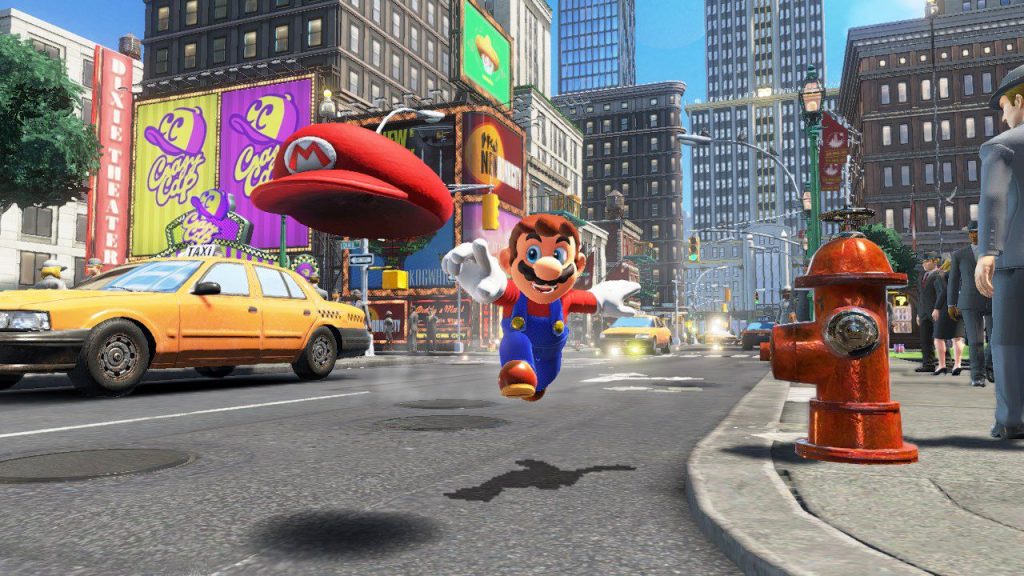
While everyone else is chasing the next live-service phenomenon, Nintendo releases a game where a plumber jumps through colorful kingdoms or where Link glues together logs, rockets, and wheels to build absurd machines that somehow solve every puzzle imaginable.
And people absolutely love it. Why?
Because Nintendo still puts gameplay above everything else.
When the Nintendo Switch 2 launched, the internet did what it always does. People compared teraflops, argued about resolution, analyzed frame rates, and debated whether the hardware was already outdated before it even hit store shelves.
Some said it wasn't powerful enough. Others claimed it was overpriced. Many argued it simply couldn't compete with PlayStation or Xbox on a technical level.
And then Nintendo did what Nintendo has been doing for decades. It sold millions of consoles because people wanted to play the games. To me, that's the perfect illustration of Nintendo's philosophy.
People don't buy Nintendo hardware because they expect cutting-edge graphics or industry-leading performance.
They buy it because they want to play Mario. They want Zelda. Mario Kart. Animal Crossing.
Nintendo sells experiences—not specifications.
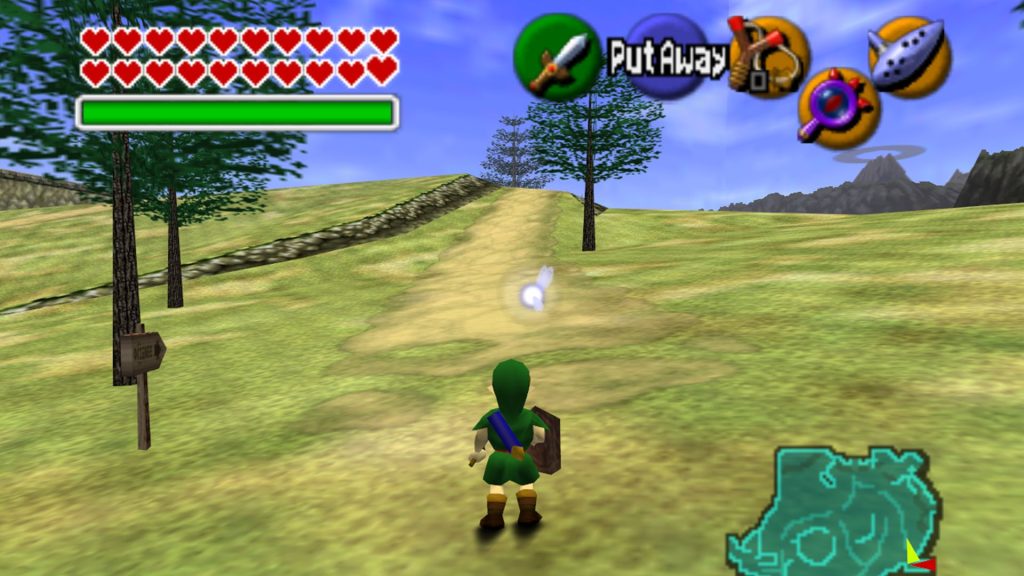
Think about how most modern AAA games begin. First, there's a ten-minute cinematic. Then you're slowly walking through a narrow corridor while the next area loads. Another cutscene follows. Then a tutorial. More dialogue. Maybe another scripted sequence.
Now think about Mario. You're jumping within the first ten seconds. That's the difference.
Nintendo understands something that much of the industry seems to have forgotten. People play games because they want to play them.
Not because they want to watch a three-hour movie interrupted by occasional button presses.
Super Mario Odyssey is probably the best example of this philosophy. On paper, its core mechanics couldn't be simpler: running and jumping. Yet Nintendo manages to squeeze dozens of fresh ideas out of those two actions alone. Every kingdom introduces a new mechanic. A new challenge. A new twist.
Just when you think you've seen everything the game has to offer, it surprises you again. Ironically, many modern AAA games take the opposite approach.
They throw crafting systems, skill trees, reputation mechanics, loot, weapon upgrades, side activities, massive maps, and countless progression systems at the player.
Yet somehow, none of those systems feel particularly deep or memorable. Games have become more complicated. I'm not convinced they've become more fun.
One of the things I admire most about Nintendo is how rarely it chases trends. The rest of the industry changes direction almost every year. One year it's battle royale games. Then hero shooters. Then extraction shooters. Then everyone suddenly wants a live-service hit.
Nintendo?
It simply shrugs and keeps doing what Nintendo does. It isn't trying to build the next Fortnite. It isn't trying to compete with Call of Duty. It isn't trying to become someone else.
Instead, it keeps making Mario, Zelda, Pikmin, Animal Crossing, and Splatoon—but each new entry introduces fresh ideas that make those franchises feel new again instead of merely bigger.
Look at Super Mario Bros. Wonder.
Almost every level introduces a completely new gameplay mechanic. The moment you become comfortable with one idea, the game throws another at you.
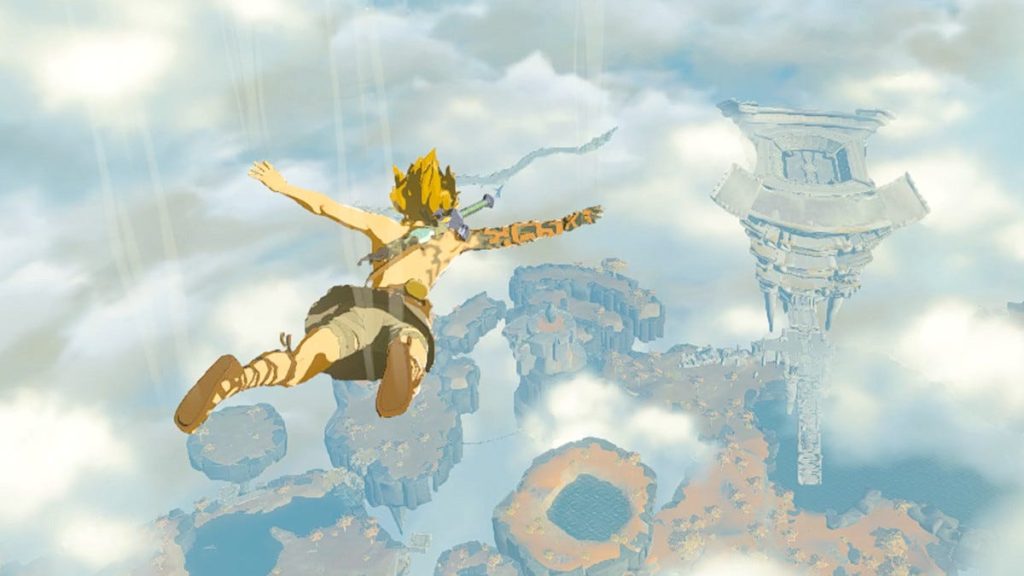
The Legend of Zelda: Tears of the Kingdom gave players an incredible amount of freedom, allowing them to solve problems in ways that even the developers probably never anticipated.
Those are the moments people remember years later—not another oversized map filled with hundreds of icons. Ironically, Nintendo is also the company that helped define many of the foundations modern gaming still stands on today.
Super Mario essentially established the blueprint for 2D platformers.The Legend of Zelda showed generations of developers what a great adventure game could look like.
Mario Kart became the gold standard for kart racers—a standard that, despite countless attempts, few competitors have ever managed to surpass.
Many mechanics we now take for granted either originated with Nintendo or were refined and popularized by its games.
That's what makes today's situation so fascinating.
While much of the industry constantly chases the next big trend, Nintendo often does the exact opposite. Instead of asking, “What's popular right now?”, they seem to ask, “What's fun?” And more often than not, that's enough.
Now, don't get me wrong. Nintendo isn't perfect.
Its hardware has lagged behind the competition for years. Its online services have never matched the quality of PlayStation Network or Xbox Live. Its first-party games rarely receive meaningful discounts, even years after release.
And Pokémon Scarlet & Violet proved that Nintendo isn't immune to shipping technically flawed games.
But that's exactly why I think it's important to separate technical quality from game design. Because when you look at Nintendo's biggest first-party releases, one thing becomes immediately obvious. Most of them launch finished. Not with promises that they'll become great six months later. Not with roadmaps filled with future updates. Not with day-one apologies from developers. They arrive as complete experiences.
In today's industry, that has become the exception rather than the rule.
Too many modern AAA games feel like products that are still under construction. Players are expected to wait for patches. Balance updates. Performance improvements. Missing features. Seasonal content.
Sometimes it feels like buying a game at launch means paying to become part of the testing process.
Nintendo certainly isn't flawless, but its biggest releases rarely leave players wondering whether they should come back in six months.
They're designed to be worth playing on day one.And that's becoming surprisingly rare.
I think the biggest difference, however, lies in Nintendo's philosophy
When I look at many modern AAA productions, I can't help but imagine meetings that start with questions like:
“How many hours of content can we advertise?”
“How do we keep players logging in every day?”
“How do we maximize engagement?”
“How do we encourage additional spending?”
With Nintendo, I imagine a very different conversation. A much simpler one.
“Is this actually fun?”
That single question feels like the foundation of almost everything they create. It's why Mario levels constantly introduce new ideas instead of repeating the same formula. It's why Zelda encourages experimentation rather than forcing players down a single solution. It's why Nintendo games so often surprise you, even after decades of making the same franchises.
The goal isn't simply to make a bigger game. It's to make a better one. And I think that's something much of the industry has lost along the way. Today, scale often replaces creativity. More content replaces better content. Larger maps replace smarter level design. Complexity replaces elegance. Nintendo reminds us that innovation doesn't always mean adding more.
Sometimes it means stripping things back until only the fun remains.
That's also why Nintendo's games tend to stay with us long after we've finished them. Not because they feature the most realistic graphics. Not because they're technological showcases. But because they create memorable moments. Moments that make you laugh. Moments that genuinely surprise you. Moments where you stop and think,
“How on earth did someone come up with this?”
No benchmark can measure that feeling. No frame-rate counter can quantify creativity. No graphics comparison on YouTube can explain why certain games remain special years after release. Those things matter. But they're not what makes us fall in love with games in the first place.
Maybe Nintendo doesn't make the most visually impressive games.
Maybe it doesn't have the most powerful hardware.
Maybe its online services still have a long way to go.
Those are all fair criticisms.
But when I look back at the games I've played over the past few years, I rarely remember their resolution. I don't remember whether they ran at 30 or 60 frames per second. I don't remember the quality of the shadows or the texture resolution. What I do remember are the moments.
I remember the first time I launched myself across Hyrule using a ridiculous flying machine I built from random scraps.
I remember laughing when Super Mario Bros. Wonder completely changed the rules halfway through a level.
I remember discovering something that made me stop and think,
“I can't believe they actually thought of this.”
Those are the moments that stay with you.
Not the graphics settings.
Not the technical specifications.
Not the benchmark scores.
The gaming industry often treats technology as the ultimate measure of quality. Every new console generation becomes a race for higher resolutions, faster frame rates, and more realistic lighting. And don't get me wrong—technology absolutely matters.
Beautiful visuals can enhance immersion. Powerful hardware opens doors that weren't possible before.
None of that is a bad thing.
The problem begins when technology becomes the goal instead of the tool. Somewhere along the way, parts of the industry started chasing scale over substance. Bigger worlds. Longer campaigns. More collectibles. More progression systems. More things to do.
But “more” doesn't automatically mean “better.”
A game doesn't become memorable because it has a thousand map icons. It becomes memorable because it creates experiences that no other game can. That's where Nintendo continues to stand apart. Its games rarely feel like they're trying to impress investors. They feel like they're trying to surprise players. And I honestly think that's becoming increasingly rare.
There's another reason I believe Nintendo deserves more credit than it often gets. It understands something that many publishers seem to have forgotten. Players don't remember features. They remember feelings.
Nobody talks about Super Mario Galaxy because of its rendering techniques. People talk about how it made them feel. Nobody remembers Breath of the Wild because it had the largest open world. They remember the freedom. The curiosity. The sense of adventure. Those are things that don't show up in marketing bullet points. They're impossible to measure with charts and graphs. Yet they're exactly why we keep coming back to games years later.
This isn't an argument that Nintendo is perfect. Nor is it an argument that every Nintendo game is better than every PlayStation or Xbox exclusive.
That would be ridiculous.
Rockstar still creates experiences almost nobody else can match. FromSoftware continues to redefine action RPGs. Larian Studios reminded the industry what player freedom truly looks like.
There are incredible developers all over the world.
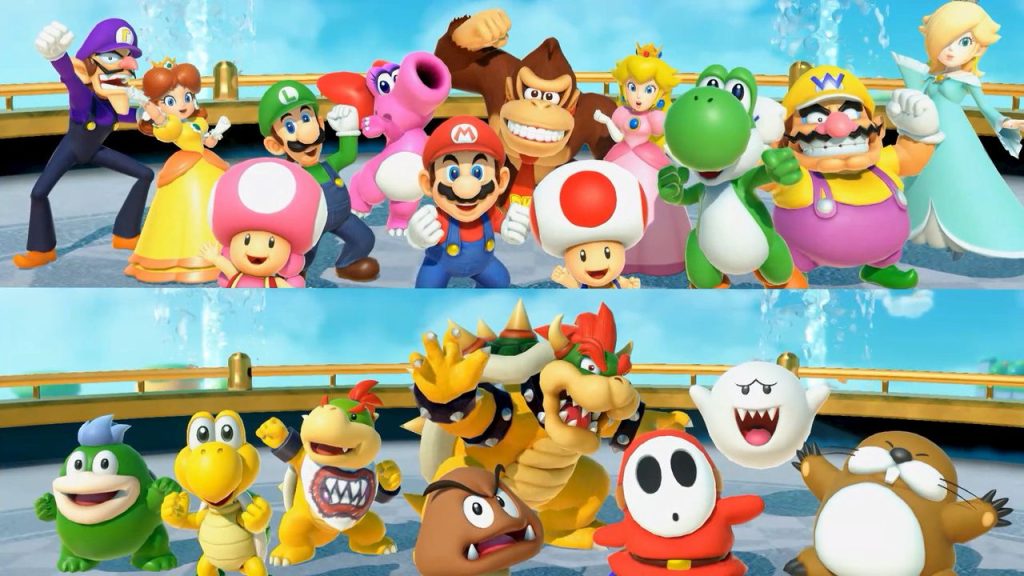
But if you asked me which major company has remained the most consistent over the last decade—whose games almost always prioritize creativity, gameplay, and pure fun over trends and monetization—my answer would still be Nintendo.
Without hesitation. Maybe you disagree. Maybe your favorite studio is Naughty Dog. Maybe it's Rockstar. Maybe it's FromSoftware.
That's perfectly fine.
In fact, I'd rather people disagree than simply nod along. Because this conversation is bigger than Nintendo. It's about what we actually value in video games.
Do we want bigger games? Or better ones? Do we want another hundred hours of repetitive content?
Or twenty unforgettable hours we'll still be talking about ten years from now?
I know which one I'd choose. And I think Nintendo has known the answer for decades. When the marketing campaigns are over… When the graphics comparisons stop… When the frame-rate debates fade away…
Only one question really matters.
Did we have fun?
If you ask me, Nintendo is one of the few major companies that still puts that question above everything else.
And maybe that's exactly why its games continue to stand the test of time.