
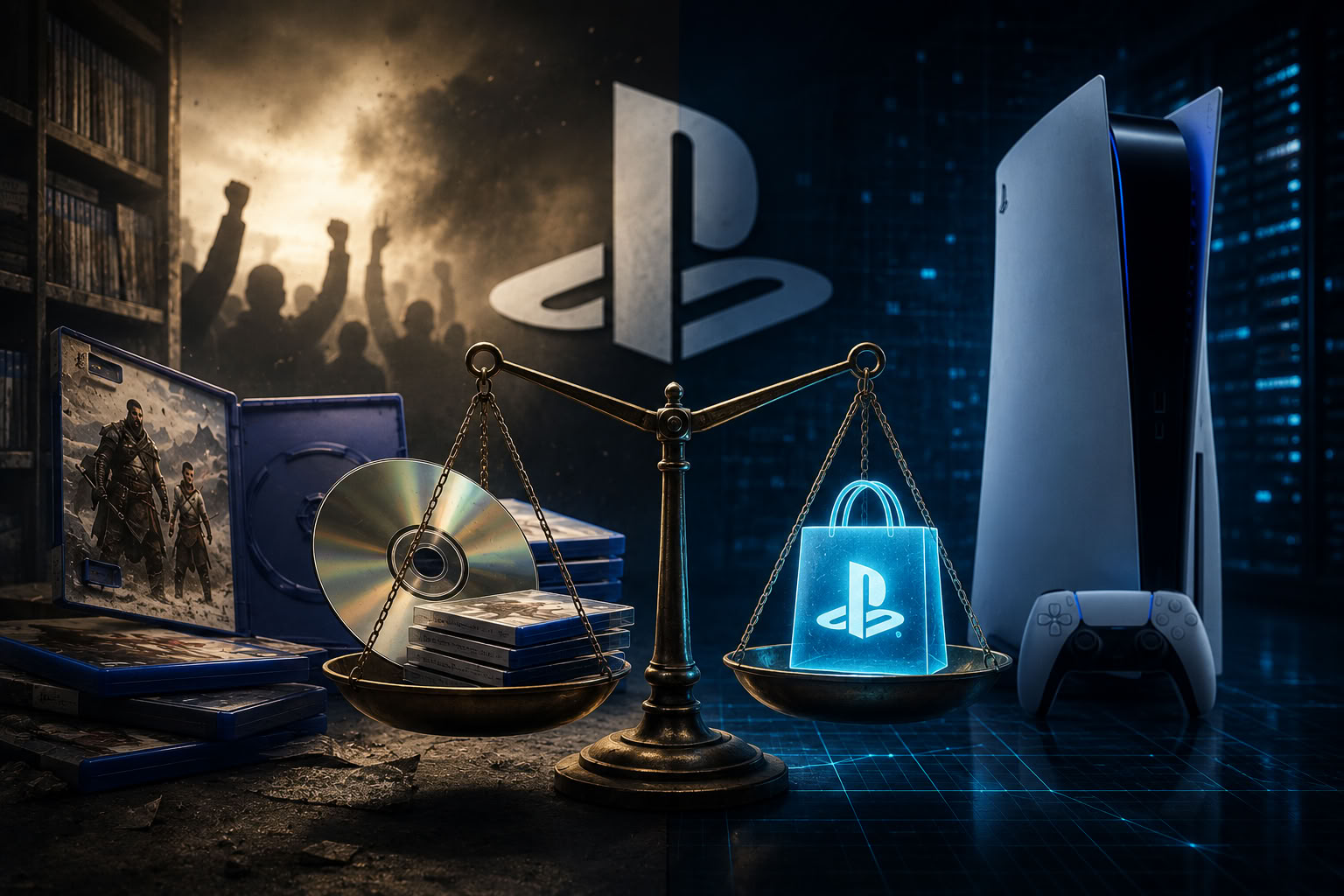
Sony's decision to move away from physical PlayStation games could fundamentally change the way players buy and own games. Starting in January 2028, Sony plans to stop producing physical discs for new PlayStation games, pushing the platform even further toward an all-digital future.
The reaction from players has been anything but positive. Petitions have appeared, social media posts have turned into a constant stream of criticism, and some players have even started talking about cancelling their PlayStation Plus subscriptions in protest.
But there is another part of this story that I find much more interesting.
As players started pushing back against Sony's decision, a different narrative began appearing across parts of the gaming media. The message was fairly simple: Sony has made its decision, the business case is obvious, and there is virtually no chance that the company will change its mind.
In other words, players should simply accept it.
And that's where things get interesting, because PlayStation's own history suggests that Sony absolutely can change its mind when the pressure becomes strong enough.

Sony Won't Change Its Mind?
One of the most interesting examples came from IGN, which spoke to industry analyst Serkan Toto of Kantan Games following the backlash against Sony's decision.
The basic argument was that Sony has little reason to back down. The company has an enormous PlayStation user base and tens of millions of PlayStation Plus subscribers, meaning even a significant number of cancelled subscriptions might not be enough to make Sony reconsider its strategy.
On paper, that sounds reasonable. Sony is one of the biggest companies in the gaming industry, digital distribution is highly profitable, and the transition away from physical media has been happening for years.
But there is one problem with the argument that Sony simply doesn't change its mind.
We have seen Sony change its mind before.
And not just once.
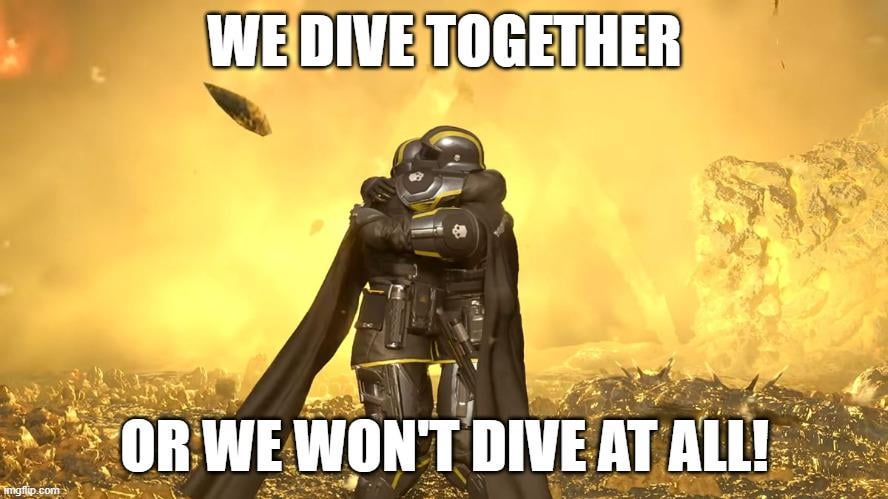
Remember Helldivers 2?
The clearest recent example is probably Helldivers 2.
Sony attempted to introduce mandatory PlayStation Network account linking for PC players. The reaction was enormous. Players protested, the game's Steam rating was hit by a wave of negative reviews, and the controversy quickly became much bigger than Sony had apparently expected.
Sony eventually backed down.
The company reversed the decision.
That matters because Sony didn't suddenly discover that PSN linking was a terrible idea. The company changed its position because the backlash became significant enough to make continuing with the plan more trouble than it was worth.
So when people say that Sony is simply too big or too stubborn to change its decisions, Helldivers 2 provides a rather inconvenient counterexample.
And it isn't the only one.
The PS3 and PS Vita Store Fight
There is another example that is particularly relevant to the current discussion about digital ownership.
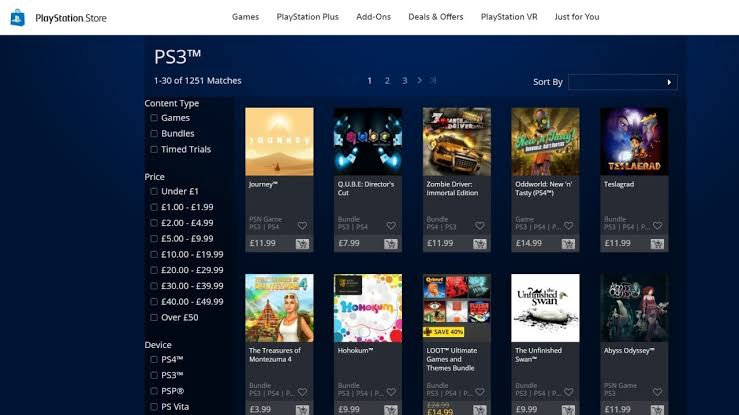
In 2021, Sony announced plans to shut down the PlayStation Store on PS3 and PS Vita. Players immediately pushed back, and the reaction was strong enough that Sony reversed course.
The important detail, however, is that the stores were not saved forever.
They eventually closed.
But the community still achieved something significant: roughly five additional years of access.
That may not sound like a complete victory, but five years is an extremely long time in the video game industry. Those extra years meant that players could continue purchasing older games, accessing digital libraries and preserving access to parts of PlayStation's history that might otherwise have disappeared much earlier.
So was the protest ultimately successful?
If by success you mean keeping the stores open forever, no.
If you mean changing Sony's original timetable by several years, absolutely.
And that's an important distinction.
Player pressure doesn't necessarily have to force a company to abandon a decision completely. Sometimes it can delay the decision, change its scope or force the company to find another solution.
That is still influence.
So Where Does the “Sony Won't Budge” Narrative Come From?
This is where the current coverage becomes particularly interesting.
I wouldn't go as far as claiming that there is some coordinated campaign on behalf of Sony. There is no evidence that would justify such a claim.
But when you read several major gaming publications covering the same story, a noticeable pattern emerges.
IGN has published coverage suggesting that Sony is unlikely to change course, with analysts arguing that even a substantial number of cancelled PlayStation Plus subscriptions would not be enough to force the company to reconsider.
Polygon went even further with a headline that essentially makes the conclusion for the reader:
GamesRadar+ has also highlighted the statistic that only seven PlayStation games have sold more than 100,000 physical copies in the United States this year, while Kotaku has used similar figures to illustrate how difficult it will be for players to push Sony away from its current strategy.
Again, none of this is inherently wrong.
Publications are perfectly entitled to analyse the numbers and conclude that Sony's decision makes business sense.
But there is a difference between saying that physical sales are declining and saying that Sony's decision is therefore inevitable.
Those are two very different claims.
The “Only Seven Games” Statistic
The statistic being repeated across several articles is certainly striking.
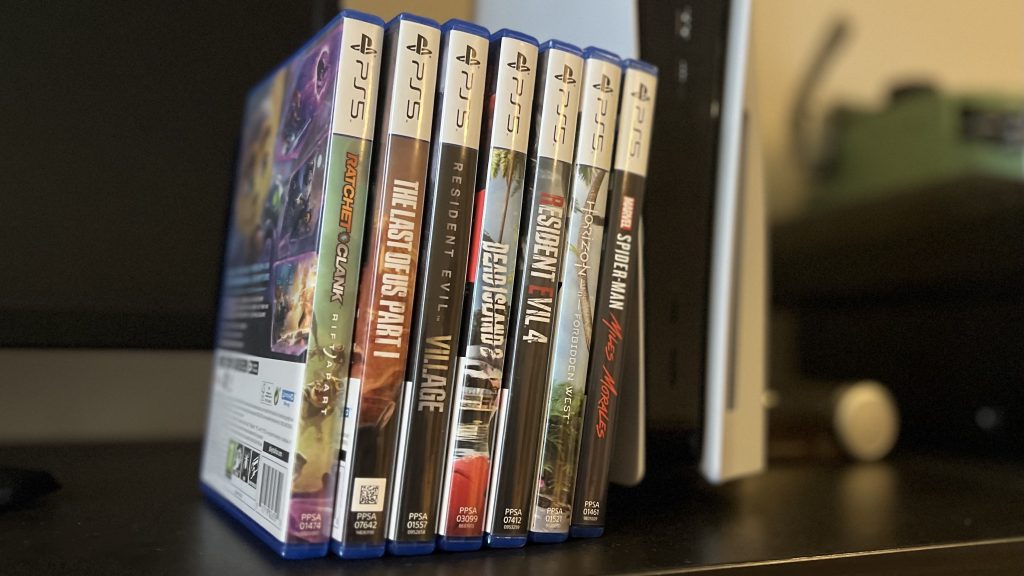
According to the data cited in those reports, only seven PlayStation games have sold more than 100,000 physical copies in the United States this year.
That's not a great sign for physical media.
There is no reason to pretend otherwise. Digital distribution has become the dominant way many players buy games, and physical sales have been declining for years.
But here's the problem.
“Physical sales are declining” is a statement supported by the data.
“Therefore Sony should eliminate physical games worldwide” is a business conclusion.
The two aren't interchangeable.
The data is also specifically about the United States. The US is obviously one of the world's biggest gaming markets and its trends matter enormously to the industry, but PlayStation isn't an American-only platform.
Consumer behaviour varies dramatically between countries. So do retail markets, payment systems, access to PlayStation Network and attitudes toward physical ownership.
A statistic showing that physical games are struggling in the US can certainly be used as an argument for Sony's strategy.
It cannot, by itself, prove that physical games should disappear globally.
There Is Also a Legitimate Environmental Argument
There is another part of the digital-versus-physical debate that deserves more attention, and this is where I think it would be unfair to portray the digital future as entirely negative.
Digital distribution has genuine environmental advantages.
A physical game requires manufacturing a disc, producing packaging, printing artwork, shipping the product to retailers and eventually dealing with the physical waste that comes with all of that.
A digital copy eliminates much of this process.
There is no plastic disc to manufacture, no physical case to produce and no truck required to deliver individual copies to stores. From an environmental perspective, reducing manufacturing, packaging, transportation and physical waste is a legitimate argument in favour of digital distribution.
Sony could actually make a much stronger case for its digital future by talking about this openly.
Instead of simply telling players that physical media is dying and that they should accept it, the company could argue that reducing physical production also means reducing material use, transportation and waste.
Of course, the environmental impact of digital games isn't zero. Data centres, servers and network infrastructure all consume electricity, so calling digital games automatically “green” would be an oversimplification.
But the environmental argument is still real.
And it is one of the strongest arguments Sony could make.
The Problem Isn't Digital Games
This is an important distinction.
There is nothing inherently wrong with digital games.
They're convenient. They're usually available instantly, they don't require physical storage, and they make it possible to access an entire library from a single console.
For many players, digital is already the preferred way to buy games.
The problem begins when digital stops being an option and becomes the only option.
Because a physical game represents more than another way to install software.
It represents a degree of ownership and independence from the platform holder.
If you own a disc, Sony doesn't necessarily need to keep a digital storefront running for you to possess that particular copy. You don't need to wait for a download. You don't need to worry about whether the game will remain available for purchase.
The disc is sitting on your shelf.
That distinction becomes increasingly important as more of the gaming industry moves toward digital-only distribution.
Sony Has Already Shown That “No” Doesn't Always Mean No
This is why I find the current argument about Sony being completely unwilling to change much less convincing than some people seem to.
Sony doesn't have to be the villain.
Players don't have to be right about everything.
Digital games don't have to be bad.
Physical games don't have to remain dominant forever.
All of those things can be true at the same time.
But when someone says that Sony won't change its decision, we should ask what that prediction is actually based on.
If the answer is that Sony is too big, that's not enough.
Big companies change their strategies all the time.
If the answer is that digital games are more profitable, that's not enough either.
A profitable strategy can still be changed if market conditions change.
And if the answer is that players simply don't have enough influence, PlayStation's own history says otherwise.
Helldivers 2 shows that Sony can reverse a controversial decision.
The PS3 and PS Vita Store situation shows that player pressure can delay a shutdown by years.
These aren't hypothetical examples.
They already happened.
The Easiest Way to Win Is to Convince People They've Already Lost
This may be the most important part of the entire discussion.
If Sony says, “We aren't changing our decision,” players can get angry.
If Sony says, “You can't do anything about it,” players can protest.
But if players are repeatedly told that protests don't matter, that digital is the future, that physical games are dying, that Sony is too powerful to care and that even cancelling subscriptions won't make a difference, some of them will simply give up.
Not because they agree with Sony.
Because they believe the fight is already over.
And that's why I have a problem with treating “Sony won't change its mind” as a fact.
Maybe Sony won't change its mind.
That's entirely possible.
But nobody knows that yet.
We still have roughly a year and a half before Sony's planned transition begins. A lot can change during that time. Sales can change. Consumer behaviour can change. The market can change. Sony's own strategy can change.
And if the numbers change, the business decision can change with them.
That's how corporations work.
Maybe Sony Won't Back Down. But Let's Find Out.
I wouldn't claim that Sony will definitely abandon its plans to eliminate physical discs.
That would be just as irresponsible as claiming that it definitely won't.
What I don't accept is the idea that players should give up before the fight has even started because analysts have already decided that Sony won't listen.
Sony has changed its mind before.
Sony has responded to player backlash before.
Sony has delayed major decisions before.
And Sony has already shown that a sufficiently large community reaction can affect its strategy.
So perhaps the real question isn't whether Sony will change its mind.
It's whether players will refuse to accept that the decision is already final.
Maybe it won't be enough.
Maybe Sony will continue down the same path regardless of what happens.
Or maybe, a year from now, the company will have a very good reason to listen to the people who actually buy its consoles and games.
We don't know.
And that's exactly why nobody should pretend that the answer is already written.
Because if PlayStation's own history has taught us anything, it's that Sony can say “no” today and change its mind tomorrow.
And if that has happened before, why should we assume it's impossible this time?