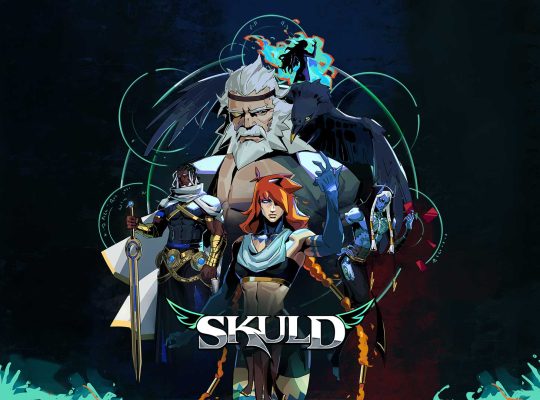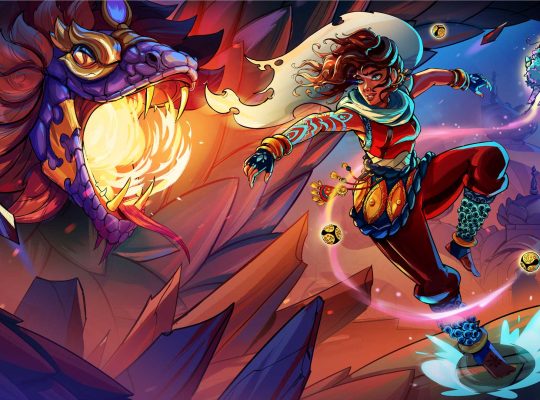

Tower defense games usually ask us to carefully position our defences, watch enemies approach in waves and react when something goes wrong. SKULD attempts to change that formula by refusing to leave us on the sidelines, simply giving orders. Here, we are both the strategist and the fighter who must personally stand against the incoming enemies.
The game comes from Spanish indie studio Super Monkey Studio, in collaboration with publisher Develup Games. A free demo arrived on Steam in early November 2026, while the full release is planned for 2027. The Kickstarter campaign reached 140% of its funding goal, suggesting that the concept has already attracted an audience. However, what makes SKULD particularly interesting is the way it combines third-person action with tower defense mechanics.
After Ragnarök, the Fight Is Only Beginning
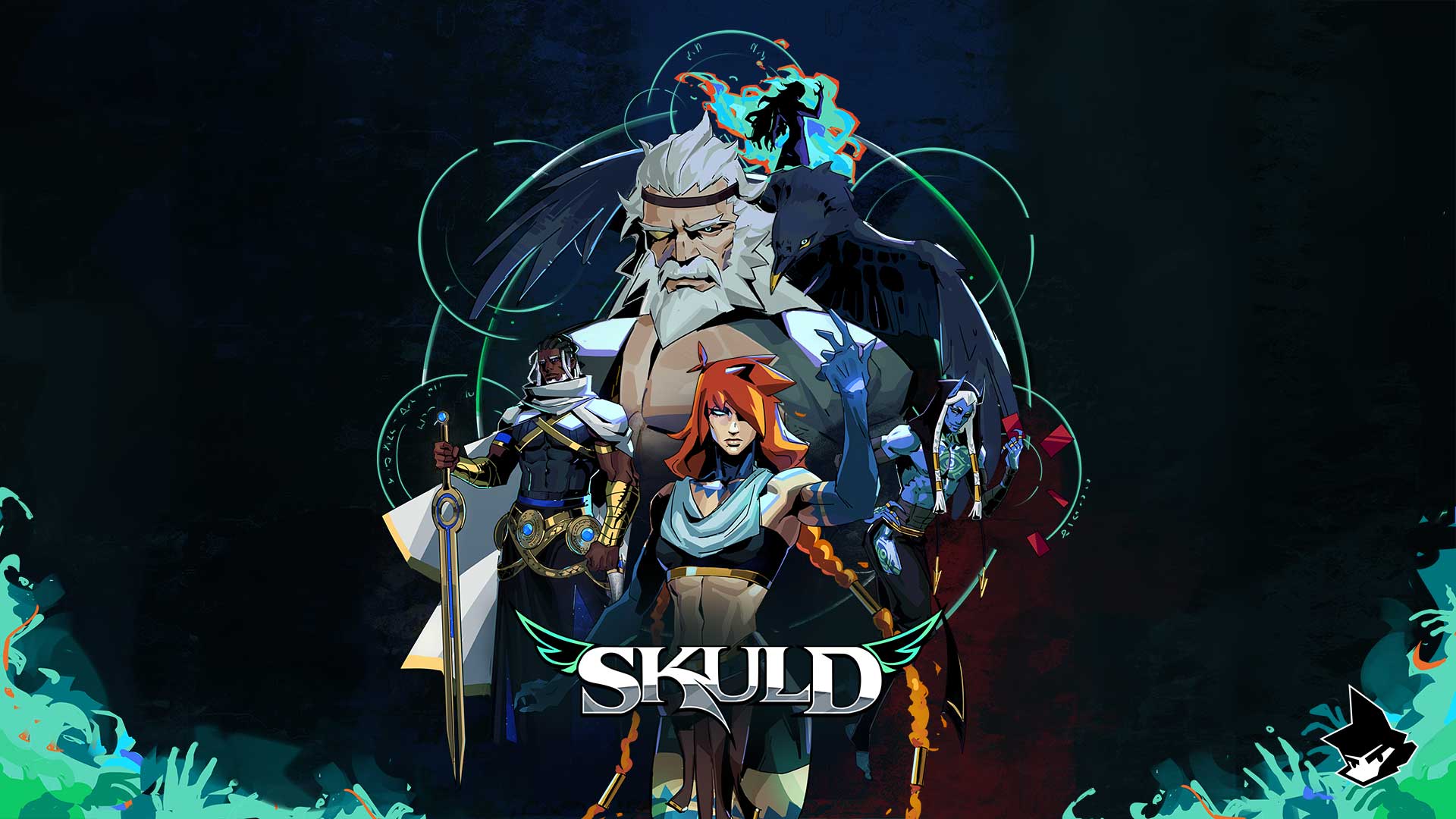
The story takes place in the aftermath of Ragnarök. The Nine Realms are dealing with the consequences of their destruction, while the influence of Hel, the goddess of death, spreads across the mythological kingdoms. At the centre of the story is Skuld, one of the Norns, who has left behind her role connected to fate to become a Valkyrie. Now, she must defend Valhalla from waves of corrupted creatures.
Skuld is not the typical heroine who relies on loud declarations and reckless aggression. There is something cold and determined about her presence, as if she already knows how things are supposed to end but is still prepared to fight until the very last moment. Her red hair, sharp gaze and quick, precise movements fit the character the game is trying to portray. She is not simply another Valkyrie with a sword, but a character who carries the weight of her role.
That feeling becomes particularly noticeable when you choose a playstyle that focuses more on direct combat. Skuld then becomes the main force behind the defence rather than someone who merely oversees the placement of turrets. You get the impression that you are the final thread holding everything together, with no room for retreat.
Action and Tower Defense on the Same Front Line
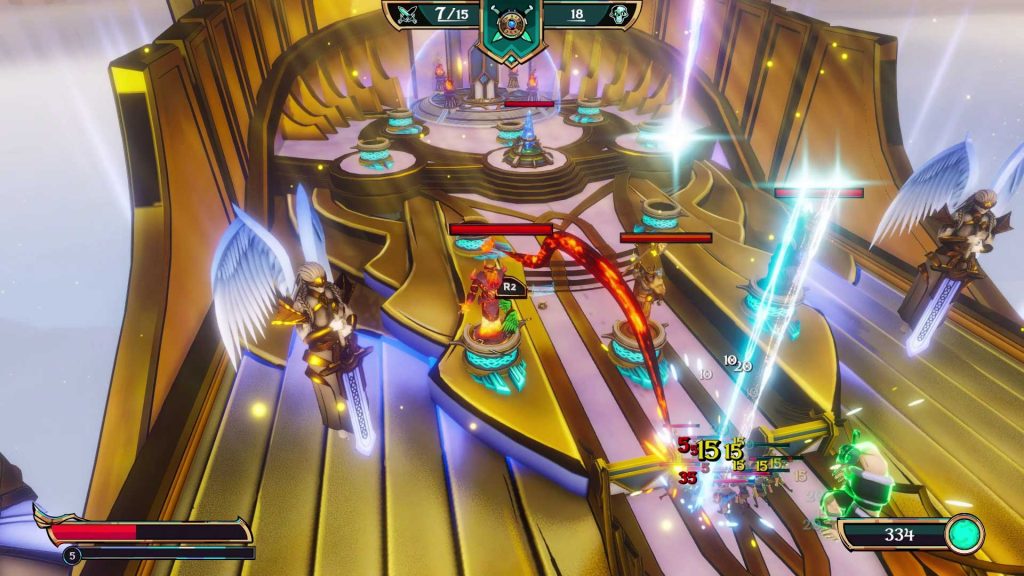
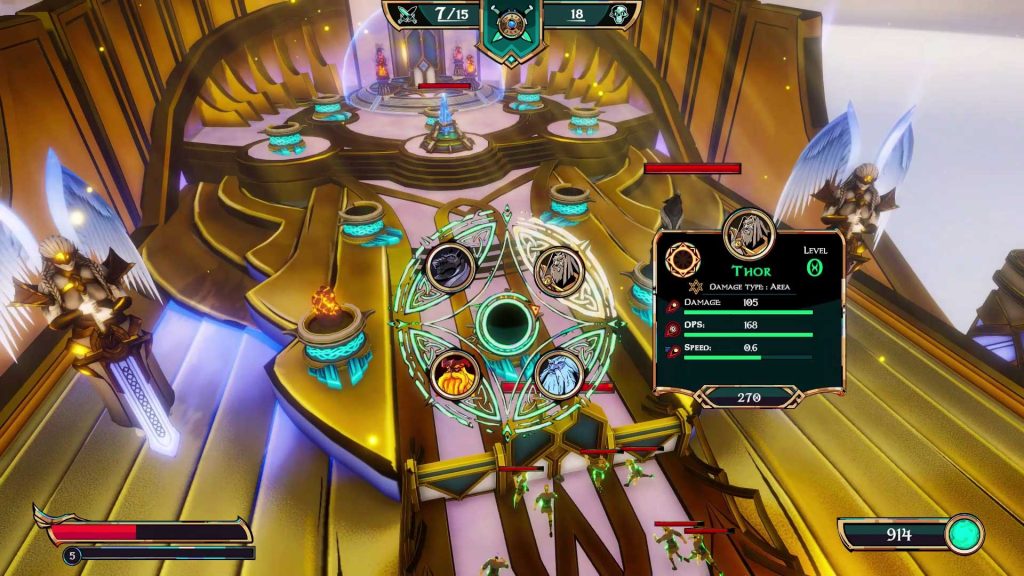
The game's biggest selling point is its gameplay. Instead of simply placing towers and waiting for them to do their job, SKULD puts us directly into the fight. We wield a sword, perform attack combos, dodge incoming strikes and activate divine abilities, all while placing and upgrading turrets.
This means that our attention has to be divided between several tasks. Some enemies try to destroy our defensive positions, others push towards the gate, while certain foes target Skuld directly. If the enemies reach Valhalla or our heroine falls in battle, the defence is over.
This is exactly why the combination of action and tower defense mechanics makes sense. You cannot rely entirely on your turrets, but you also cannot ignore their placement and upgrades. You have to decide when it is more important to personally stop an enemy and when you should focus on making sure your defences can hold their ground without your direct involvement.
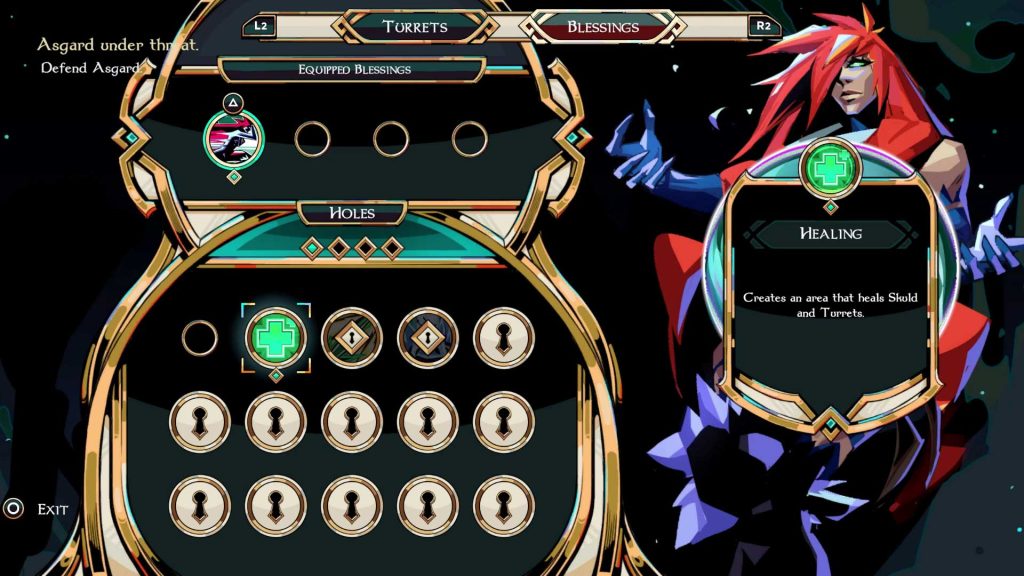
Before each battle, you choose a tower deck and customise Skuld's abilities through the blessings of the gods. You can opt for a more aggressive approach, relying primarily on your own combat skills, or build a stronger defensive setup and let your turrets handle most of the work. This leaves room for different playstyles, while the introduction of new enemies in each realm means that the same strategy will not necessarily work everywhere.
Thor fits particularly well into this system. If you prefer a more aggressive approach and want to feel that raw power backing you up, his influence on your tower selection and defensive strategy complements that playstyle. While Skuld fights on the front line, your defences gain additional strength through the powers associated with the gods.
Valhalla Between Battles
Combat is not the only thing the demo has to offer. Between encounters, we return to Valhalla, where we can speak with familiar figures from Norse mythology, including Odin, Loki, Heimdall and Idunn. These encounters provide a welcome break from the action, but they also play a role in the story, as our dialogue choices influence the campaign.
This structure does a good job of breaking up the pace. After an intense battle, we get the opportunity to learn more about the world, its characters and the relationships that are expected to play an important role in the full release. Of course, the demo cannot yet show how significant these decisions will be in the long run, but it establishes a promising foundation for the narrative side of the game.
Visually, SKULD has a recognisable identity. Hand-painted textures, bold lines that give combat a comic-book feel and a painterly approach to major scenes give the game plenty of character. Each realm also has its own soundtrack, which should further emphasise the differences between the worlds we explore.
Short Battles That Make You Want Another Attempt
One thing I particularly like is the length of individual runs. Based on what the demo offers, a single battle generally lasts between 10 and 20 minutes, depending on the difficulty and your approach. That is enough time to jump into a fight, try a particular strategy and see how well your chosen combination of abilities and turrets performs.
You do not need to set aside an hour and a half just to feel like you have made some progress. You can play a battle, return to Valhalla, talk to one of the gods and call it a session. Of course, there is also that familiar trap: when you tell yourself you will play just one more round, it can easily turn into three.
I like this pacing because SKULD does not try to turn every session into a lengthy commitment. Battles are short enough to encourage experimentation, while returning to Valhalla gives you a sense of progression even between encounters.
A Promising Demo, but the Full Release Still Has to Deliver
SKULD makes a very good first impression. The combination of direct combat and tower defense mechanics provides an interesting foundation, and I particularly like that players are not locked into a single playstyle. You can become the main force on the battlefield or focus more heavily on building your defences. Either way, Skuld remains an active part of the fight rather than a character standing on the sidelines.
Comparisons with the Orcs Must Die! series are understandable because of the combination of traps, defence and direct action, while the visual approach may bring Hades to mind. Still, SKULD is trying to establish its own identity through Norse mythology, the personality of its main character and a system that connects combat with strategic decisions.
Naturally, it is still too early to draw final conclusions. The demo cannot show how varied the enemies will be, how deep the progression system is or whether the balance between different playstyles will remain satisfying throughout the game. These are things the full release will have to prove.
For now, SKULD is one of those games worth keeping an eye on. If you enjoy tower defense but wish you could personally take part in the defence, or if you like action games such as Orcs Must Die! and Hades, the free Steam demo is certainly worth your time.
Skuld is not simply a heroine standing in front of a gate with a sword. She is someone who knows what is coming, yet still has to fight as if she does not. That combination of determination, action and responsibility for the entire defence gives SKULD its most interesting quality.
We are looking forward to the full release in 2027.
Ako tražite povoljnije cene za igre, DLC-ove i druge digitalne proizvode, posetite Eneba i pogledajte aktuelnu ponudu.
Pre kupovine obavezno unesite naš promo kod BUFFGAMING i ostvarite dodatnih 5% popusta.
Kupi igre, poklon-kartice i dopune povoljnije