
Crimson Deser: Crimson Desert is far more than just another open-world title. Despite some gameplay-related flaws, the game has the potential to leave a lasting impression on players and set new standards within the genre. It’s definitely a game that rewards patience, and one that’s best enjoyed by taking your time with its world and systems. – Igor Marković
Crimson Desert immediately showcases a very high production value. The game clearly emphasizes its ambition to redefine the open-world RPG genre. From the opening scenes, Crimson Desert introduces players to the harsh world of Pywel — a politically unstable land where wars, betrayal, and personal tragedies shape the story and its characters.
Because of that, the game is not only visually impressive, but also works as a strong narrative experience focused heavily on character development and the consequences of their decisions.
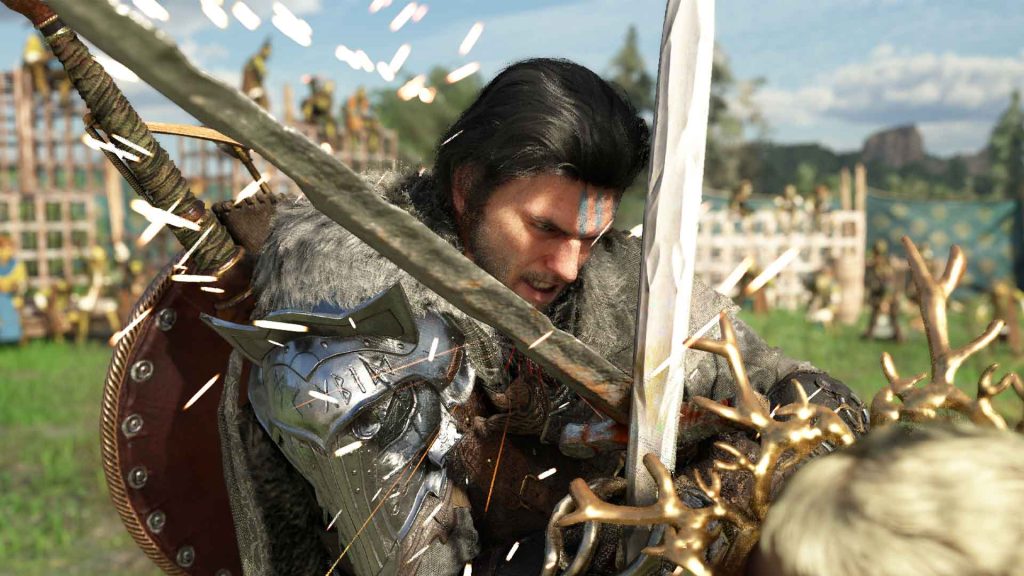
On top of that, the combat system combines raw power, tactical thinking, and environmental interaction, making every encounter dynamic and unpredictable. Players can use terrain, objects, and physics to gain advantages during battles, while enemies actively react to changes happening around them.
Crimson Desert further stands out through the balance between its personal story and larger political conflicts. The focus remains equally on the protagonist and the world surrounding him.
The open world itself is not simply a space meant for exploration. Instead, it functions like a living system that reacts to player choices, meaning nearly every action carries visible consequences.
In the end, the combination of technology, storytelling, and gameplay freedom clearly defines the game’s identity. Because of that, Crimson Desert positions itself as one of the most important open-world titles of its generation.
What Is Crimson Desert and Why It Matters
Crimson Desert is an open-world action RPG that combines a narrative-driven campaign with free exploration systems and dynamic combat mechanics. At first glance, the game stands out because of its ambition to merge cinematic storytelling with sandbox gameplay systems, placing it somewhere between classic RPGs and modern open-world experiences.
More importantly, the world itself is not static. It constantly reacts to player decisions, further deepening immersion.
What makes the game particularly interesting is the balance between personal storytelling and large-scale conflicts, while the technical execution and visual quality raise the standards of the genre itself.
The World of Pywel
Crimson Desert takes place in the fantasy world of Pywel, a continent filled with war, political tension, and brutal survival conditions. The story follows Kliff Macduff, the leader of a mercenary group whose fate develops through morally complex decisions and conflicts.
Gameplay combines melee combat, ranged weapons, and environmental interaction. Players can use terrain during combat, climb structures, and manipulate physics to gain tactical advantages. The mission structure also blends major narrative quests with numerous side activities that expand the lore and worldbuilding.
Meanwhile, weather conditions and the day-night cycle directly affect NPC behavior and mission availability, adding another layer of realism to the experience.
Pearl Abyss and the BlackSpace Engine
The game is developed by Pearl Abyss, best known for Black Desert Online. However, unlike that project, Crimson Desert shifts its focus toward a single-player narrative experience.
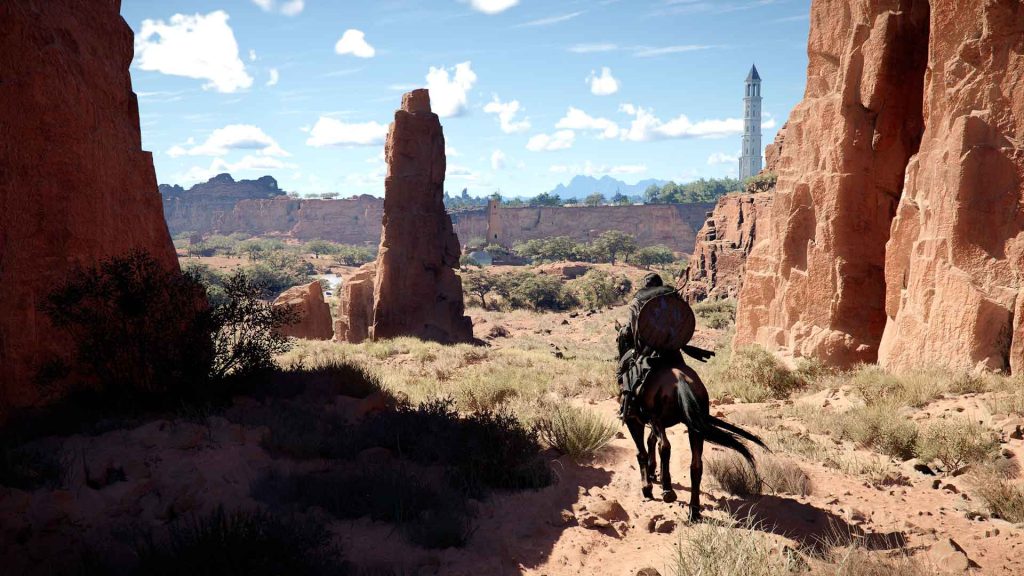
To achieve this, the studio uses the upgraded BlackSpace Engine, which allows advanced physics simulations, realistic animations, and highly detailed environments. Destructible objects, realistic collisions, and natural environmental behaviors like wind and water all contribute to creating a believable world.
The AI systems are also impressive. Enemies actively react to player behavior, adapt their tactics, and change strategies during combat encounters, making every fight feel unique and unpredictable.
Gameplay and Combat Mechanics
Crimson Desert combines fast-paced action with systemic open-world design that rewards both exploration and tactical thinking.
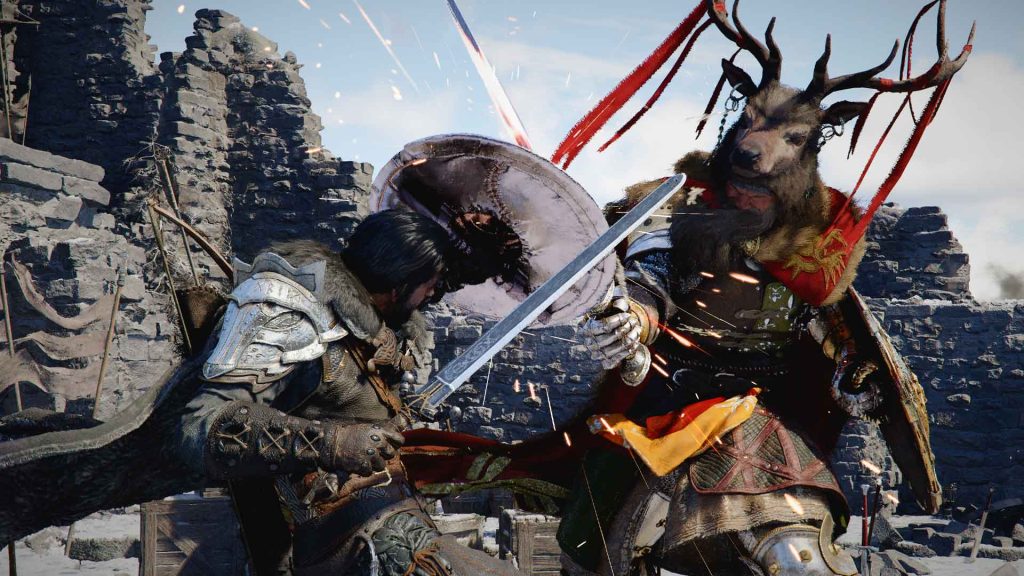
The combat system focuses heavily on physical weight and realistic interaction during battles. Every hit has clearly defined animations, while enemy reactions depend on attack strength and angle. Because of that, combat never feels scripted or repetitive.
From personal experience, the game’s depth becomes especially noticeable during more intense fights. Several times I tried approaching encounters aggressively, only to get punished immediately due to poor timing. That forced me to slow down and approach combat more tactically, which ultimately made the system far more satisfying.
The game combines melee attacks, ranged combat, and special abilities, but its biggest strength lies in environmental interaction. Players can use walls, objects, and elevation differences to gain tactical advantages, while blocking, dodging, and counter-attacking all play major roles.
Timing is absolutely essential.
A Living Open World
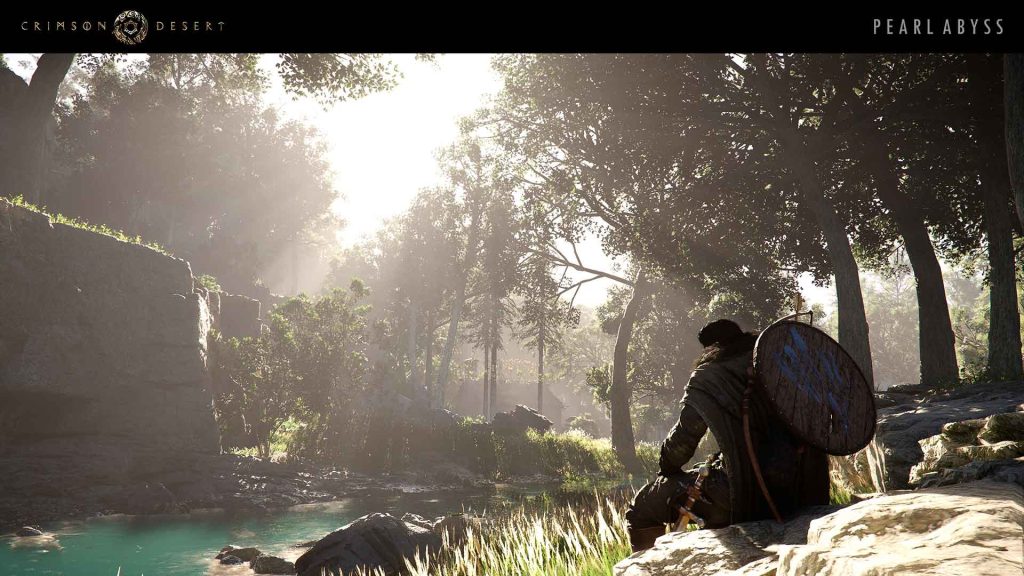
One of Crimson Desert’s strongest aspects is its incredibly detailed open world. Pywel is not simply visually impressive — it functions like a living ecosystem where events occur independently from the player.
NPCs follow routines, while certain events only trigger depending on time of day or weather conditions.
Exploration itself is also highly varied. Players can climb, ride mounts, swim, and use multiple traversal methods across the map. Because of that, every region feels unique, whether it’s a snowy mountain, a war-torn battlefield, or a crowded city.
While exploring, I constantly found myself abandoning the main path and discovering hidden encounters, enemy ambushes, or secret locations. Those moments significantly strengthened the feeling that the world exists independently from the player.
Missions and Narrative Design
The mission structure in Crimson Desert is carefully designed to support the game’s narrative.
Main quests focus on story progression and character development, while side missions expand the lore and political conflicts of the world. Thankfully, these activities rarely feel repetitive.
Some missions can also be approached in multiple ways, allowing players to choose between direct combat, stealth, or negotiation. Decisions made during quests can also affect faction relationships and future story developments, making the narrative feel organic and reactive.
AI and Enemy Behavior
Enemy AI is one of the most important gameplay elements in Crimson Desert.
Enemies are not static targets — they analyze situations, retreat when necessary, call reinforcements, and attempt to surround players during combat. Different enemy types also behave differently. Basic enemies attack directly, while more advanced opponents block attacks, use tactics, and take advantage of the environment.
Because of that, every battle requires adaptation and strategic thinking.
Interestingly, the true depth of the game’s systems only becomes fully apparent after roughly fifty hours of gameplay. By that point, players begin mastering enemy behavior patterns, advanced combat combinations, and strategic decision-making with long-term consequences.
Crimson Desert doesn’t reveal everything immediately. Instead, it gradually rewards patience and long-term investment, which makes the experience feel even more rewarding over time.
Story and Characters
The narrative in Crimson Desert revolves around personal tragedy, political conflict, and morally complex choices.
From the very beginning, the game establishes a world where the line between good and evil is never fully clear. Perspective and motivation define nearly every conflict.
At the center of the story is Kliff Macduff, the leader of a mercenary group whose life has been shaped by loss, survival, and constant war. Initially, he appears to be a typical warrior protagonist, but as the story progresses, his deeper vulnerabilities and internal conflicts become increasingly visible.
What makes Kliff particularly interesting is the fact that his decisions are not always heroic. He often finds himself forced to choose between morality and personal survival.
Politics, Factions, and Consequences
The world of Pywel is divided between kingdoms, tribes, and military factions, each with their own goals and ideologies.
Political conflicts are not merely background storytelling — they directly impact gameplay. Certain regions may fall under the control of different factions depending on story events and player decisions, affecting available resources, missions, and allies.
Relationships with factions are also dynamic. Players can build alliances or create enemies who actively respond to their actions later in the game.
That combination of a strong protagonist, a reactive world, and layered faction systems makes Crimson Desert’s narrative especially memorable.
Graphics and Technical Performance
Visually, Crimson Desert sets an extremely high standard for modern open-world games.
The level of detail is immediately noticeable through textures, lighting, environmental effects, and realistic animations. Dynamic weather, fog, rain, and wind significantly enhance immersion, while facial animations and character movement often feel cinematic.
The upgraded BlackSpace Engine allows seamless transitions between regions without loading screens, while advanced lighting and shadow systems further improve realism.
Physics also play a major role throughout gameplay. Objects can be destroyed, moved, or used during combat encounters, while environmental elements like wind and gravity directly affect movement and projectiles.
The result is a technically impressive world that feels highly interactive and believable.
Crafting and Weapon Upgrades
Crimson Desert also introduces a deep crafting and upgrade system designed around exploration and resource management.
Equipment constantly evolves through collected materials, blueprints, and upgrades. Different combinations of resources can affect weapon stats, adding effects like bleeding or stunning enemies.
From my experience, the importance of upgrades only becomes obvious during harder encounters. At one point, I attempted progressing without investing into equipment upgrades and quickly hit a wall, proving just how essential the system really is.
Crafting is not limited to weapons either. Players can also create consumables, survival tools, and specialized equipment that significantly improve their chances during boss fights.
That said, the crafting system can occasionally feel demanding because some recipes require large amounts of resources that are not always easy to obtain.
Comparisons to Other Open-World Games
Crimson Desert naturally draws comparisons to games like The Witcher 3: Wild Hunt and Red Dead Redemption 2.
Like The Witcher 3, it focuses heavily on narrative complexity and morally gray decisions. However, Crimson Desert places a stronger emphasis on real-time systemic reactions and environmental interaction.
Meanwhile, its attention to realism, NPC routines, and immersive worldbuilding strongly resembles Red Dead Redemption 2. However, Crimson Desert delivers significantly faster and more dynamic combat compared to Rockstar’s slower pacing.
At the same time, the game introduces its own identity through its heavy integration of physics systems and reactive world design.
Strengths and Weaknesses
Pros
- Deep and tactical combat system
- Beautiful and reactive open world
- Strong narrative and character development
- Impressive visuals and physics systems
- Meaningful progression and crafting mechanics
Cons
- Complex systems may overwhelm new players
- Occasional performance drops in demanding scenes
- Some mission structures become repetitive over time
- Certain player choices have less impact than expected
Final Verdict
In the end, Crimson Desert successfully balances narrative storytelling with deep gameplay systems, making it one of the most interesting open-world RPGs of its generation.
While it certainly has flaws — especially regarding pacing, complexity, and occasional technical issues — its strengths far outweigh its weaknesses.
The combination of challenging combat, meaningful progression, immersive worldbuilding, and reactive systems creates an experience that feels ambitious and memorable.
Crimson Desert is far more than just another open-world RPG. It’s a game with the potential to leave a long-lasting impact on the genre itself.
Patience is definitely required, but players willing to invest the time will likely find one of the most rewarding RPG experiences in recent years.
If you enjoyed this review, you can check out our other reviews at the following link.
A review copy of the game was provided by Pearlabyss
Ako tražite povoljnije cene za igre, DLC-ove i druge digitalne proizvode, posetite Eneba i pogledajte aktuelnu ponudu.
Pre kupovine obavezno unesite naš promo kod BUFFGAMING i ostvarite dodatnih 5% popusta.
Kupi igre, poklon-kartice i dopune povoljnije