
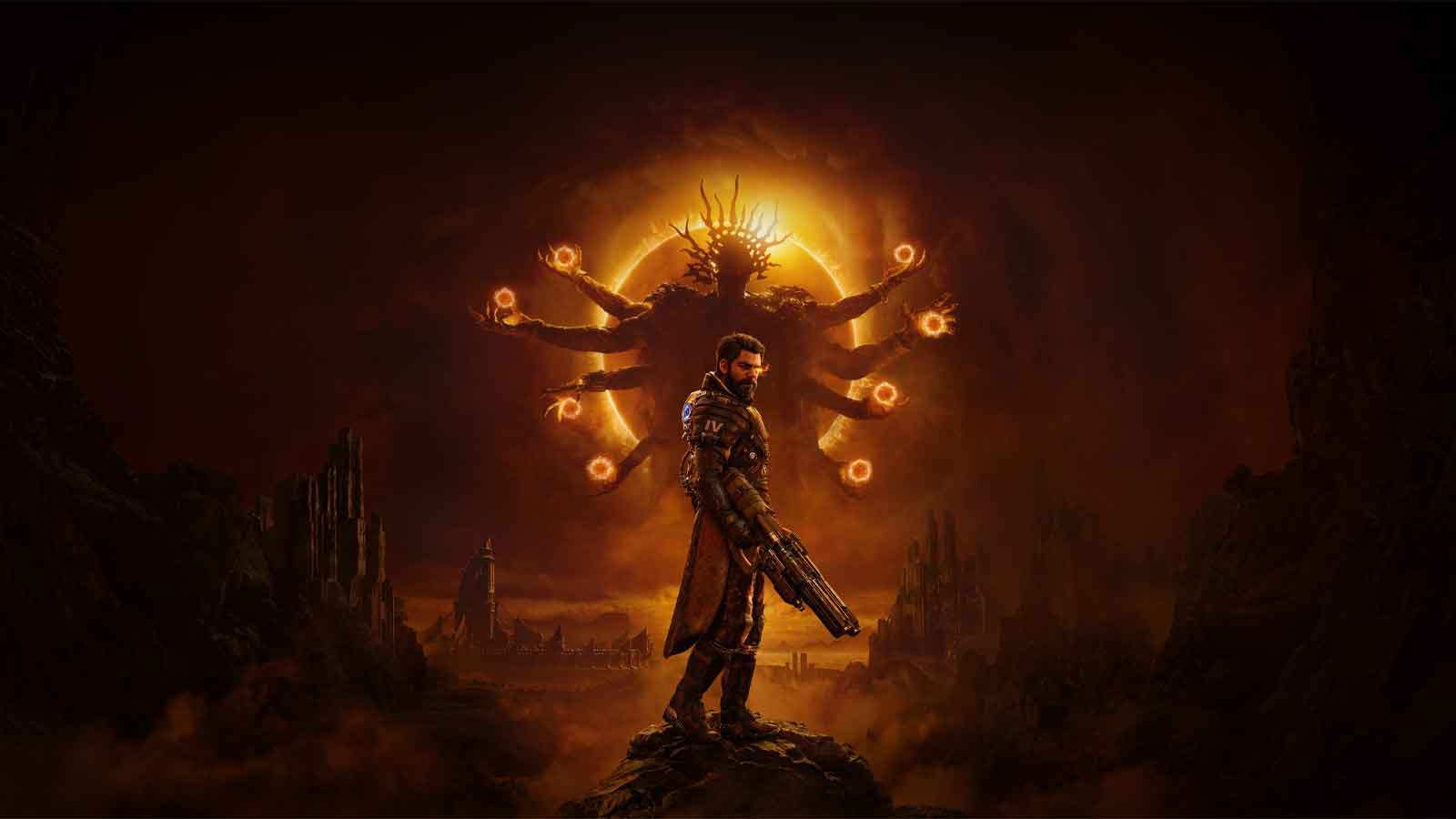
SAROS: SAROS is one of the most impressive PlayStation 5 exclusives in recent years. Housemarque successfully combines intense roguelike gameplay with an excellent cosmic horror story and an outstanding atmosphere. While certain systems and the ending are not perfect, the game leaves a very powerful impression and easily establishes itself as a serious Game of the Year contender. – Miloš Markovic
Over the past few years, I’ve had a somewhat complicated relationship with my PlayStation 5. On one hand, it delivered several incredible exclusives that kept me hooked for weeks — sometimes even months — and there are still many promising titles on the horizon. On the other hand, the console never quite reached the same level as the PlayStation 4 for me personally. A big reason for that is how heavily PlayStation Studios has relied on sequels and established franchises instead of pushing brand-new IPs. Thankfully, there are exceptions, and Housemarque continues to prove itself as one of Sony’s most creative and experimental studios. Their newest original project, SAROS, is proof of that.
Back in 2021, Housemarque surprised a lot of players with Returnal, combining fast-paced roguelike gameplay with a mysterious sci-fi narrative. Even though I respected what the game accomplished, something about its characters and overall tone never fully connected with me, and it still remains unfinished in my backlog. That’s exactly why SAROS immediately caught my attention. Building upon Returnal’s gameplay systems while introducing a full cosmic horror narrative sounded far more appealing to me.
After spending dozens of hours with it, I can confidently say that SAROS is one of the most impressive original experiences currently available on PS5.
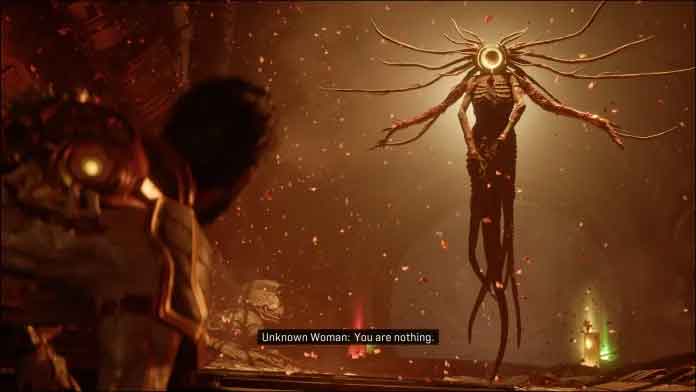
Behold the Yellow: The Story of SAROS
SAROS takes place on the mysterious planet Carcosa, a world that has become the obsession of the powerful Soltari Corporation. After multiple expeditions — Echelon I, II, and III — disappeared without explanation, a final team known as Echelon IV is sent to uncover the truth. You play as Arjun Devraj, an enforcer tasked with investigating the fate of previous crews, recovering valuable assets, and somehow surviving the nightmare waiting on the planet.
What initially feels like a simple recovery mission slowly transforms into something far darker. After a traumatic event early in the expedition, Arjun begins uncovering the horrifying truth behind Carcosa and the entities hidden within it. The planet doesn’t simply attack its victims physically — it slowly invades their minds, feeding on trauma, fear, obsession, and desire.
The cosmic horror inspiration is impossible to ignore, especially if you’re familiar with The King in Yellow by Robert W. Chambers. The recurring yellow imagery, references to the “Yellow Shore,” and the gradual collapse of sanity feel like a direct love letter to classic cosmic horror storytelling.
What impressed me most was the writing itself. The audio logs are genuinely disturbing, slowly revealing how members of previous expeditions became obsessed with Carcosa’s twisted “beauty.” The crew of Echelon IV — Tarn, Sheridan, Kayla, Jerome, and Stack — all feel believable and memorable despite the game’s dark atmosphere constantly pulling them toward madness.
Then there’s Arjun himself, portrayed brilliantly by Rahul Kohli. At first, he appears to be a typical action-game protagonist searching for his missing wife, Nitya. But as the story progresses, the game slowly reveals someone far more broken and emotionally layered. Themes of trauma, cultural expectations, identity, and power are explored surprisingly well through his character arc.
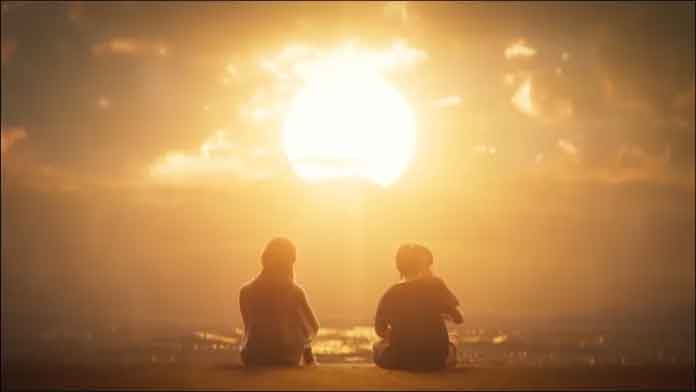
A Planet Driven by Madness
One of the strongest aspects of SAROS is the way Carcosa corrupts absolutely everything around it — not just humans, but technology as well. The gradual changes in the behavior of your suit AI are subtle at first, but become increasingly unsettling as the story progresses.
The game constantly blurs the line between reality and manipulation, which creates a lingering sense of paranoia throughout the campaign.
That said, I do think the Teen rating slightly limits the horror potential. Some body horror moments feel toned down, which weakens the impact of certain scenes. The true ending — unlocked after extensive post-game content — is also a bit too vague for my taste and leaves several major questions unanswered.
Gameplay: Roguelike Chaos Done Right
Fortunately, SAROS is just as strong mechanically as it is narratively. At its core, it’s a third-person roguelike shooter mixed with heavy bullet hell mechanics. Every run takes players through beautifully designed biomes filled with increasingly dangerous enemies and brutal boss encounters.
Combat revolves around managing three types of projectiles — blue, yellow, and red — each demanding a completely different reaction. Blue attacks can be absorbed for energy, yellow projectiles corrupt your health bar, while red attacks require precise movement or perfectly timed parries.
That constant decision-making creates a combat loop that feels intense, fast, and extremely satisfying. During some boss fights, the screen becomes so overloaded with projectiles that the game almost feels like a modern sci-fi version of Touhou Project.
Weapons and artifacts provide a solid amount of build variety, although balancing isn’t perfect. Some weapons, especially the shotgun, feel far less useful than others during late-game encounters. Still, the overall gameplay loop is addictive enough that I constantly wanted to jump into “just one more run.”
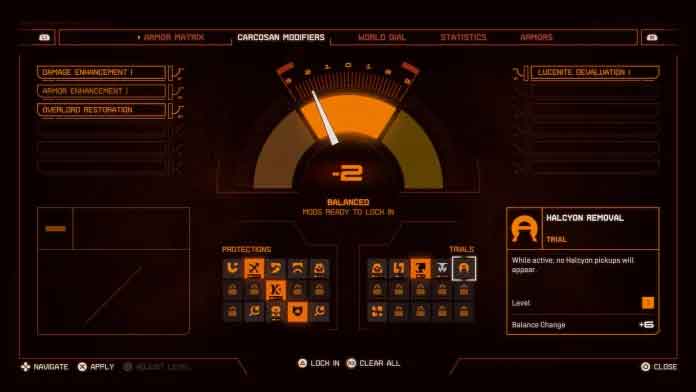
Stunning Presentation
Visually, SAROS is absolutely gorgeous. The art direction and environmental design are among the best I’ve seen in recent years. Locations like the Cathedral and the mysterious Yellow Shore are simultaneously beautiful and terrifying.
The game also makes fantastic use of lighting, particle effects, and environmental storytelling to create a world that constantly feels hostile yet hypnotic.
If possible, this is absolutely a game worth experiencing on a high-end display because the atmosphere and visual presentation are a huge part of what makes Carcosa feel so memorable.
Final Verdict
SAROS is bold, atmospheric, emotionally complex, and mechanically satisfying. Housemarque successfully combines cosmic horror storytelling with intense roguelike gameplay in a way that feels unique even within today’s crowded AAA landscape.
It’s not flawless. Certain weapons and artifacts could use better balancing, while the post-game ending feels slightly underwhelming compared to the emotional journey leading up to it. Still, those flaws barely diminish the overall experience.
As someone who has grown increasingly drawn toward horror stories and psychologically driven narratives, SAROS completely exceeded my expectations. It stands as one of the strongest original PS5 exclusives in recent years and already feels like a serious Game of the Year contender.
If you own a PlayStation 5, this is absolutely a game worth experiencing — and honestly, I already can’t wait to return to Carcosa for another run.
A review copy of the game was provided by PlayStation.