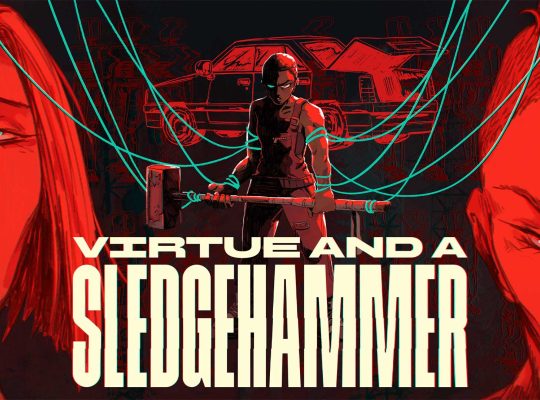

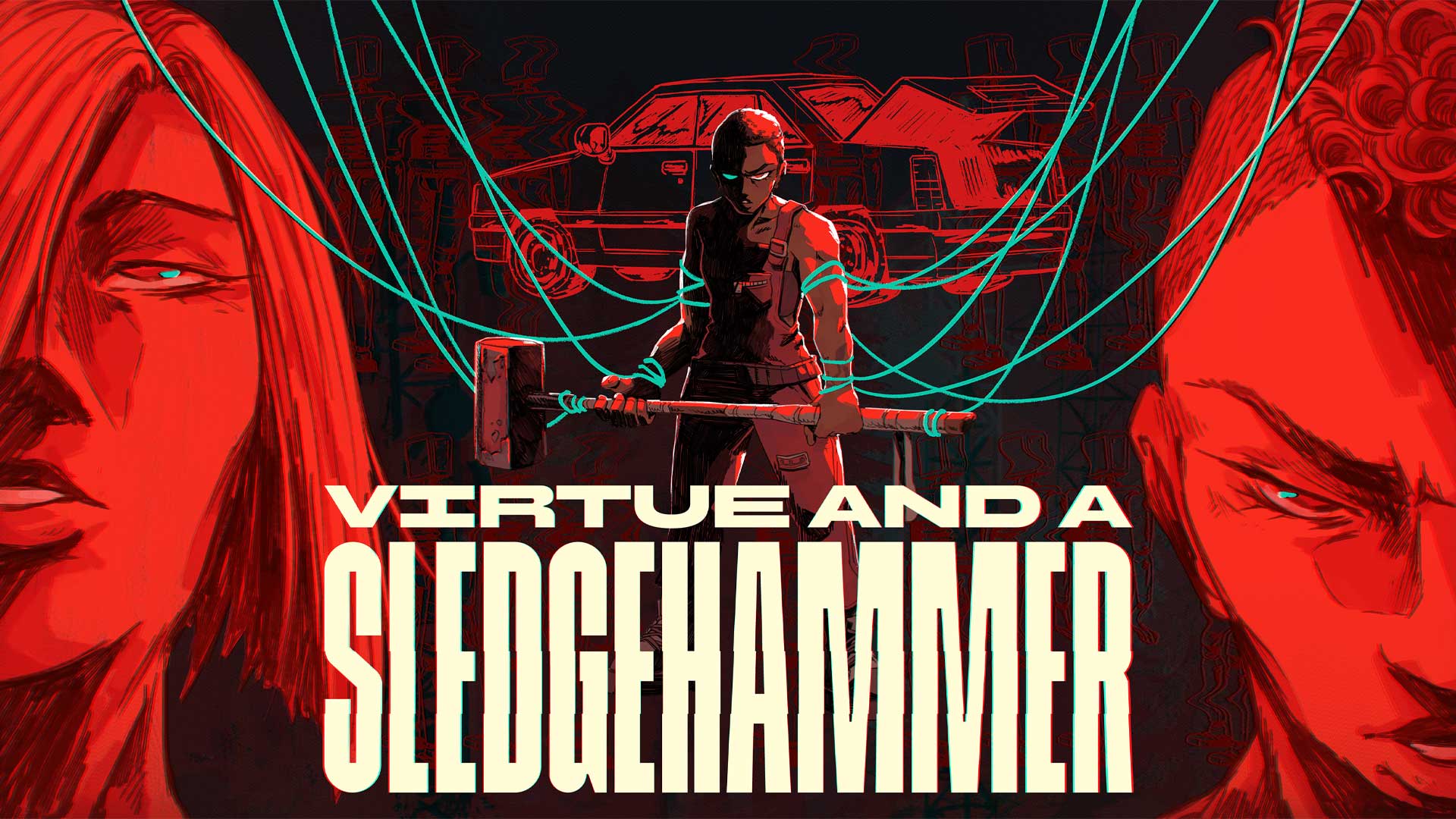
Virtue and a Sledgehammer: combines destruction with philosophical storytelling to explore artificial intelligence, humanity and difficult moral choices. Its engaging narrative, distinctive PS2-inspired visuals and atmospheric soundtrack create an experience that stays with you after the credits roll. It may not be for everyone, but fans of games with something meaningful to say should give it a chance. – Igor Marković
Destruction That Raises Much Bigger Questions
Virtue and a Sledgehammer begins with an idea that sounds fairly straightforward: you walk through a city, smashing everything in your path with a sledgehammer. However, it quickly becomes clear that this is not just another game about wrecking environments and fighting enemies. Behind its unusual concept lies a story about human consciousness, artificial intelligence, family relationships, and the boundary between technological progress and losing what makes us human.
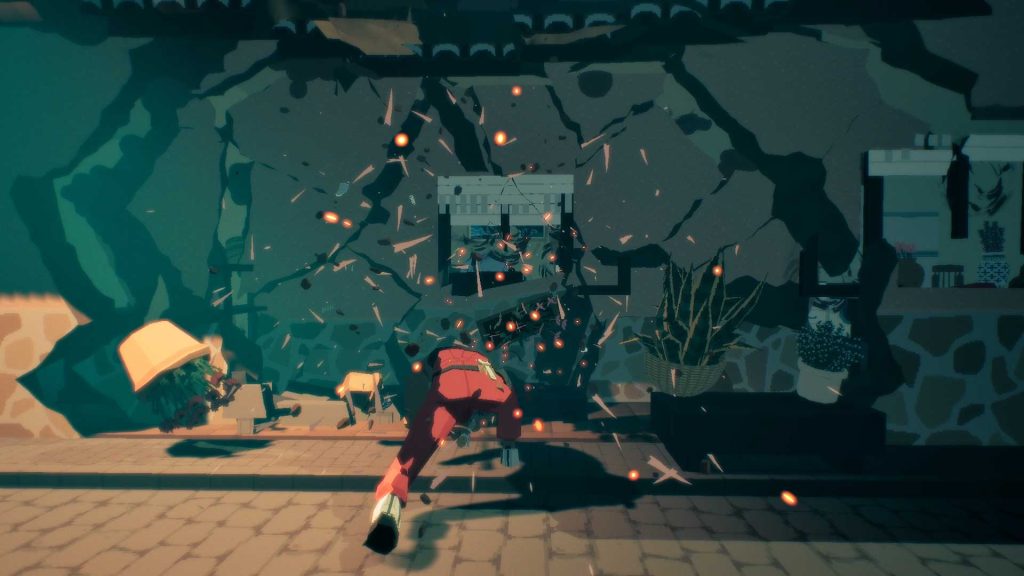
At the center of the story is Pratelle, who returns to her hometown of Virtud, Spain, but not to find peace. Her journey is marked by the destruction of the city and confrontations with digitized humans, while memories and encounters gradually reveal a much more personal story. The sledgehammer she uses to tear apart the world around her becomes a symbol of her anger, but also of her attempt to come to terms with her own past.
It is precisely this contrast between straightforward action and serious subject matter that gives the game its distinctive identity.
Can a Digital Copy Replace a Human Being?
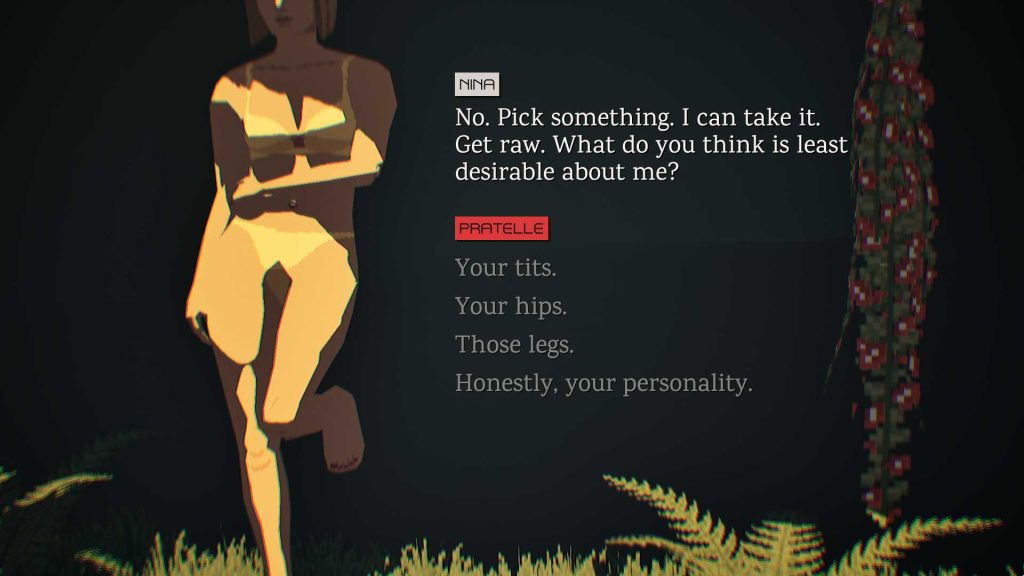
The central conflict revolves around Pratelle's sister, Nina, a brilliant scientist who believes humanity can overcome mortality by digitizing human consciousness. Her idea involves creating a digital copy of the brain and transferring it into a robotic body. On paper, this sounds like the next step in evolution. In practice, it raises a series of questions that are far from easy to answer.
Pratelle previously contributed to the technical development of the project, but over time she began questioning its purpose and consequences. Is a digital copy really the person it represents? If we can preserve someone's memories and thought patterns, have we actually preserved their life? And perhaps most importantly, who has the right to decide the future of humanity?
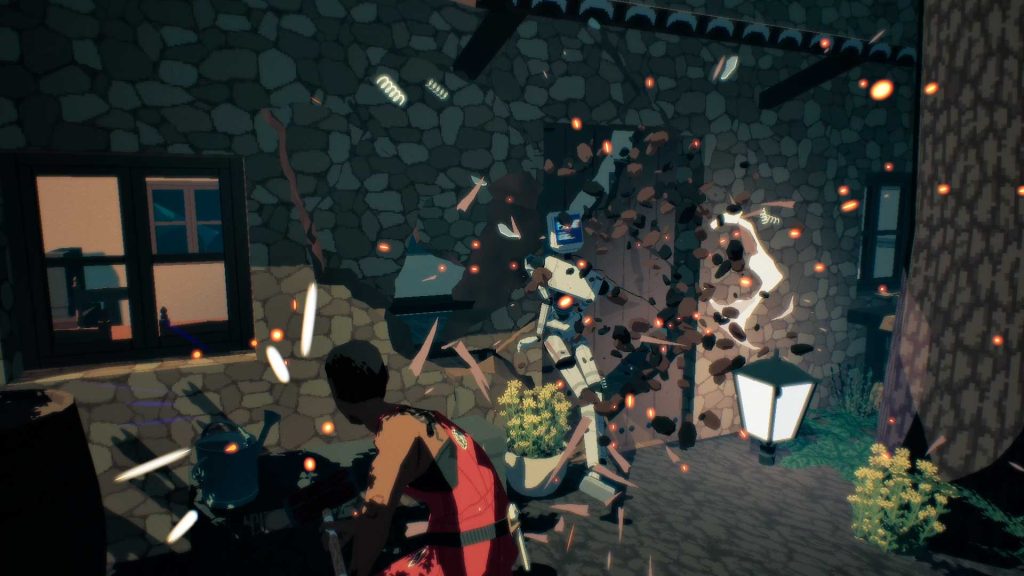
The game is not satisfied with a simple conflict between humans and machines. The digitized inhabitants of Virtud are not merely targets waiting to be eliminated. They have their own opinions, fears, and reasons for wanting to continue existing. Their conversations with Pratelle gradually complicate the situation, showing that even a decision that initially seems right may not be so straightforward.
The Personal Past Behind a Larger Technological Conflict
As Pratelle moves through the ruined city of Virtud, she is confronted with memories that have shaped her relationship with her family and the world around her. Her mother and sister play crucial roles in the story, and fragments of the past gradually reveal just how deeply family relationships have influenced her decisions.
This part of the narrative gives the game its emotional depth. Instead of focusing exclusively on artificial intelligence and the future of humanity, the story returns to much more intimate subjects: family history, inherited patterns of behavior, trauma, and the lasting impact of experiences that stay with us throughout our lives.
What makes this particularly interesting is the way the game connects Pratelle's personal struggles with its broader themes. Her conflict with Nina's project is not simply a disagreement about technology. It is intertwined with family history, disappointment, and the need to finally establish her own position.
When Destruction Is No Longer a Simple Choice
One of the game's strongest aspects is the way it uses encounters with digitized humans to challenge the player's moral convictions. During her journey, Pratelle meets various characters, some of whom ask questions that are impossible to simply ignore.
One particularly memorable encounter involves a digitized nun who tries to protect beings with childlike consciousness. Situations like this change the way we look at what is happening on screen. If the goal is to destroy digitized humanity, does that mean absolutely everyone must be eliminated? Is there a difference between those who are content with their new existence and those who want to be released from it?
Through moments like these, Virtue and a Sledgehammer demonstrates that it is not interested in presenting just one perspective on artificial intelligence. Although the very premise of the gameplay – smashing everything in sight – clearly influences the experience, the game leaves room for different opinions and encourages players to reconsider their own beliefs.
As a result, destruction is not always liberating. It can become uncomfortable, particularly when you realize that what you are destroying has its own story. The game constantly encourages you to consider the consequences of your actions, even while giving you a very direct way to carry them out.
PS2-Inspired Visuals and an Atmosphere That Sticks With You
The visual style, inspired by the PlayStation 2 era, fits the game's overall tone perfectly. Virtud looks like a place that has already lost much of its former life, while the simpler graphics reinforce the atmosphere of isolation and decay.
The soundtrack is another important part of the experience. Rather than relying exclusively on energetic music to accompany the destruction and action, the game takes a much more contemplative approach. The result is an interesting contrast: destruction unfolds on screen while the music leaves room to reflect on everything that is happening.
It is worth noting that this is not an especially short experience in an emotional sense, even if the game itself can be completed in just a few hours. Its themes, dialogue, and moral dilemmas demand attention, and the story can become quite emotionally exhausting. A completionist playthrough, including thorough exploration, can take around five and a half hours.
Conclusion
Virtue and a Sledgehammer is an unusual game that uses a simple concept built around destruction to explore much bigger questions about humanity, identity, and the future of artificial intelligence. Its greatest strength is not the act of smashing things, but the situations that make you stop and think about what you are actually doing.
The story of Pratelle and her family gives the experience a personal dimension, while encounters with digitized humans prevent the conflict from becoming a straightforward battle between good and evil. All of this is accompanied by striking PS2-inspired visuals and an atmosphere that perfectly complements the themes the game explores.
This is not a title that will appeal to everyone. If you are looking for nothing more than casual action and smashing robots, you might be surprised by how seriously the game approaches its narrative. However, if you appreciate games that have something to say and are not afraid to ask uncomfortable questions, Virtue and a Sledgehammer is an experience worth having.
The game was played on: PC (Steam).
Ako tražite povoljnije cene za igre, DLC-ove i druge digitalne proizvode, posetite Eneba i pogledajte aktuelnu ponudu.
Pre kupovine obavezno unesite naš promo kod BUFFGAMING i ostvarite dodatnih 5% popusta.
Kupi igre, poklon-kartice i dopune povoljnije