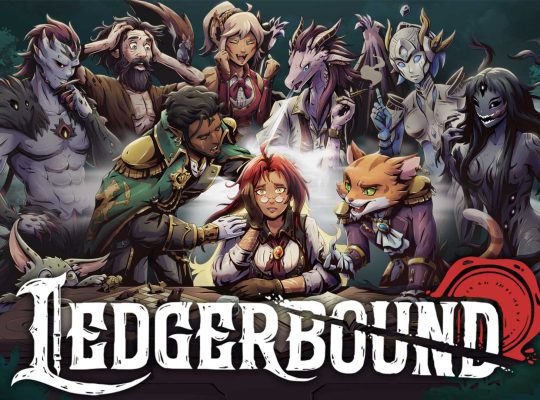

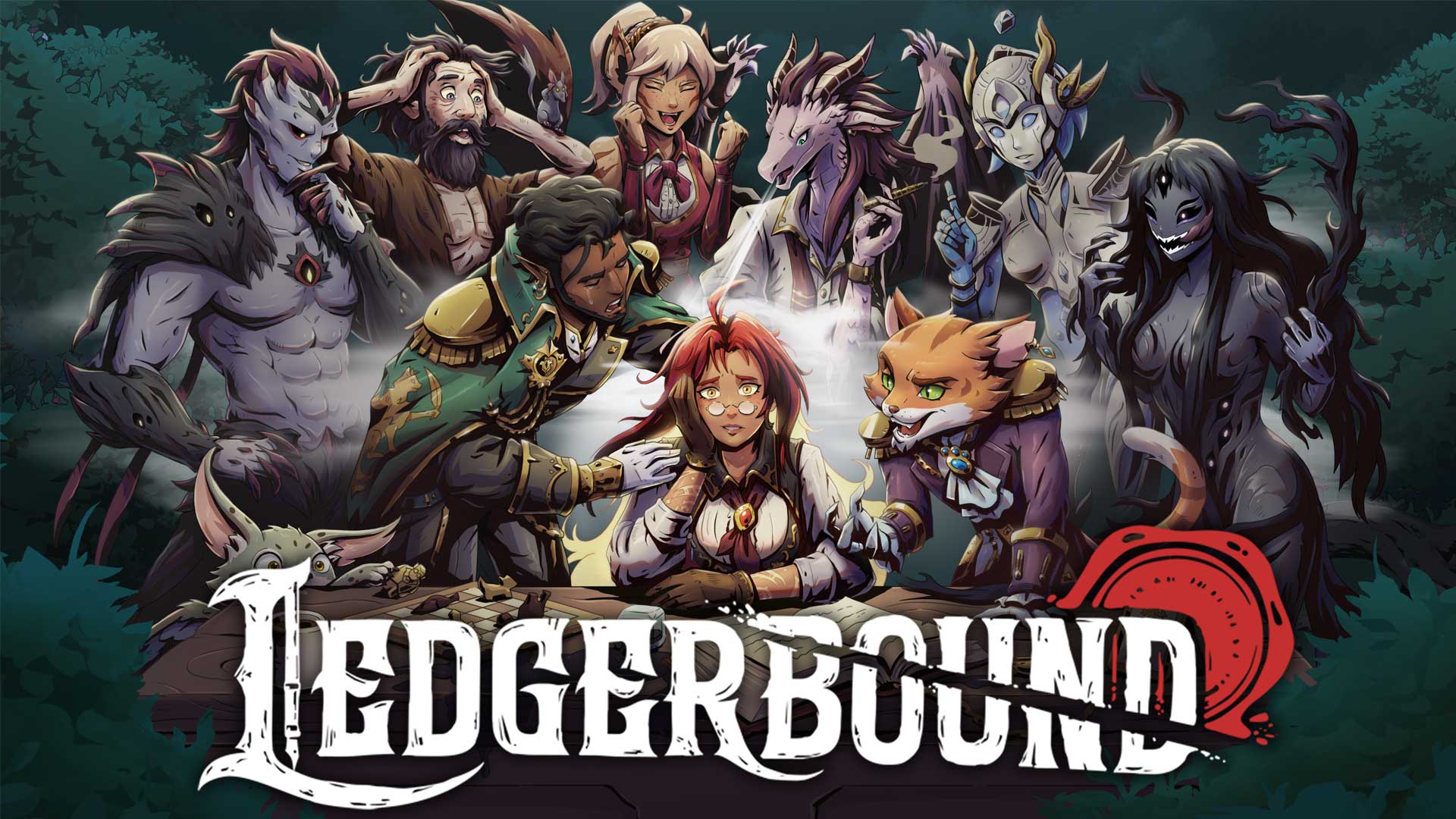
Ledgerbound: Ledgerbound is a refreshing tactical RPG that combines the familiar Fire Emblem formula with sharp humor, memorable characters, and an unusual time-management system. Its battles offer plenty of room for strategy, while the relationships and corporate satire give the game an identity of its own. It isn't perfect, but it's different and entertaining enough to deserve the attention of tactical RPG fans. – Miloš Markovic
Tactical RPGs often rely on a familiar formula: a grid-based map, turn-based combat, character progression, and relationships between party members. Ledgerbound takes all of that and drops it into a world where heroes are employees, adventures have budgets, and even saving the world might require approval from the company.
At the center of this unusual adventure is Rayna, an insurance adjuster who works for a company that insures heroes. Her job is rather bizarre – whenever an insured hero dies, Rayna has to find a way to deny their claim. Everything works perfectly until the exact heroes who happen to be among her most important clients are killed, and she can't find a way to reject their claims.
What starts as another day at the office quickly becomes a much bigger problem. Rayna has to head into the field, assemble her own group of heroes, and face an unknown threat. All while, naturally, keeping an eye on business performance. That clash between classic fantasy adventure and modern corporate culture is at the heart of what makes Ledgerbound so entertaining.
A Fantasy World Where Even Heroes Have Jobs
One of the game's best decisions is the way its humor isn't limited to occasional jokes. It's built directly into the world.
Ledgerbound is a fantasy RPG, but its characters talk and behave like people working at a modern company. Heroes have responsibilities, the company tracks performance, there are quotas and performance reviews, and even personal relationships can come with their own corporate twist.
It works because the game doesn't try to turn every moment into a joke. There's still a genuine adventure and a story that wants you to care about what's happening.
The writing is definitely one of the game's biggest strengths. The characters have enough personality to be memorable, while the excellent voice acting adds even more to their humor and individuality. Thanks to that, Ledgerbound manages to create a group of heroes you actually want to spend time with between battles.
Tactical Combat With Clear Fire Emblem Influences
If you've played Fire Emblem, much of the combat system will feel immediately familiar.
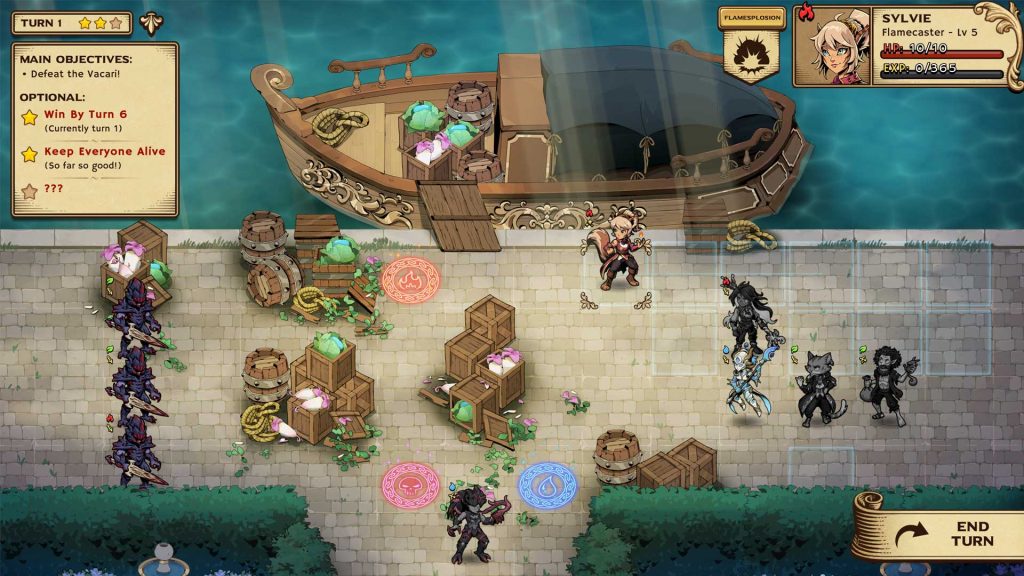
Battles take place turn by turn on a grid, and positioning your units correctly is the foundation of any serious strategy. Every party member has their own abilities and role, so simply sending your strongest character forward and hoping for the best isn't enough.
Ledgerbound also uses an elemental system that adds another layer to combat. Characters belong to one of three elements – Fire, Water, and Plant – which determine strengths and weaknesses during attacks.
An additional layer comes from Sigils, special tiles found on the battlefield. Placing a character on a matching Sigil boosts their stats, while standing on an opposing-element Sigil can have the opposite effect.
This means you're not only thinking about who you want to attack, but also where your unit will end up after the move.
Maps also feature various hazards and environmental dangers, such as vines and falling rocks, turning the battlefield itself into another part of the puzzle.
Every Battle Comes With Another Objective
One of the better details in the combat system is the inclusion of additional Combat Challenges.
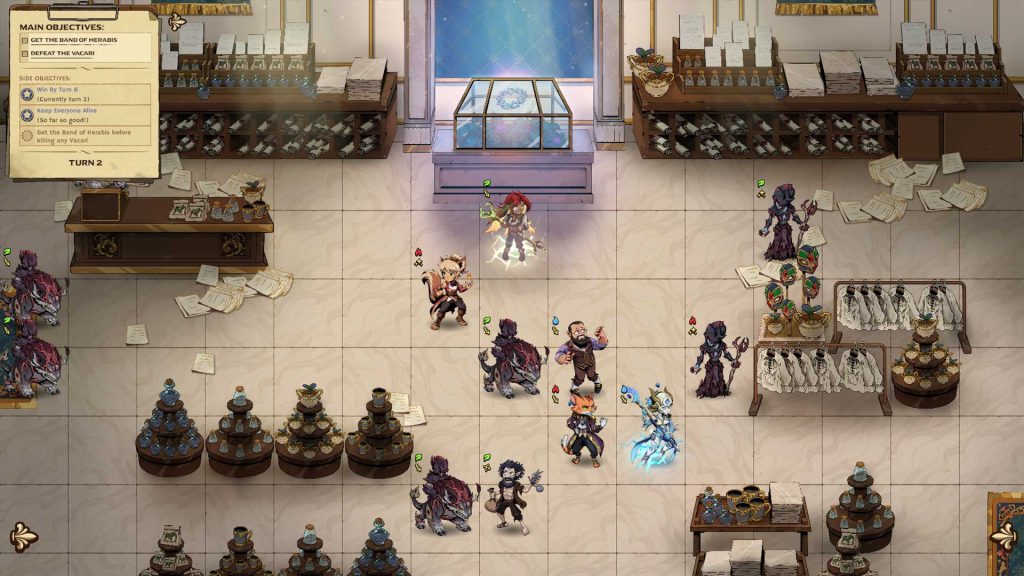
Besides simply winning, missions often give you extra objectives to complete. One might require you to finish the battle within a certain number of turns, while another could require you to make sure nobody in your party dies. The third objective depends on the specific mission and may involve using a particular character's ability or meeting another special condition.
The good thing is that these challenges rarely feel forced. The maps are designed in a way that makes completing them realistically achievable, but you still have to think ahead about how the battle is going to unfold. That's where Ledgerbound becomes particularly interesting.
Instead of thinking only about your next move, you start planning several moves ahead and trying to predict how the entire encounter will develop.
The Most Interesting Part Happens After the Battle
If combat is the heart of Ledgerbound, then its time-management system is what gives the game its own identity.
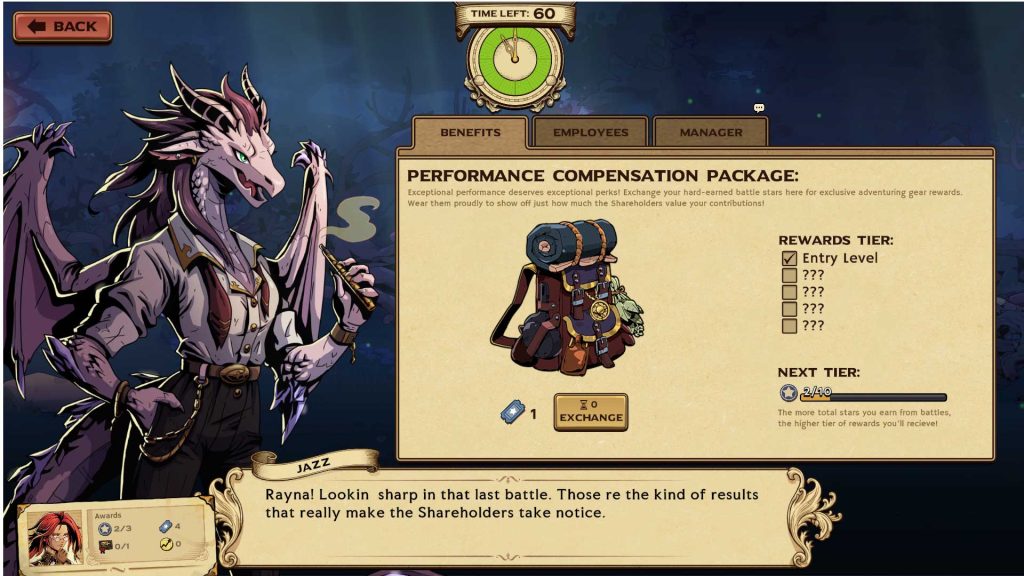
After each battle, you have a limited amount of time that can be spent on different activities. You can equip your characters, replay previous battles to complete missed challenges, or simply spend time with members of your party.
And that's where the real decisions begin.
New equipment can significantly improve a particular character, but equipping it takes time. If you're already happy with your gear, you can instead use that time to talk to someone in your party and develop your relationship with them.
Because of this, every period between battles feels like its own small decision. You never have enough time to do absolutely everything you want.
This was one of the biggest surprises for me. Limited-time mechanics can often be frustrating, but here the system is integrated well enough into the structure of the game that it forces you to think about your priorities.
Gear and Progression Give You More Reasons to Experiment
The progression system isn't particularly complicated, but it gives you enough room to customize your party.
Completing Combat Challenges gives you tickets that can be used to obtain new equipment, after which you have to decide who would benefit from it the most.
It sounds simple, but when combined with the limited amount of time available between missions, it becomes more interesting than I expected. You have to decide who needs the new equipment most and whether it's worth spending your precious time equipping it.
Different promotions and character development options also allow you to gradually build a party that fits your preferred playstyle.
It doesn't reach the depth of the most complex Fire Emblem titles, but that isn't really the goal. Ledgerbound is much more accessible while still providing enough strategic decisions to avoid feeling shallow.
The Characters Are a Reason to Return to Camp
Between battles, you aren't forced to think only about stats and equipment.
You can also spend time with your companions.
Relationships develop through conversations, and the personalities of the characters are one of the reasons this part of the game is so enjoyable. The corporate humor returns here as well, but now through the relationships between people who have been sent together to do what is essentially an impossible job.
Romantic relationships are also part of the game, but they don't feel like a completely separate system added simply to check another feature off the list. They're part of the wider relationship system and give you another reason to spend your limited time talking to your party members.
That's something Ledgerbound understands particularly well: if you want a tactical RPG to be truly engaging, it's not enough to make good battles. The player needs a reason to care about the people they're taking into those battles.
Humor That Mostly Hits the Mark
Corporate satire can become tiring very quickly. If every other line is about HR, quotas, or work, the joke can lose its charm.
Fortunately, Ledgerbound mostly avoids that trap.
The humor comes from the clash between two worlds. These characters are fantasy heroes, but many of their problems are surprisingly mundane. They have to worry about work, performance, and relationships while an adventure that would normally be considered an epic quest to save the world is unfolding around them.
The voice acting helps considerably. Familiar names such as Matthew Mercer, Ben Starr, Stephanie Kerbis, and Jeff Leach give the characters even more personality, while some performances are memorable simply because of the way certain scenes are delivered.
Where Ledgerbound Still Has Room to Improve
While I enjoyed most of its systems, Ledgerbound isn't without weaknesses.
Combat can become predictable once you find a party composition and strategy that works for you and start relying on it repeatedly. Experienced tactical RPG players may also find that the system doesn't provide enough of a challenge to remain demanding throughout the entire experience.
The limited time between missions is an interesting idea, but it won't appeal to everyone. If you're the kind of player who likes to completely optimize every system before moving forward, being forced to choose how to spend your time can occasionally become frustrating.
The humor is also a matter of taste. Most of the jokes work, but corporate satire appears often enough that some players may feel certain jokes start to repeat themselves.
These are more issues that prevent Ledgerbound from being excellent rather than problems that make it a bad game.
Final Verdict
Ledgerbound is one of those tactical RPGs that takes a familiar formula and finds a clever way to make it its own.
The Fire Emblem influence is obvious, but the game isn't a clone. Its elemental system, Sigils, additional battle objectives, and limited time between missions give it an identity of its own. Add in well-written characters, strong voice acting, and enough corporate chaos to turn a fantasy world into one giant office, and you get something that feels familiar while still being different enough to stand out.
What I enjoyed most is that Ledgerbound understands that a good tactical RPG isn't only about figuring out how to win the next battle. It's also about who you take with you, how you develop your party, and how you choose to spend the limited time you have between missions.
If you enjoy Fire Emblem, Tactical Breach Wizards, or tactical RPGs that don't take themselves too seriously, Ledgerbound is definitely a game worth keeping an eye on.
Score: 8.5/10
Ledgerbound doesn't try to reinvent the tactical RPG. Instead, it takes a familiar formula and adds memorable characters, smart time management, and enough corporate chaos to give it a personality of its own. The result is one of the more interesting indie tactical RPGs worth keeping on your radar.