
RIFTSTORM: RIFTSTORM has an excellent foundation and a highly enjoyable combat loop. Its varied Weavers, weapons and build options leave plenty of room for experimentation, while co-op makes the experience even more engaging. Mission repetition and the balance of certain systems are currently its biggest weaknesses, but as an Early Access title, this is a very promising start. – NikolaOtasevic
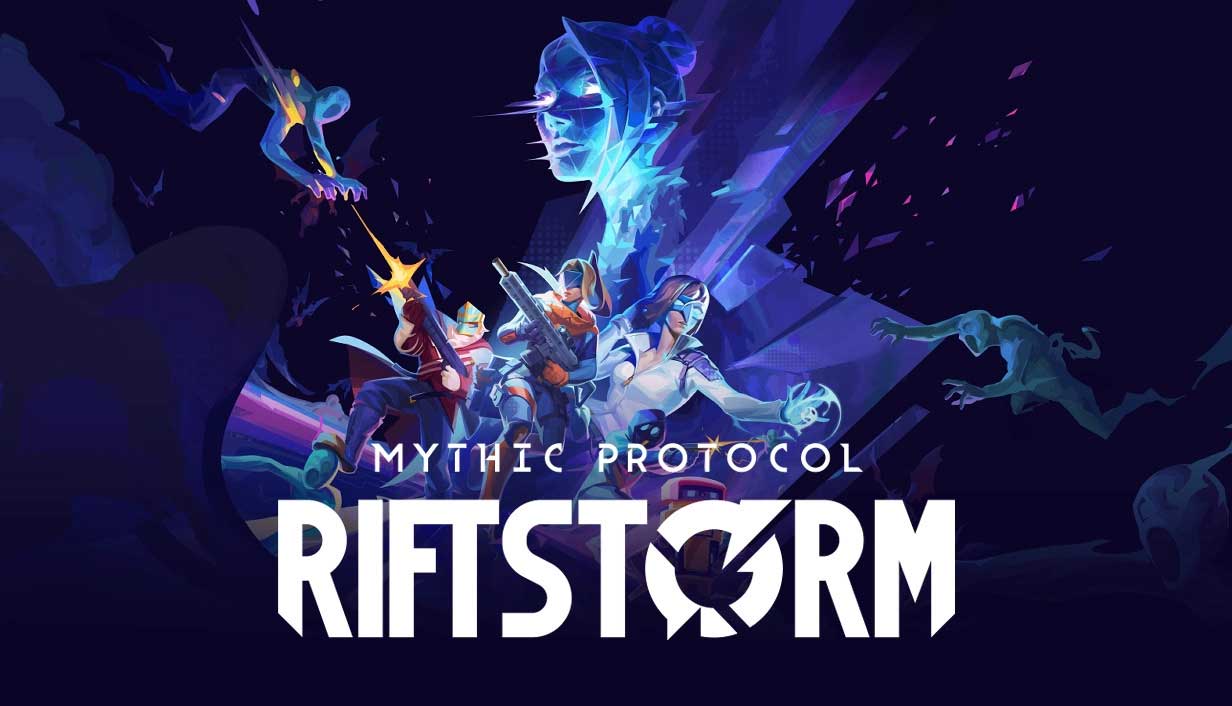
If you threw Diablo, Hades, and a co-op looter-shooter into a blender, added vampires, chemical elements, and an AI that sends you out to repair rifts in reality, you'd get RIFTSTORM.
The game entered Steam Early Access on August 11, 2026, and currently features five playable heroes, known as Weavers: Rook, Starling, Hertz, Botsy, and Caracal. It can be played solo or cooperatively with up to two other players. The developers expect Early Access to last around 18–24 months, during which they plan to add new Weavers, weapons, enemies, missions, and deeper endgame systems.
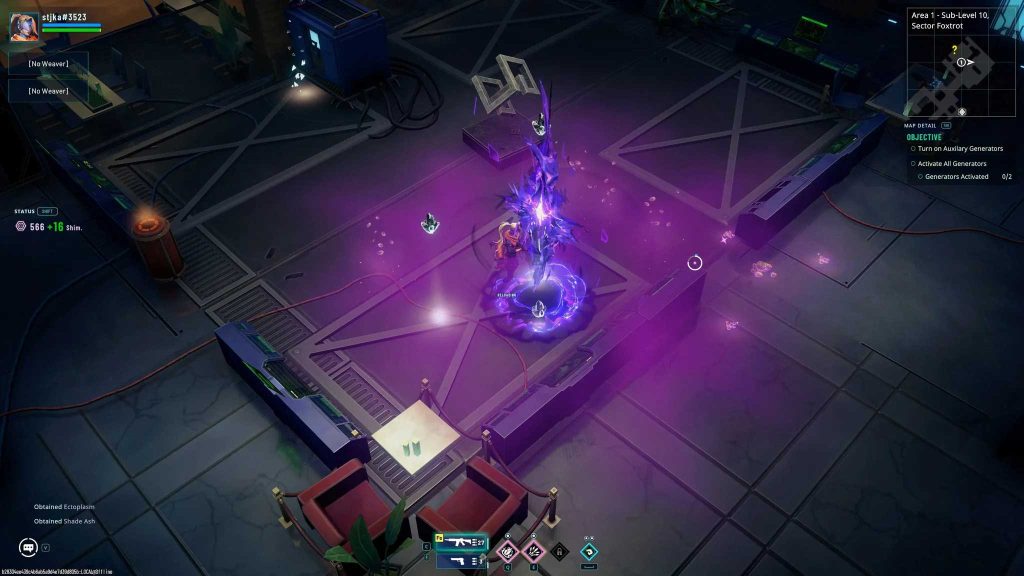
Top-Down Shooting Without Clicking Yourself to Death
RIFTSTORM is a top-down roguelite looter-shooter controlled with WASD. That might not sound revolutionary, but it works surprisingly well. Movement is precise, aiming feels natural, and combat is fast enough to make positioning genuinely important.
Each Weaver has two regular active abilities, an ultimate, a dodge, and several passive upgrades that can increase shields, damage, magazine size, or completely change the way you build your character. Every Weaver has two dodge charges that recharge, which sounds like more than enough — until a boss decides to perform six or seven consecutive charge attacks.
That's when you realize that dodge isn't a button you press whenever you panic. It's a resource you actually need to manage. In other words: you use the first dodge strategically, the second one out of fear, and after that you pray to the periodic table.
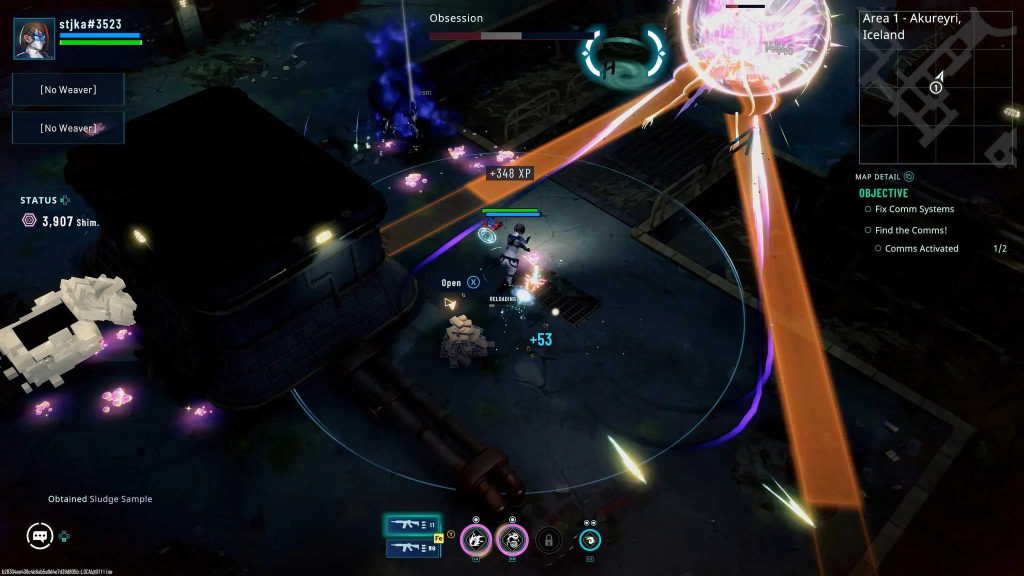
Welcome to the Hub
The small single-player campaign mainly serves as an introduction to the game's systems and a way to gradually unlock different parts of the central hub.
The hub contains several important locations. The Weaver Center is where you unlock new Weavers, while the Armory handles buying, crafting, and recycling weapons. Loadout lets you customize your equipment depending on the mission and enemies you'll be facing, while Periaptry is where you manage augments that increase your stats or dramatically change your abilities. Finally, the Mission Center is where you select missions, choose Threat Levels, and continue the main progression. The campaign isn't particularly large and isn't really the main reason to keep playing. It's more like a very long tutorial with a story attached:
“Congratulations, you now know where to buy a gun. Next assignment – survive.”
Mission Center and Threat Levels
There are currently four Threat Levels, and you can switch between them depending on which materials you're looking to farm and how willing you are to let the game remind you that your Combat Power isn't quite high enough. Each mission has a recommended Combat Power. You can obviously go below the recommendation.
You can also run across a highway blindfolded. Neither is an ideal strategy.
Missions currently come in several types:
- Urgent – standard missions with additional materials.
- Contain – defend a radar or another key objective.
- Investigate – locate portals and investigate anomalies.
- Exterminate – hunt bosses and larger threats.
- Keystone – required missions that unlock the main progression.
Each map has its own biome, such as Transit Hub, Industrial Complex, or Protocol Base, along with different enemy types and points of interest. These can include scanners, Anomaly Shimmer bounties, Class-2 Rifts, and other objectives required to complete missions. All of these missions are assigned by PAAM, an artificial intelligence responsible for monitoring Rifts around the world.
PAAM is basically your manager.
Except instead of sending you to a Teams meeting, it sends you to kill vampires.
And there's one particularly important detail: the global map is one of the few maps in gaming that actually gets Serbia right. A miracle has occurred. We're not an unidentified blob between Hungary and Greece.
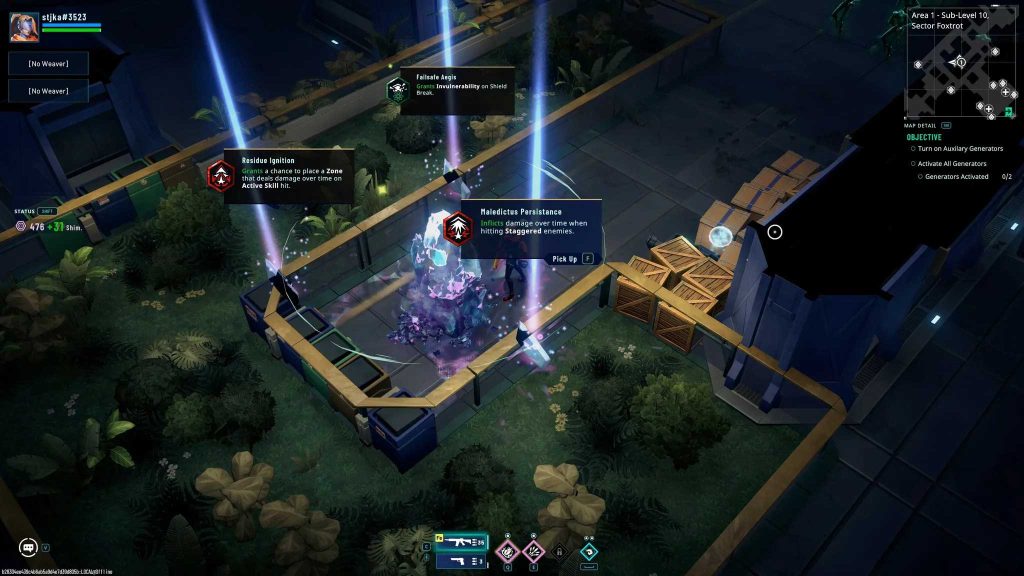
The Periodic Table Finally Has a Purpose
Enemies have elemental weaknesses represented by symbols from the periodic table: Fe for iron, Na for sodium, Ag for silver, and so on.
Certain enemy types are vulnerable to specific elements. Nennothoids, for example, can be weak to Ag, while vampires are vulnerable to Na. Using the appropriate element helps you break their shields more efficiently and opens them up for serious damage. The elemental weakness system itself isn't exactly revolutionary, but it's presented in a way that makes remembering something from chemistry class unexpectedly useful.
Although the fact that vampires are weak to sodium probably means they haven't been eating enough salty food.
Starling – Woman, Glasses and an Infinite Amount of Bullets
My favorite Weaver is Starling.
Not just because she's the coolest girl with glasses in the game, but because she has excellent solo potential while also providing serious support for the entire team.
Her first ability deals heavy stagger and stuns smaller enemies, while also doing solid damage to bosses. Her second ability deploys a Kinetic Screen, a barrier that blocks projectiles. Any allied bullet fired through it gets a guaranteed critical hit and increased range.
Her ultimate refills ammunition, while the resulting bullets can pierce multiple enemies and gain a homing effect.
In other words, you don't have to be completely accurate because Starling temporarily turns your weapon into an administrative error that hits everything on screen.
A special Legendary Augment transforms her standard barrier into a huge X-shaped structure. This makes it much easier to shoot through it from different angles and trigger those guaranteed critical hits.
The problem is that Legendary Augments don't just modify abilities. They also provide extremely powerful multipliers for health, shield, and attack.
They're so strong that regular augments currently feel more like participation trophies.
Balance will obviously need some work during Early Access.
Weapons Have Weight and Personality
Weapons aren't simply the same models with different numbers attached to them. Shotguns and sniper rifles have a distinct charge feel, SMGs burn through magazines quickly, while rifles and pistols offer more traditional and controlled firing patterns.
During missions, you'll find Lythogram upgrades and build a roguelite setup that can become completely ridiculous by the end of a good run.
You stack bonuses, create synergies, and try to become powerful enough before the enemies do the same. The environment isn't just decoration either. You can trigger traps, activate turret systems, and find small support robots that shoot enemies, repair you, or follow you around. They're incredibly useful. Until they get stuck behind something and start reconsidering their life choices.
Death Doesn't Take Everything – It Just Ruins Your Favorite Gun
One of the more interesting systems is Weapon Scarring.
If you die or fail to extract from a mission without a teammate who can revive you or an extra life, weapons you brought with you can become Scarred.
The weapon remains the same, but one of its positive modifiers is replaced with a random negative affix. Sometimes you'll get something manageable, like a smaller magazine. Other times, your weapon might gain a chance to damage you while you're shooting.
Yes, your gun can look at the entire situation and decide that you are the real boss fight. The developers are working on additional ways to repair and manage Scarred weapons, and they've asked players not to throw them away for now. A little late for those of us who recycled them during the beta without thinking twice, but hey – Early Access is a shared journey through our mistakes.
Bosses, Vacuums and Controlled Chaos
The bosses I've encountered aren't overloaded with endless abilities, but fights can turn around in a second if you stop paying attention. Attack telegraphs are generally very well designed, so the game usually gives you a clear warning about what's coming. If you die, you can usually understand why you died.
The only serious issue I've had is with vacuum abilities. They can be brutally strong when used by a boss, especially if you're pulled directly into another attack that can practically one-shot you. Of course, when you get a vacuum perk yourself, it's perfectly balanced, fair, and brilliantly designed. That's just how video games work.
Technical Performance
The gameplay is very smooth and remains readable even when the screen is filled with enemies, projectiles, visual effects, and players.
I didn't encounter any serious stuttering or bugs that ruined a run. For a game that has only just entered Early Access, that's an excellent start.
The developers have openly stated that higher Threat Levels, progression, the Periapt system, and enemy balancing are still being developed, so players should expect changes, resets, and the occasional completely broken build. The biggest technical caveat is that the game requires a constant internet connection even when playing solo, although a special offline mode has recently been added.
Music From the Wrong Universe
My biggest complaint right now is the music.
Sometimes it completely misses the atmosphere of the scene.
A Rift in reality is opening, dozens of monsters are trying to eat you, your teammate is on fire, a boss is vacuuming half the map – and the soundtrack sounds like someone turned on a random Spotify playlist and went to make a sandwich. It's not bad enough to ruin the gameplay, but it's strange enough that you'll notice it.
Final Verdict
RIFTSTORM is an excellent roguelite looter-shooter with a very enjoyable combat loop, a good selection of weapons, interesting Weavers, and plenty of room for creating ridiculous builds.
Missions can become repetitive, regular augments currently struggle to compete with Legendary ones, and several systems clearly still need balancing.
However, the core combat is so good that the repetition isn't a major problem yet.
You enter a mission, collect loot, create a completely broken build, overestimate your abilities, lose your favorite weapon, and return to the hub to do it all over again.
That's the loop. And it's a very fun loop.
Score: 7/10
An excellent foundation, smooth gameplay, and plenty of potential – someone just needs to take PAAM's Spotify account away.
RIFTSTORM was played and reviewed on PC. This review is based on our experience with the PC version of the game.