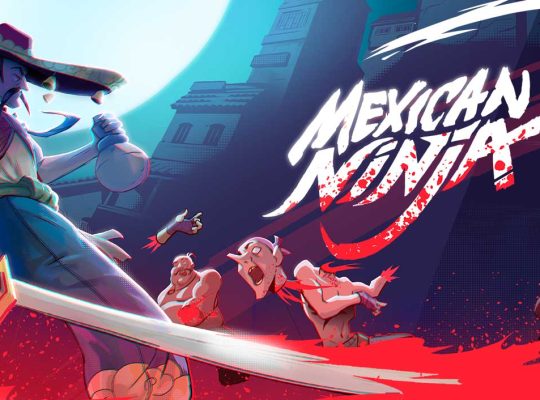

Mexican Ninja: Mexican Ninja brings Mexican and Japanese culture together in an over-the-top action adventure built around fast-paced combat, outrageous special moves, and unapologetically crude humor. Its roguelike elements and varied builds offer plenty of room for experimentation, although repetitive levels, limited enemy variety, and occasional readability issues keep it from reaching its full potential. Still, fans of characterful beat ’em ups will find plenty to enjoy in this unusual adventure. – Miloš Markovic
At first glance, Mexican Ninja sounds like one of the wildest ideas anyone could come up with: a Mexican ninja in a city where Japanese and Mexican cultures have collided, while drug cartels and the yakuza have merged into a single criminal force known as the Narkuzes. Mexico and Japan might not have much in common on paper, but when you throw them together in this unusual combination of katanas, sombreros, neon-lit streets, and absurd humor, the result is far more interesting than you might expect. That willingness to take its central idea to the extreme is what makes Mexican Ninja immediately stand out, and the more time you spend in its world, the clearer it becomes that beneath all the jokes and madness lies a surprisingly solid action game.
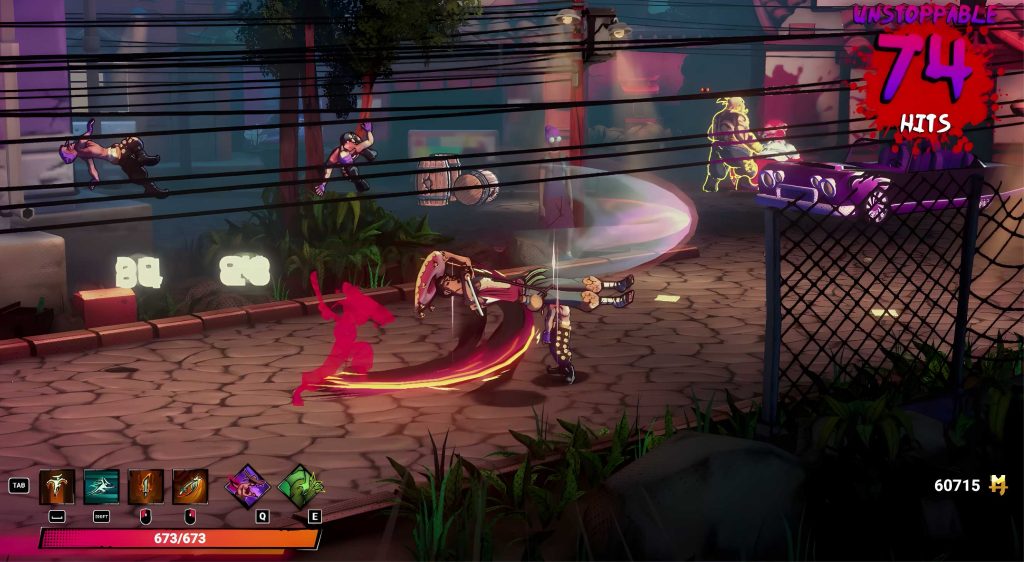
Nuevo Tokyo – A City Where Mexico and Japan Collide
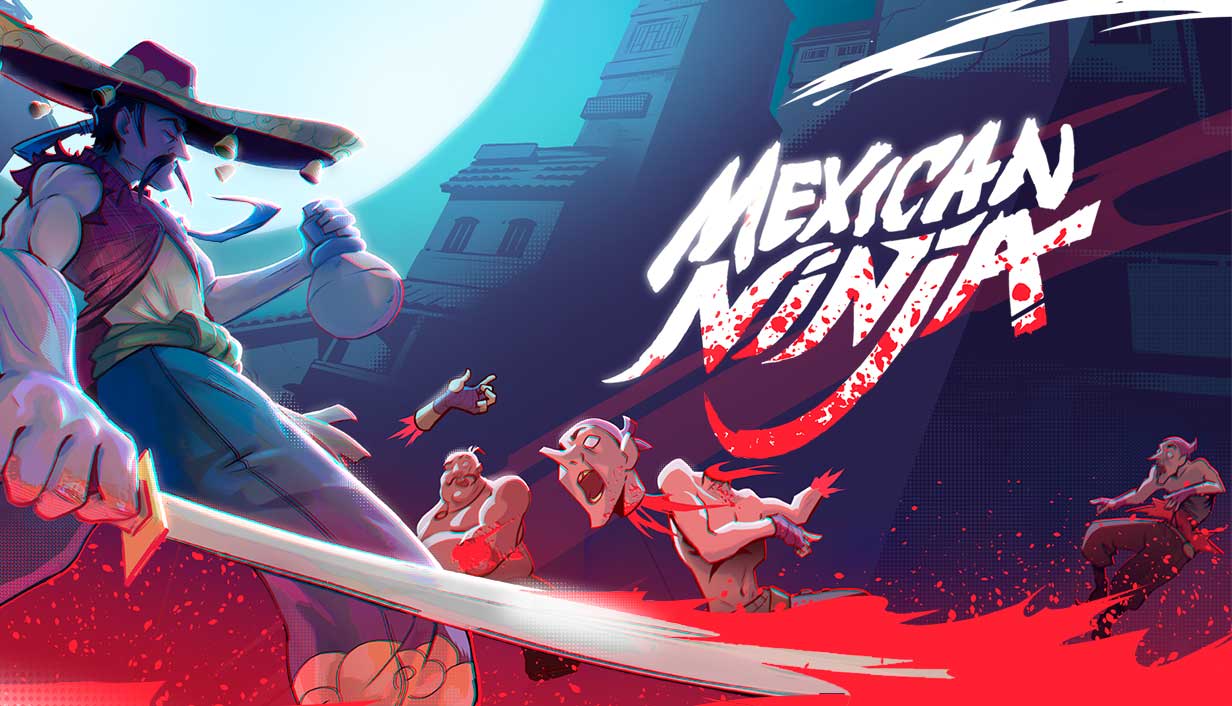
The story takes place in Nuevo Tokyo, a dystopian city born from a clash between a Japanese invasion, complete with the obligatory robots, and Mexican culture, resulting in a world shaped by fire, power, and betrayal. Out of this conflict emerged a society in which drug cartels and the yakuza merged into a single criminal class known as the Narkuzes, who now control the city and have no intention of giving up their power without a fight. You take on the role of Juan, a Mexican ninja attempting to take the city back from them, and the premise alone makes it clear that the game has no intention of taking realism too seriously.
The visual identity follows this concept from beginning to end, mixing sombreros and katanas, tacos and cherry blossoms, Japanese motifs, and Mexican folklore in an environment filled with neon lights, grime, and cartoonish violence. The cel-shaded graphics give everything the appearance of an animated movie or an arcade game from the 1990s, only with considerably more attitude and far less restraint. What matters is that this combination doesn't feel like a random collection of stereotypes thrown together without direction; instead, it feels like a world designed from the ground up to be exaggerated, colorful, and fully aware of just how absurd its central idea really is.
The atmosphere isn't built on the city's appearance alone, as the characters and locations you encounter also play an important role, from the central hub where you train with el Mero Mero Sensei to the streets packed with enemies and the boss encounters that await you. The game never tries to make its premise seem more serious than it actually is, which works in its favor, because any attempt to turn the whole thing into an overly serious crime drama would probably weaken one of its biggest strengths.
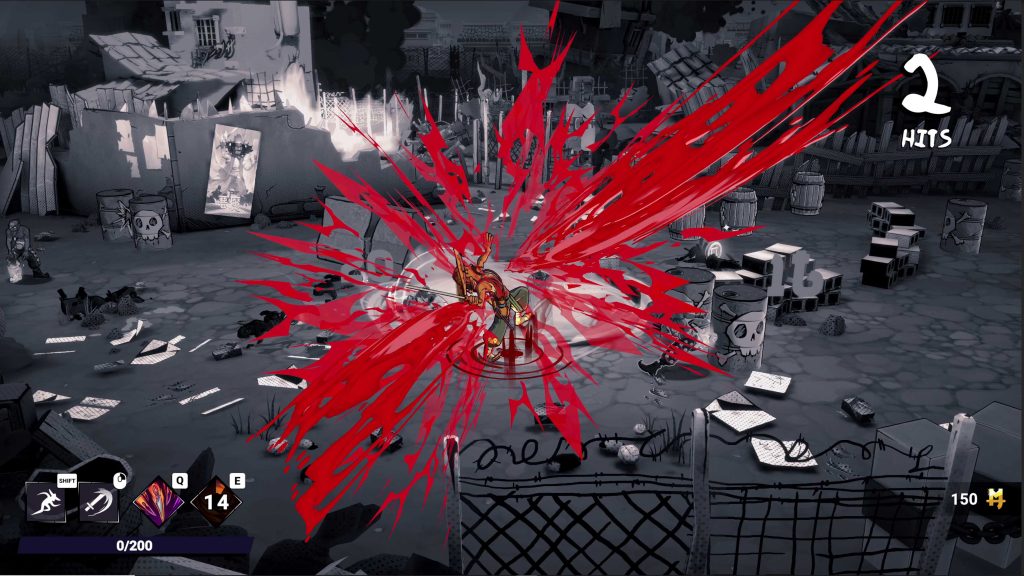
Combat Is Easy to Learn, but There's Room for Combos
At its core, Mexican Ninja is a 2.5D beat ’em up with a roguelike structure, meaning that most of your time is spent fighting groups of enemies, figuring out the best way to take them down, and trying to get as much as possible out of each run. The controls are straightforward enough that you can get comfortable with them quickly, but combat goes beyond simply mashing buttons, as combining light and heavy attacks, dodging, parrying, jumping, and attacking enemies in midair creates opportunities for something more engaging than just trading blows.
There's particular satisfaction in connecting several attacks and keeping an opponent suspended in the air, as juggling enemies gives combat a rhythm that doesn't revolve around waiting for them to approach you again. Juggling and chaining attacks allow you to control the pace of an encounter, while parrying plays an important defensive role and can stop a wide range of attacks if you get the timing right. Once these mechanics start working together, combat becomes considerably more interesting than you might expect from the game's straightforward premise and cartoonish presentation.
Of course, this isn't a combat system aiming to match the depth of the most complex action games, but it doesn't need to be. Mexican Ninja works best when it throws you into a crowded fight, gives you enough tools to deal with the enemies, and lets you experiment until you discover the combinations that suit your playstyle. Its biggest strength isn't that it reinvents the beat ’em up genre, but that it combines familiar mechanics into a dynamic package that keeps most encounters entertaining.
Mexican Jutsus and Builds Give Every Run a Different Feel
One of the game's biggest strengths, alongside its combat system, is Mexican Jutsus, a collection of special techniques that are exaggerated, often completely absurd, and perfectly suited to the tone of the adventure. Their value isn't limited to how spectacular they look, as they change from one run to another, meaning you can't always rely on having exactly the same set of abilities available. These techniques are joined by passive abilities, spirit blessings that combine Mexican and Japanese influences, and permanent upgrades that you unlock between runs.
This structure allows you to gradually develop your own playstyle, whether you want to focus on aggressive attacks, control larger groups of enemies, or improve your chances of survival when encounters become more demanding. Different combinations of abilities can change how you approach combat, so progression isn't simply a matter of increasing your stats and becoming stronger; it also involves experimenting with the options the game gives you during each individual attempt.
Each run lasts approximately 15 to 25 minutes, while completing the entire game takes roughly six to twelve hours, depending on how much time you spend experimenting and how successfully you progress. That's a respectable amount of time for a game of this type, particularly if you enjoy revisiting previous levels and testing different ability combinations. However, the progression system isn't deep enough for Mexican Ninja to compete with the very best roguelikes, so your long-term motivation will largely depend on how much you enjoy its core combat loop.
Humor That Knows No Limits
If there's one area where Mexican Ninja truly manages to stand out, it's humor, because the game rarely attempts to be subtle, polite, or particularly serious. The dialogue is packed with swearing in both Spanish and English, absurd situations, and references ranging from El Chavo to anime and God of War, while the entire world behaves as though it's perfectly normal for a Mexican ninja to solve problems with katanas and special techniques in a city ruled by the Narkuzes.
This approach won't appeal to everyone, as the game relies on crude, vulgar, and politically incorrect humor that often deliberately goes overboard just to see how far it can push things. If that style doesn't suit you, some of the jokes may wear thin fairly quickly, especially since Mexican Ninja makes little effort to change its tone or soften its humor to appeal to a wider audience. On the other hand, if you enjoy games that aren't afraid to be completely ridiculous and turn their absurdity into part of their identity, you'll probably find plenty to laugh about here.
The most important thing is that the game never apologizes for its premise or tries to justify it with an unnecessarily serious story. It knows exactly what kind of adventure it wants to deliver and embraces everything that comes with that idea, making humor more than just something to enjoy between fights. It runs through the characters, the environment, and the way enemies are presented, becoming an essential part of the overall experience.
Mexican Ninja
When the Chaos Starts to Feel Repetitive
Even such an unusual premise can't completely hide some of the game's weaknesses. During larger fights, readability can become a problem, particularly when the screen is filled with enemies, projectiles, and special effects all at once. At those moments, it isn't always easy to keep track of everything happening around Juan, which can undermine the precision of combat and leave you taking damage because you couldn't clearly follow the action.
Some levels also feel more repetitive than others, and the enemy variety isn't extensive enough to ensure that every new encounter brings something different. After several runs, you begin recognizing familiar patterns and relying on strategies you've already tested, causing some of the initial excitement to fade. A certain degree of repetition is naturally part of the roguelike structure, but the best games in the genre use combinations of enemies, events, and abilities to create enough variation for every attempt to feel different.
Another oddity is that regular stages can sometimes be more challenging than boss fights, which feels a little strange when you'd expect the main opponents to represent the biggest tests of your skills. This isn't necessarily a major problem, but better difficulty balancing and a greater variety of enemies would improve the experience, particularly during longer sessions.
Still, none of these issues is serious enough to undermine what Mexican Ninja does well. Its weaknesses generally become more noticeable after you've spent more time with the game, while the core combat, humor, and unusual setting continue to provide plenty of reasons to start another run.
Is Mexican Ninja Worth Your Time?
Mexican Ninja is an excellent example of how an apparently ridiculous idea can become an entertaining and distinctive game, provided the development team understands what makes that idea interesting and isn't afraid to see it through. The combination of Mexican and Japanese culture, the Narkuzes, the cartoonish visual style, and the uninhibited humor gives it an identity that's easy to remember, while the dynamic combat, special techniques, and different builds provide enough variety to keep the core gameplay loop entertaining.
Of course, this isn't the deepest or longest roguelike on the market, and repetitive levels, limited enemy variety, and occasional readability issues in crowded fights prevent it from making an even stronger impression. Nevertheless, Mexican Ninja has plenty of personality, knows exactly what kind of game it wants to be, and generally succeeds in turning its central concept into an enjoyable action adventure. You can tell that the Colombian development team at Madbricks had a clear vision and wasn't afraid to experiment, resulting in a game that's much more than a simple joke about two cultures colliding.
If you enjoy fast-paced 2.5D beat ’em ups, roguelike elements, and humor without many boundaries, Mexican Ninja deserves your attention. It won't revolutionize the genre or keep you busy for hundreds of hours, but it offers enough satisfying combat, outrageous moments, and interesting ability combinations to make another trip to Nuevo Tokyo worthwhile.
Score: 8/10
The game was played on: PS5.
Ako tražite povoljnije cene za igre, DLC-ove i druge digitalne proizvode, posetite Eneba i pogledajte aktuelnu ponudu.
Pre kupovine obavezno unesite naš promo kod BUFFGAMING i ostvarite dodatnih 5% popusta.
Kupi igre, poklon-kartice i dopune povoljnije