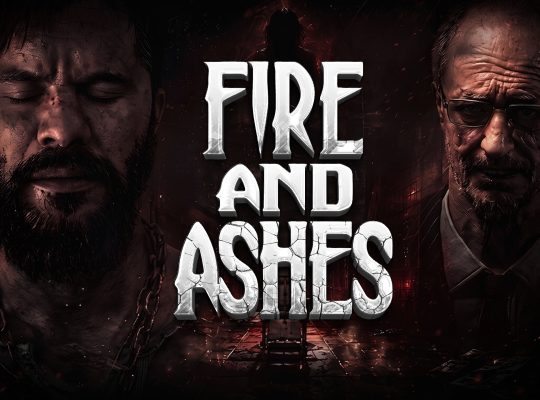

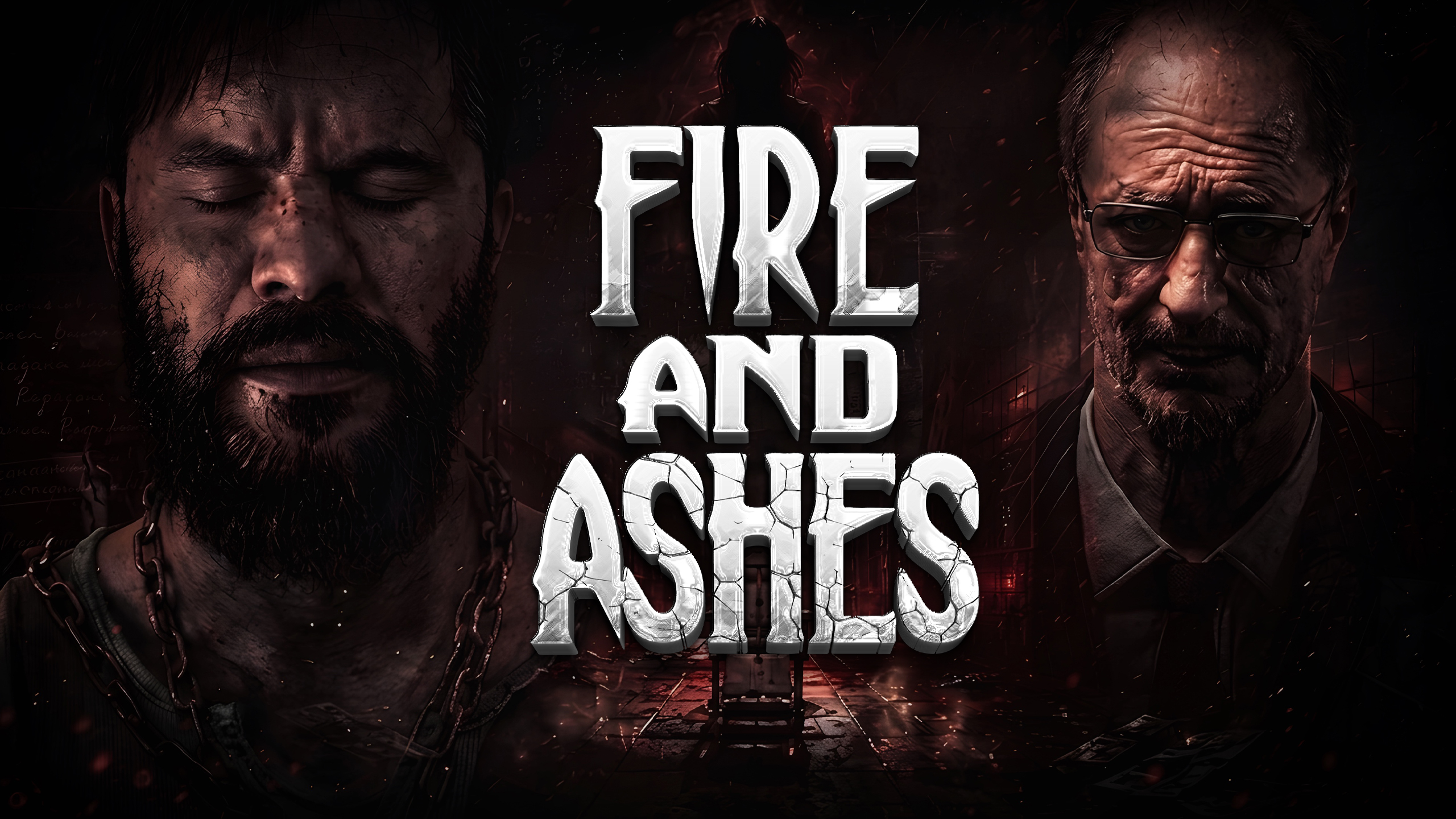
FIRE AND ASHES: blends psychological horror, exploration, puzzles, and first-person combat with an unusual microphone mechanic that makes your own voice part of the survival experience. It may not reinvent horror, but its willingness to experiment helps it stand out. – NemanjaKocica
Horror games have been trying to find new ways to scare us for decades. Darkness, sudden attacks, terrifying enemies, and claustrophobic corridors have become staples of the genre, making it increasingly difficult for a game to stand out from the crowd. That’s why FIRE AND ASHES tries something different. Instead of relying solely on what’s happening on screen, it makes the microphone an important part of the experience. Staying silent, whispering, or even screaming can affect what happens in the game. Is it a genuine innovation or just a marketing gimmick designed to grab our attention? Honestly, I find the fact that the developers even decided to give it a shot far more interesting.
It Ain't Horror Without a Psych Ward
The story begins in 1977, when Henry Gray wakes up in a bathtub inside a psychiatric hospital. There’s blood everywhere, but none of it is his. From that moment on, he embarks on a journey through a world where reality and madness increasingly blur together, and the hospital is only the beginning of a much darker story.
FIRE AND ASHES combines psychological horror, exploration, puzzles, and first-person combat. As we try to survive encounters with various enemies, we also uncover clues that lead us deeper into Henry’s past. The environments and creatures we encounter aren't there just to give us something to kill or something to run away from. They also serve to blur the line between what's real and what might exist only in the protagonist's mind.
This kind of setup is nothing new to horror fans. Psychiatric institutions, dark experiments, repressed memories, and protagonists whose grasp on reality is questionable have been part of the genre for a long time. Still, starting with familiar territory isn't necessarily a problem, as long as a game manages to use it to establish its own identity.
Keep It Down, They're Listening
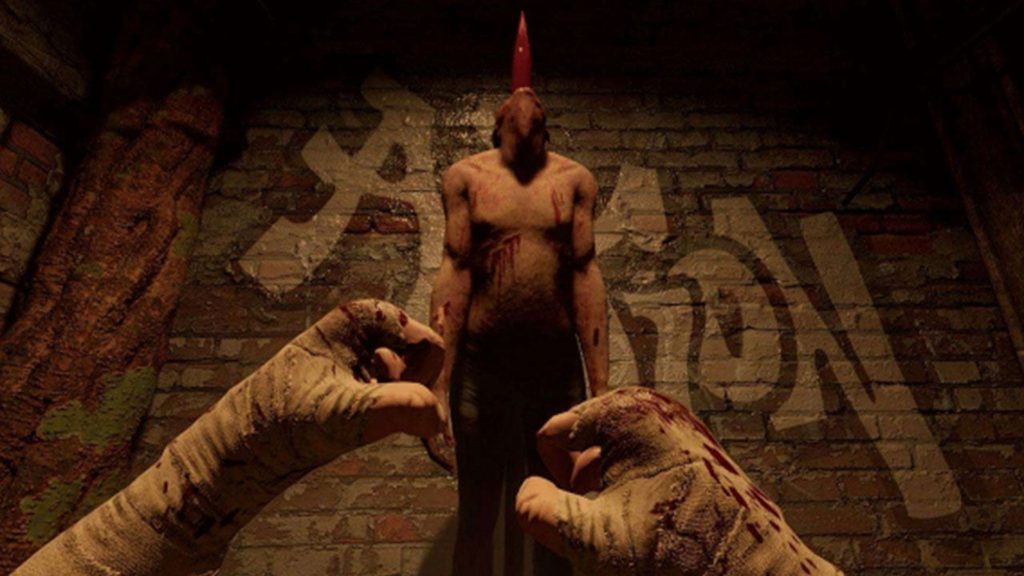
The game's central idea revolves around the microphone. In most horror games, you can get scared, swear, or scream your lungs out, and the virtual world won't give a damn. In FIRE AND ASHES, things work differently. The sounds we make can attract the attention of enemies, while our voice can also help create an opportunity to escape or launch an attack. Sometimes we need to keep quiet. Other times, we need to do the exact opposite.
For me, this is easily the most interesting part of the entire game. Not because using a microphone is going to change horror games forever, but because it's an attempt to further blur the line between the player and the character they're controlling. It's no longer enough to simply react to the horrors unfolding on screen. In certain situations, we also have to think about our own voices.
Of course, we can debate just how revolutionary this mechanic really is and how much its marketing potential influenced the decision to make it the game's main selling point. However, I think that's missing the point a little. An idea doesn't have to reinvent an entire genre to be worth exploring. Sometimes, all it takes is a fresh twist on a familiar experience to make us rethink something we've always taken for granted.
It's also worth noting that the game can be played without a microphone. That's a practical option for anyone who doesn't want to use voice input or simply can't play that way. Still, the microphone is what sets FIRE AND ASHES apart from countless other horror games, so it's understandable that playing with one is the most interesting way to experience it.
It's Horror as Usual, But…
Beyond its main gimmick, we're looking at a horror game that combines exploration, resource management, puzzle-solving, and first-person combat. Henry will face different types of enemies, and surviving these encounters requires us to make use of whatever the environment has to offer.
None of these mechanics are particularly groundbreaking. On the contrary, they're the building blocks of countless games in the genre. That's why FIRE AND ASHES faces a challenge that goes beyond simply scaring us: it also needs to keep us engaged between its standout moments. Horror can't rely on jump scares forever, just as a clever idea can't carry an entire game on its own.
What matters is how well all these elements come together and whether the voice mechanic feels like a natural part of the survival experience rather than just a neat little gimmick. That's why it makes more sense to look at this game as an attempt to refresh the genre's familiar foundations rather than a title trying to reinvent the wheel.

New Ideas Are Always Welcome
In an industry that often relies on proven formulas, sequels, and playing it safe, an attempt to introduce a different way of interacting with a game deserves some credit. Not every new idea is automatically a good one, but that doesn't mean we should dismiss every fresh approach just because it might look like a marketing gimmick.
FIRE AND ASHES has enough familiar elements to give horror fans a good idea of what they're getting into, but the microphone gives it an identity that makes it harder to dismiss as just another game set in dark corridors and abandoned buildings. That combination of familiar and fresh makes it an interesting title, especially for players who are getting tired of seeing the same genre conventions recycled from one game to the next.
An idea doesn't have to be perfect to be worth trying. It's far more interesting when developers dare to experiment than when they play it safe and repeat something we've seen dozens of times before. That's exactly why FIRE AND ASHES feels like a game worth giving a shot.
FIRE AND ASHES isn't interesting simply because it tries to scare us. It's interesting because it attempts to involve us in the horror in a different way. The idea of making our own voice part of the survival mechanics is unusual enough to help the game stand out, whether we call it an innovation or a clever marketing move.
What matters more to me is that the developers were willing to take a risk and try something new instead of settling for a tried-and-tested formula. In a genre that so often relies on familiar conventions, that willingness to experiment is worth something in itself.
Ako tražite povoljnije cene za igre, DLC-ove i druge digitalne proizvode, posetite Eneba i pogledajte aktuelnu ponudu.
Pre kupovine obavezno unesite naš promo kod BUFFGAMING i ostvarite dodatnih 5% popusta.
Kupi igre, poklon-kartice i dopune povoljnije