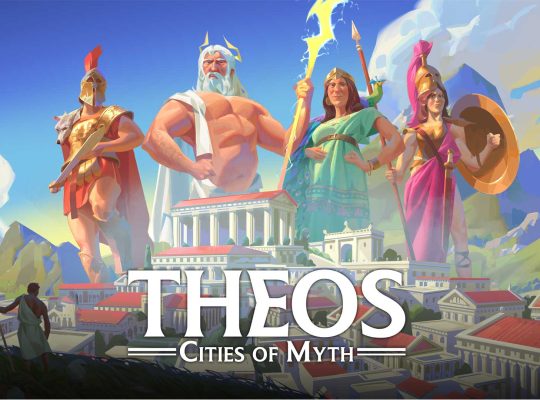

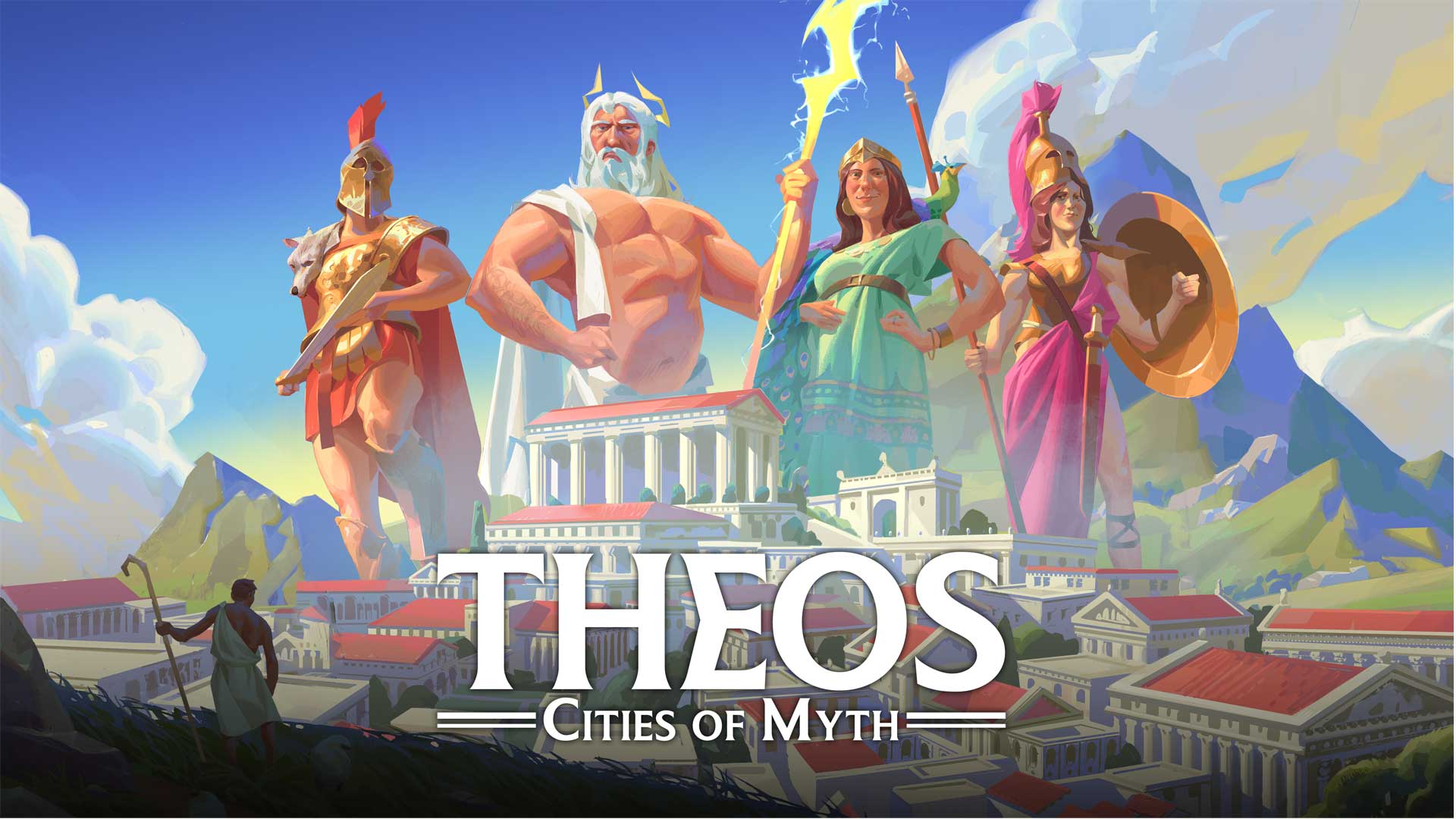
Theos: Cities of Myth: offers a promising foundation for fans of ancient city-building games. Its city management, economy, and Greek gods bring to mind classics such as Zeus: Master of Olympus, but technical issues and systems that still need refinement hold the experience back. The potential is there, but the full release will need to deliver on it. – NikolaOtasevic
Building a City in the Shadow of Olympus
City-building games often rely on a familiar formula: find a suitable location for a settlement, establish the foundations of its economy, provide for the needs of its citizens, and gradually build a city capable of thriving without constant intervention from the player. Theos: Cities of Myth Demo follows this basic approach but adds an element that naturally fits its setting in ancient Greece – gods whose expectations can influence the development of an entire civilization.
In this strategy game, you take on the role of a founder of a Greek polis and attempt to transform a modest settlement into a prosperous city. Simply placing houses and expanding roads is not enough. You must manage production, storage, and resource distribution, organize trade, and provide access to various services. At the same time, your city must satisfy the needs of its inhabitants and fulfill the demands of its patron deity.
This combination of everyday city management and mythological elements gives the game a recognizable identity. The gods are not merely decorative figures reminding players of the setting; they are an important part of the concept that shapes the development of your settlement.
Athens and Miletus – Two Different Approaches to City Management
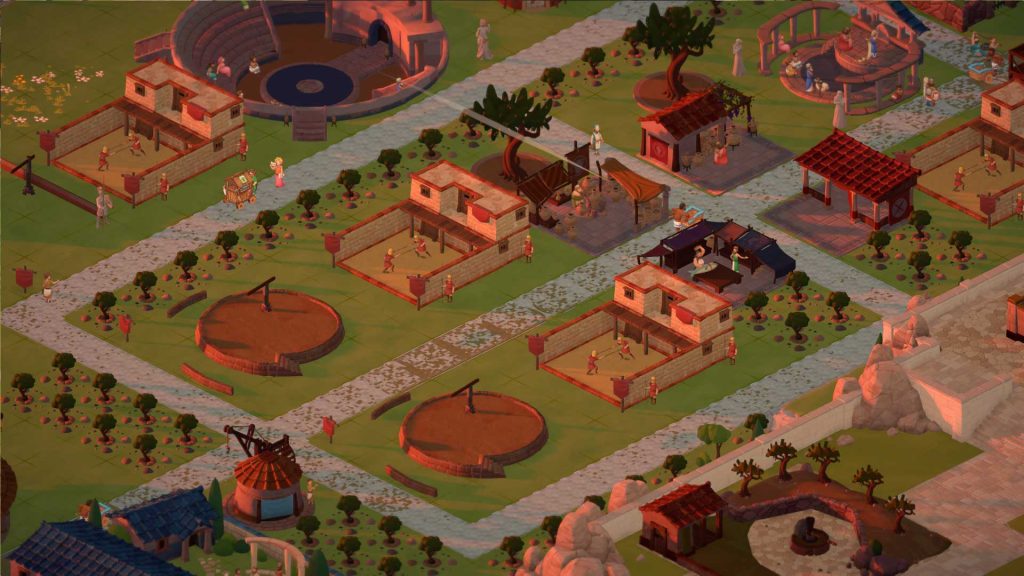
The demo offers a glimpse into the first three chapters of the Athenian campaign, along with an opportunity to develop the colony of Miletus. One particularly interesting aspect is that players are expected to adapt their city's development to the deity protecting it. Athena and Dionysus represent two different approaches, meaning that objectives and priorities change depending on whose favor you are trying to earn.
Under Athena's protection, the emphasis is on knowledge, philosophy, stability, and thoughtful management. Developing your city requires you to pay attention to the population's needs, education, and trade relationships. Dionysus, on the other hand, brings a different atmosphere, demanding a city where celebrations and the happiness of its citizens play an important role in everyday life.
This approach has the potential to give missions more personality than they would have in a traditional strategy game focused exclusively on economics. Instead of developing every city in the same way, you must consider what kind of settlement you want to build and how your decisions will affect its future. However, the demo only introduces the beginnings of this system, so it remains to be seen how differently the various gods and their benefits will function in the full release.
An Economy Where Every Piece Has a Purpose
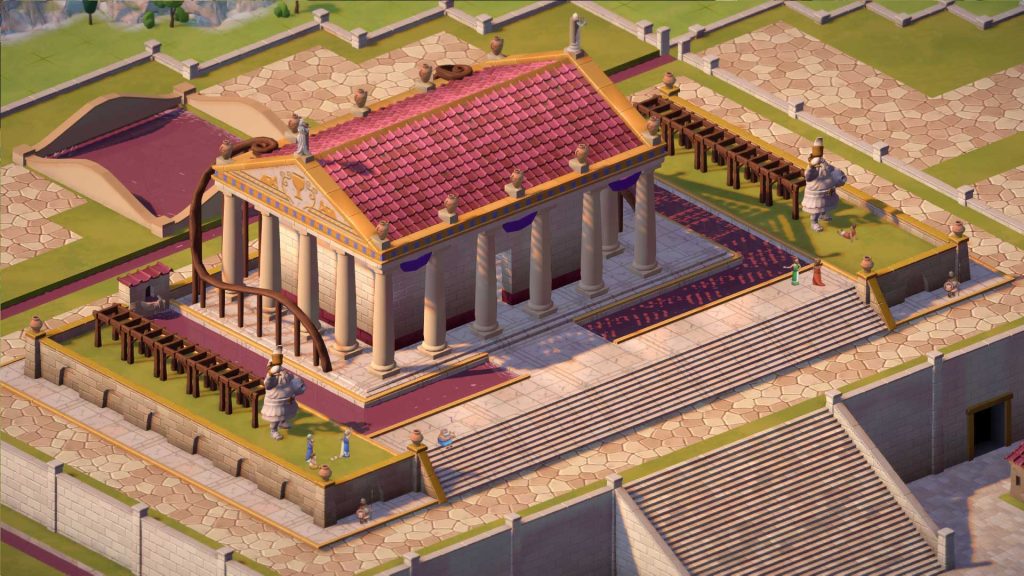
Resource management is at the heart of the gameplay. A city needs functional infrastructure, a well-organized road network, and appropriate production buildings to ensure that its citizens receive the goods and services they require. Trade and storage are also important, as a successful city cannot rely on simply constructing new buildings without considering how they will function within the wider economic system.
Theos: Cities of Myth Demo attempts to combine accessible city-building with management mechanics that require planning ahead. Placing buildings is not merely a matter of aesthetics or filling available space; it is about organizing an economy capable of supporting further growth. As your settlement expands, understanding the connections between production, distribution, and the needs of the population becomes increasingly important.
This is one of the game's most appealing aspects for fans of classic city-builders. Rather than focusing entirely on continuous expansion, success depends on how well you understand your city's infrastructure. However, such a system needs to be supported by a clear interface and accessible information. When management becomes too complicated, it can easily overshadow the satisfaction that should come from developing your own city.
The Spirit of Ancient Greece with a Mythological Identity
The game's visual identity draws on familiar elements of ancient Greece, from settlements and public buildings to temples dedicated to the Olympian gods. The world is designed so that a city feels like more than a collection of functional structures, gradually developing its own character through infrastructure and religious buildings.
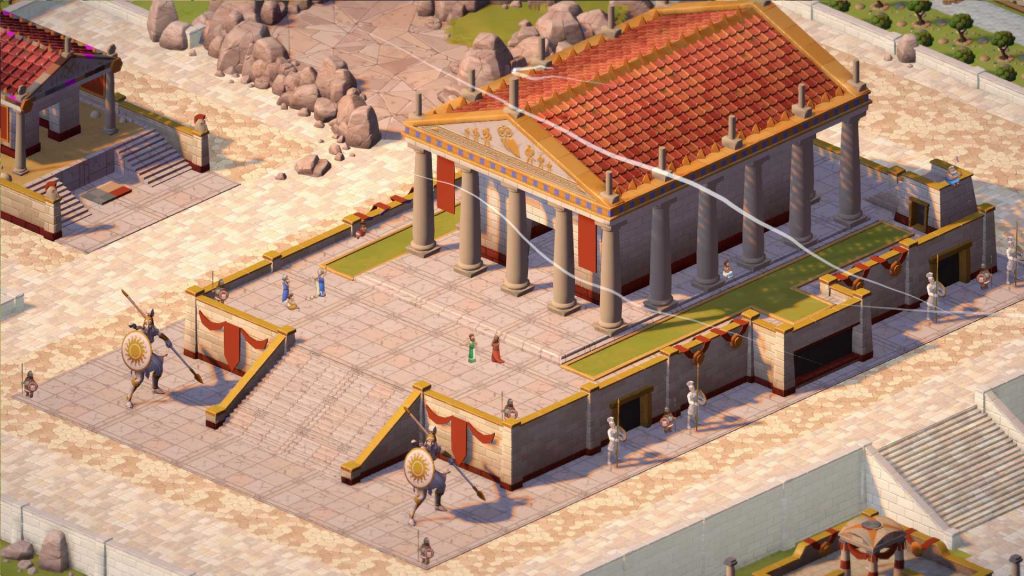
The patron deity's sanctuary serves as a central part of the city, around which further development takes place. This is a good idea because it connects the building mechanics with the game's thematic identity. Temples and other special structures are not simply decorative finishing touches; they are part of a system that influences how the city functions and how it relates to its patron.
Nevertheless, the visual presentation and atmosphere need to be convincing enough to make the city feel alive rather than like an orderly network of buildings. Some player impressions of the demo have pointed to a lack of liveliness in the settlements and animation issues when the game runs at increased speed. These are areas where additional polish could make a significant difference, especially in a genre where observing the daily lives of citizens is one of the pleasures of playing.
A Demo That Still Has Room to Improve
The most important thing to remember is that this is a demo, not the final version of the game. Its purpose is to introduce the core mechanics and demonstrate the direction in which the project is heading. In that respect, Theos: Cities of Myth has a solid foundation: the combination of city management, ancient Greek mythology, and divine demands is interesting enough to attract fans of strategy games.
However, player impressions have also highlighted technical problems, including crashes and situations in which progress can become blocked. There have also been reports of the demo lacking an autosave feature and certain difficulties with the interface. Problems like these can seriously disrupt a strategy game in which progress is built gradually over longer sessions. For that reason, it is advisable to save manually on a regular basis until the stability of the current version becomes more reliable.
These shortcomings do not mean that the concept itself is flawed, but they demonstrate how important it is for the development team to improve stability, interface clarity, and the overall gameplay flow before the full release. The potential is there, but the final impression will depend on how successfully the developers turn it into a polished experience.
A Spiritual Successor to Zeus: Master of Olympus
If you spent hours playing Zeus: Master of Olympus, Theos: Cities of Myth will probably feel familiar within the first few minutes. Both games use ancient Greece as the foundation for city-building, resource management, and meeting the needs of the population, while the gods play an important role in the development of your polis.
However, Theos is not simply trying to repeat the formula of an old classic. It introduces more modern management systems and places greater emphasis on the deity to whom the city is dedicated. As a result, objectives and priorities differ depending on whether you build under the protection of Athena or Dionysus.
For veterans of Zeus: Master of Olympus, this could be an interesting opportunity to revisit a familiar style of strategy game in a more modern form. Of course, the demo is only the first step, and it is still too early to tell whether Theos can match the charm and lasting appeal of its predecessor.
Conclusion
Theos: Cities of Myth Demo is a promising starting point for a city-builder that aims to combine classic city management with the mythology of ancient Greece. Settlement development, economic management, and the different demands of Athena and Dionysus provide an interesting foundation, while the central role of the sanctuary helps connect the game's theme with its building mechanics.
However, technical problems and certain shortcomings in the presentation show that the demo has yet to reach its full potential. Fans of classic strategy games should certainly consider giving it a try, but a final judgment will have to wait until we see how much the full release improves the management systems, mission variety, and technical stability.
Score: 7/10
The game was played on: PC.
Ako tražite povoljnije cene za igre, DLC-ove i druge digitalne proizvode, posetite Eneba i pogledajte aktuelnu ponudu.
Pre kupovine obavezno unesite naš promo kod BUFFGAMING i ostvarite dodatnih 5% popusta.
Kupi igre, poklon-kartice i dopune povoljnije