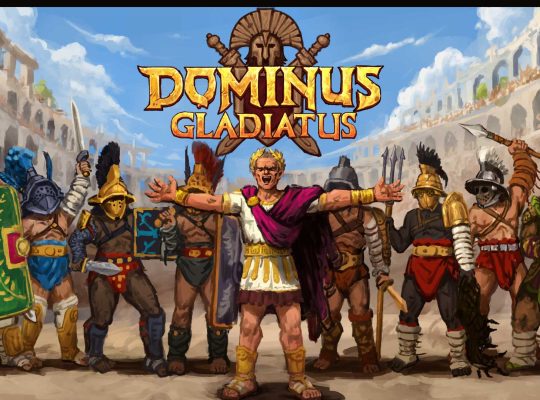

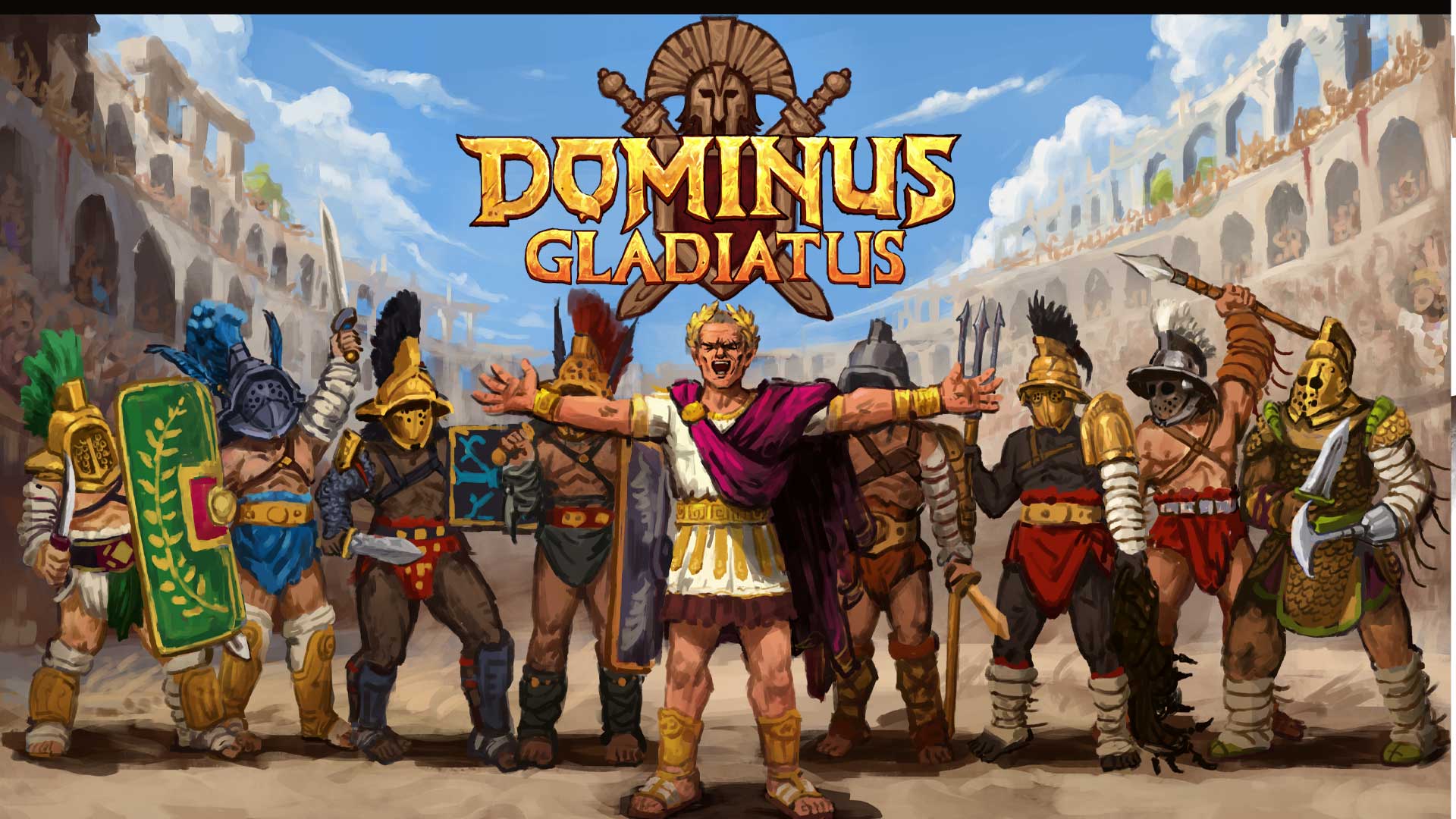
Dominus Gladiatus: s an enjoyable management game that immediately caught my attention with its Ancient Roman setting. Running a gladiator school, training fighters and preparing them for arena battles create an engaging gameplay loop, while the charming 2D art style adds to its appeal. However, repetitive activities and limited management depth prevent it from reaching its full potential. If you enjoy Ancient Rome and strategy games that don't demand too much of your time, it's worth checking out. – NikolaOtasevic
Whenever I think about Ancient Rome, it's hard not to pay attention to a game set during that period. I've always been interested in Roman history, and when you combine it with strategy or some form of management gameplay, I'm usually halfway to buying it already. That's why Dominus Gladiatus immediately caught my attention. Instead of taking control of a gladiator fighting for survival in the arena, we get to run our own gladiator school, known as a ludus. We recruit new fighters, train them, equip them and send them into battle, hoping they will bring back money, glory and the favour of the crowd.
The game was developed by Brain Seal Ltd, the studio behind Story of a Gladiator and the Dark Quest series, and published by PlayWay. Dominus Gladiatus launched on November 5, 2026, for PC, PlayStation 5, Xbox Series X|S and Nintendo Switch. At first glance, it looks like a relatively simple management simulator with a Roman setting, but its core gameplay loop involves several interesting decisions that can make the difference between a successful ludus and a school running out of fighters.
Rome in a Hand-Painted Style
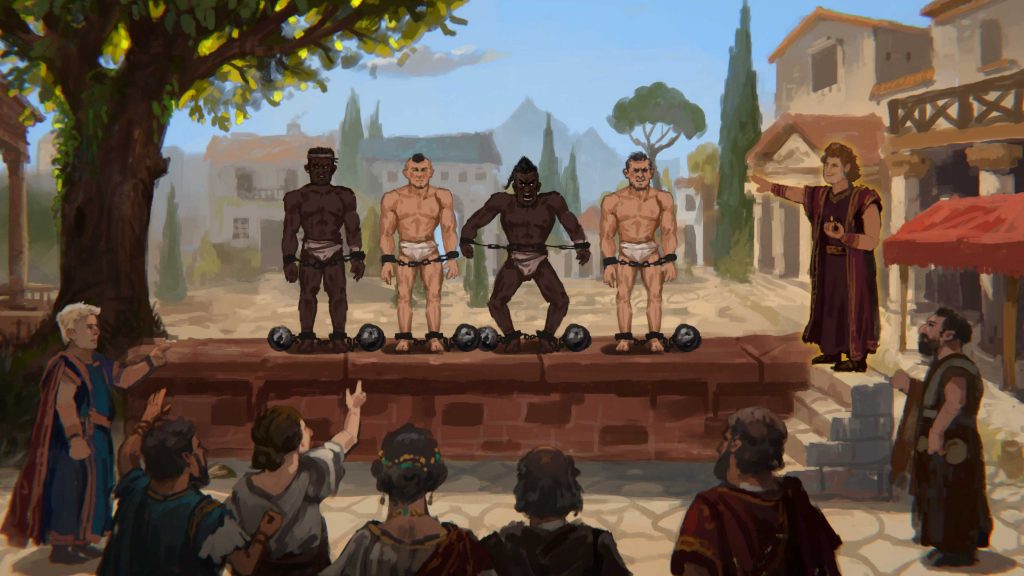
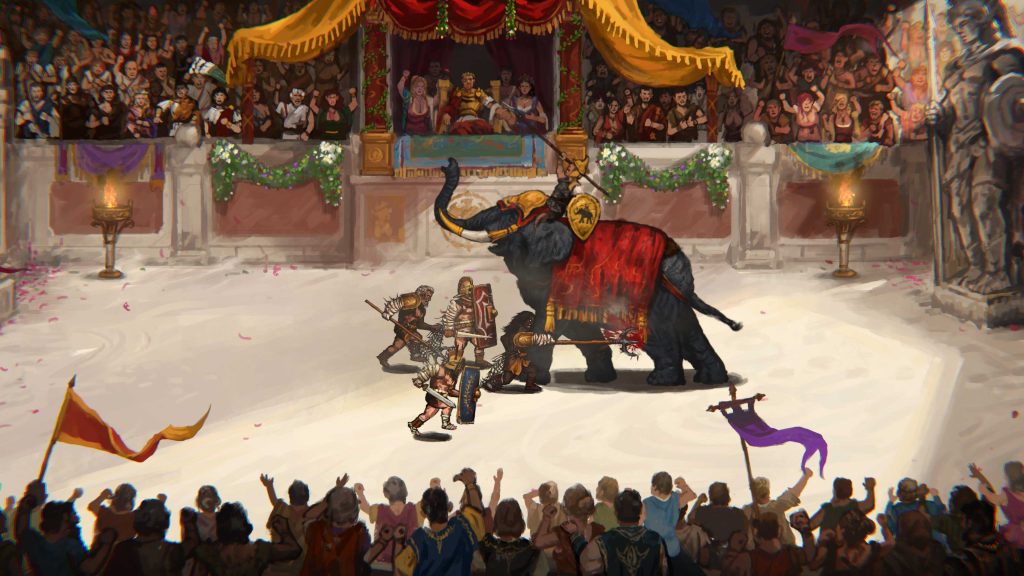
The first thing that caught my attention was the visual style. Dominus Gladiatus uses 2D artwork with a hand-painted appearance, warm colours and slightly rough edges that give the world a distinct character. Battles take place from a side-on perspective, and the animations are surprisingly fluid. Gladiators move convincingly, attacks have a satisfying sense of impact, and the crowd's reactions add to the atmosphere of the arena.
Honestly, I wasn't particularly convinced at first that such a straightforward 2D presentation would be able to capture the atmosphere of gladiatorial combat. However, I quickly changed my mind. The graphics look great, remain consistent throughout the game and fit its overall presentation. Rather than trying to impress with technical details, the art style does exactly what it needs to do.
Performance is another strong point. The game has modest hardware requirements and runs well even on weaker configurations. Steam Deck support is another welcome addition, especially for a title built around shorter management sessions and keeping an eye on what's happening in the arena.
The sound is decent. The music and ambient effects during battles help establish the atmosphere, but they aren't particularly memorable once you step away from the game. Nothing is wrong with them, but sound isn't one of the elements that makes Dominus Gladiatus stand out.
Choose Your Dominus
At the beginning, we choose one of six leaders, either a Dominus or a Domina. Each has a unique passive ability that can influence how we manage our school. Some offer cheaper slave purchases, while others provide certain advantages during battles or make life more difficult for their opponents.
The characters we don't choose become our rivals throughout the campaign. They aren't just names on a leaderboard, as they can attempt to sabotage our ludus and make progress more difficult. This means that choosing your starting leader isn't merely a cosmetic decision; it can influence the strategy you develop.
I also have one minor complaint regarding terminology. The game allows us to choose female leaders, or Dominae, but the interface still uses the general term Dominus in certain places. It doesn't affect the gameplay, but it's a detail I noticed, especially considering the game's historical setting.
Everyday Life in the Ludus
We spend most of our time managing our own gladiator school. This is where we recruit new fighters from the market, assign their classes, organise training sessions, purchase equipment and decide who is ready for their next appearance in the arena.
Gladiators are randomly generated with different traits and potential, so not every new recruit is equally worth investing in. Some may already have an excellent foundation for combat, while others require considerably more time before becoming serious contenders. It's up to us to decide where our money and time are best spent.
The available classes offer different fighting styles. We can develop tougher fighters who rely on defence and strength or choose more agile gladiators with a different approach to combat. Each fighter also has their own attributes and talents, which can affect critical hit chances, learning speed and earnings from battles.
However, training and buying better equipment aren't enough. We also need to keep an eye on fatigue, morale and injuries. Pushing our fighters too hard can have serious consequences, and an exhausted gladiator won't be particularly useful in the arena. Sometimes it's better to give a fighter time to recover than risk losing them in the next battle.
This is probably the part I find most interesting. The basic gameplay loop is simple: recruit a fighter, train them, equip them, send them into the arena and earn money to invest in the further development of the school. However, permanent death gives our decisions additional weight. When you've invested time and resources into a gladiator, losing them isn't just another defeat. It can seriously disrupt your plans for the next battles.
As we progress, we can also upgrade the facilities within our ludus, giving us more options for developing our fighters. It's not an especially complicated system, but there are enough elements to keep the first few hours interesting.
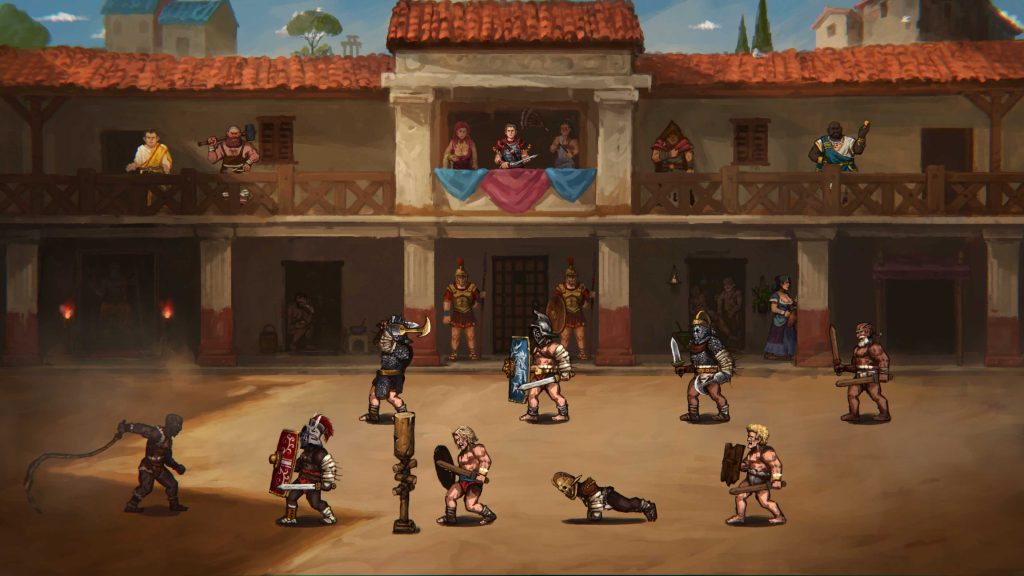
Arena Battles – Decisions Are Made Before the Fight
Unlike traditional action games about gladiators, we don't directly control our fighters during combat. Dominus Gladiatus uses an auto-battler approach: we prepare our roster, choose equipment and formations, and then watch our gladiators fight in the arena.
That doesn't mean the outcome is entirely left to chance. Training quality, class selection, abilities and equipment all have a noticeable impact on the result. That's why it's important not to send fighters into the arena without proper preparation. A well-balanced team and the right strategy can make a significant difference.
Matches have a good pace and generally last long enough to create some tension without dragging on unnecessarily. In addition to individual duels, there are team battles and special spectacles in which gladiators face dangerous beasts.
However, the biggest problem I encountered while playing was the passage of time. In earlier versions, including the demo, time progressed in real time, with no option to speed things up. This meant that a training session lasting six in-game days required six minutes of real-world waiting. That might not sound too bad on paper, but when these activities are repeated, the waiting starts to slow down the entire experience.
Fortunately, the Day 1 Update introduced a 2x speed option, activated by holding the right mouse button or the corresponding button on a controller. This is a significant improvement and makes managing the ludus much more enjoyable. I would still like to see more flexible speed controls, but this is certainly a step in the right direction.
What Happens After Winning the Tournament?
One of the shortcomings of the main campaign is that it doesn't last particularly long. The Grand Tournament covers around 160 in-game days, which can translate into approximately 10–20 hours of playtime, depending on your pace. That's not necessarily a problem for this type of game, but it does leave you wondering whether there could be more to do after completing the tournament.
Fortunately, the developers responded with the first update. The Day 1 Update introduced the option to continue our career after winning the Grand Tournament through new series of arena contracts. These are organised into groups of ten and feature different battle formats, ranging from individual duels to team fights. There are also battles to the death and encounters with lions and elephants. This means winning the main tournament no longer has to mark the end of our career.
Shortly afterwards, Patch #2 arrived and further expanded the available modes. Provincial Games offers a shorter and more accessible tournament lasting 40 days, with 8–9 battles, while Blood Games is aimed at players looking for a much tougher challenge. This second mode lasts 90 days and features 22 battles, with every match ending in the death of one of the fighters.
The new spectacles featuring beasts are particularly interesting, as is the fact that rivals in Blood Games are more likely to attempt to sabotage our ludus. These additions give players who have completed the main campaign more reasons to return to the arena.
Still, it's worth remembering that additional modes don't completely solve the game's main issue: its core gameplay loop can still become repetitive after a few hours.
Where Dominus Gladiatus Loses Momentum
The biggest problem is the lack of variety over longer play sessions. At first, recruiting new gladiators, developing their abilities and preparing them for battle is enjoyable. However, once we become familiar with the main systems, the routine starts to feel rather predictable.
Recruiting, training, resting, equipping and sending fighters into the arena provide a solid foundation, but the game could use more events and situations that occasionally change how we manage our school. Rivals and their sabotage attempts add some variety, but they don't always succeed in breaking up the established routine.
The difficulty isn't always ideally balanced, either. Certain encounters can be considerably more challenging than expected, requiring careful planning when developing fighters and distributing resources. This can be interesting when the game forces us to change our strategy, but less enjoyable when the result feels like a consequence of uneven balancing.
The additional modes and updates certainly improve the situation, but they don't change the fact that the core management systems are relatively simple. If you're expecting a complex historical simulator with numerous systems, economic decisions and unpredictable events, Dominus Gladiatus probably won't meet all your expectations.
Conclusion
Dominus Gladiatus is an enjoyable and accessible management game that works best when you're looking for something more relaxed, without too many complicated systems. The idea of running your own gladiator school, investing in fighters and following their journey to glory has enough charm to keep you playing for several hours. I particularly like the visual style, while managing fatigue, morale and injuries adds extra weight to the decisions we make.
On the other hand, the core gameplay loop starts to feel repetitive relatively quickly, and the events and activities outside the everyday management of the ludus could offer more variety. The problems with the passage of time have been eased through updates, and the new modes extend the experience, but there is still room for more substantial improvements.
If you're looking for a deep and complex simulator of Ancient Rome, this isn't the game for you. However, if you enjoy gladiatorial themes, straightforward management games and an auto-battler system where preparation determines the outcome of a fight, Dominus Gladiatus can provide a pretty enjoyable experience. Especially if you can pick it up on sale.
This isn't a game that will keep you occupied forever, but it can offer several enjoyable hours as the person deciding who enters the arena and who makes it back out alive.
Ako tražite povoljnije cene za igre, DLC-ove i druge digitalne proizvode, posetite Eneba i pogledajte aktuelnu ponudu.
Pre kupovine obavezno unesite naš promo kod BUFFGAMING i ostvarite dodatnih 5% popusta.
Kupi igre, poklon-kartice i dopune povoljnije