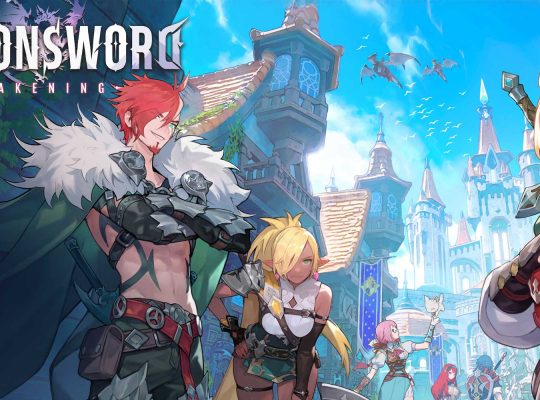
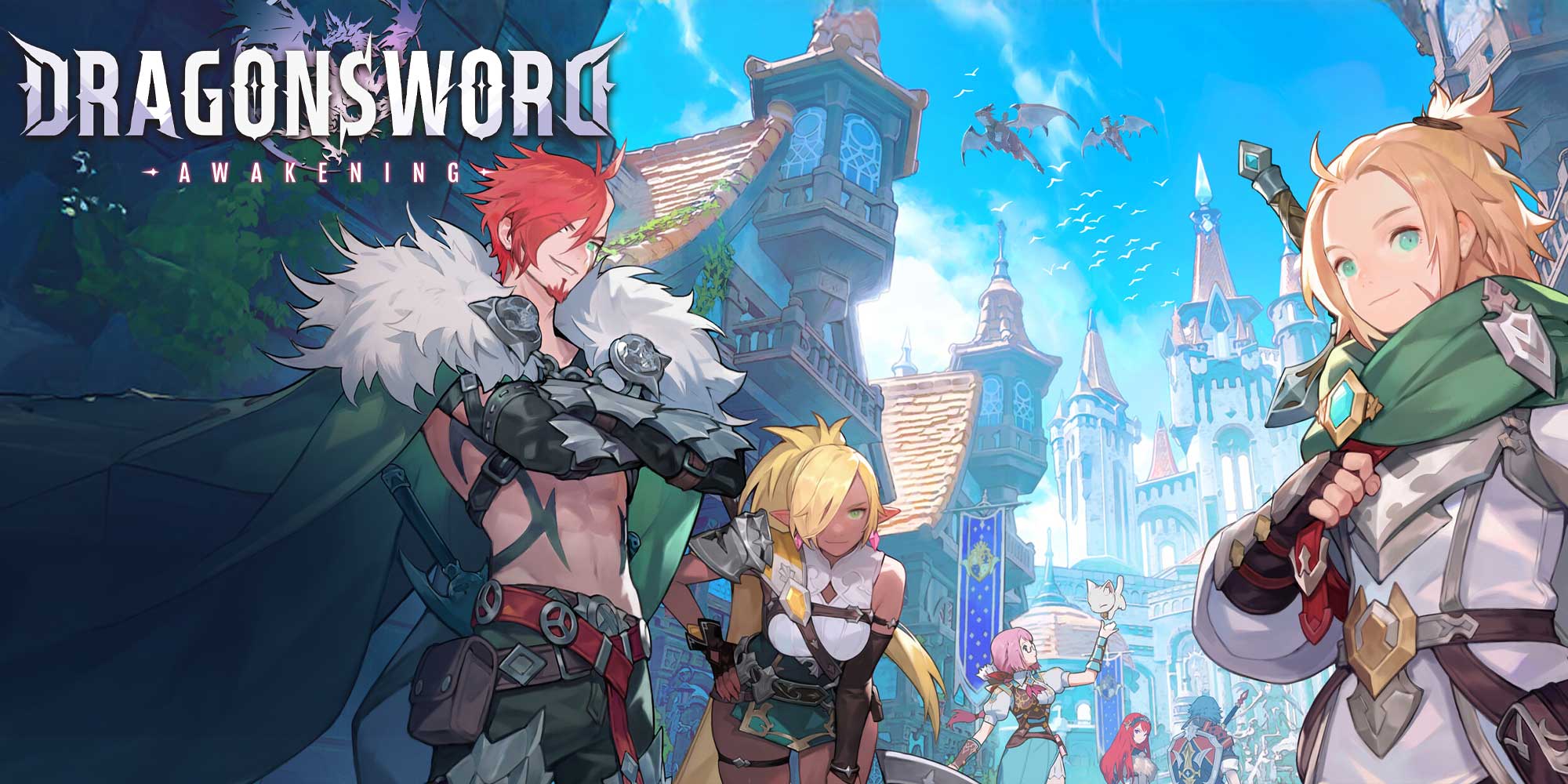
Dragon Sword: Awakening: Dragon Sword: Awakening may not redefine the RPG genre, but it's a surprisingly enjoyable adventure that became a far better game than originally intended. With satisfying combat, deep progression systems, and a huge amount of content, it offers excellent value for its price. While its gacha roots are still noticeable, the lack of pay-to-win mechanics makes it an easy recommendation for fans of anime-inspired action RPGs. – NikolaOtasevic
Dragon Sword: Awakening is probably one of the stranger gaming stories of the year. The game was originally designed as a classic gacha/live-service title, but after a serious conflict between developer Hound13 and publisher Webzen, the entire situation completely changed. The result is essentially a premium single-player/co-op RPG without the usual pay-to-win systems.
And honestly? That might be the best thing that could have happened to it.
Instead of endless character pulls and credit-card grinding, for around €30 you get a huge amount of content, 19 playable heroes, and the ability to earn practically everything you need just by playing. After unlocking 55 out of 59 achievements, I can say with confidence: Dragon Sword isn’t a masterpiece, but it’s a much better and more enjoyable game than I expected.
Story – Anime with a Slightly Darker Twist
The campaign is solid enough. Don’t expect writing on the level of The Witcher 3, but if you enjoy anime stories, there are enough interesting characters, humor, and a few more serious moments to keep you invested.
The main protagonist, Lute, and his best friend Johnny, who leads our group of mercenaries, are easily among the most entertaining characters in the game. Naturally, true to anime tradition, it quickly becomes apparent that the protagonist possesses a mysterious power of his own.
The story gradually takes on a darker tone and ends on a cliffhanger, which is currently maybe its biggest problem given the chaos between the developer and publisher. Because I would actually like to see a sequel.
Combat – Genshin Is the Obvious Inspiration
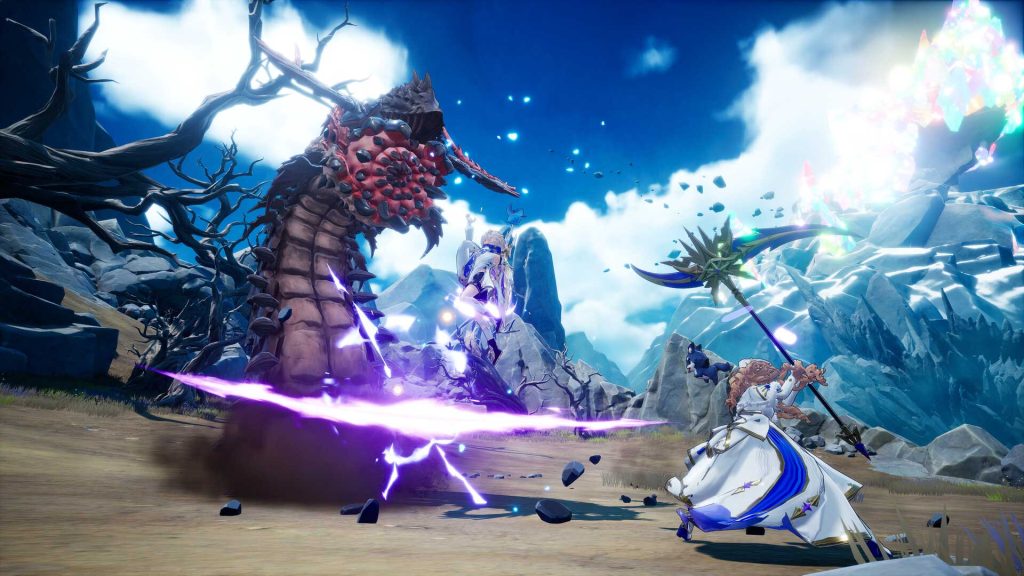
Comparisons to Genshin Impact are unavoidable. You use a party of three characters that you switch between during combat. Combining heroes isn’t strictly necessary for all content, but it’s clearly how the combat system was designed.
There is a full range of elements and status effects: fire, ice, poison, lightning, stun, knockdown, airborne…
Certain skills require specific statuses to activate, so later on it’s no longer enough to simply put your three strongest heroes in the team. Building good combinations becomes very important.
There are currently 19 playable characters, ranging from sexy rogues and mages all the way to… children? Anime game. Moving on.
Hero Leveling
The progression system is probably where you feel the most that this was once supposed to be a gacha. Every hero has several different layers of development.
The first is the classic level. Heroes currently go up to level 70 and five stars, but you can’t just mindlessly push them to the maximum. For example, to go from level 50 to 60 you first need to collect the appropriate Breakthrough materials. Only after that can you continue leveling.
Skills
Every character has passive/basic and active skills. Auto Attack, Jump Attack, Dodge Attack and similar skills mostly go up to level 7, while active skills can go up to level 10.
The two main active skills work on cooldowns that you can further reduce with auto attacks. In addition, there are two Signal Skills. You can’t simply activate them whenever you want — they require a specific condition, for example Frost status on the enemy.
This is where the combat system starts to gain a lot more depth than it first appears.
Gear – Time to Min-Max
Every hero has five gear slots. Sets usually require two or three pieces of equipment, which naturally leads the game toward a 3-piece main set + 2-piece secondary set combination.
Legendary gear goes up to level 15, has five stars, and can have an additional Rune slot. The current meta revolves quite a bit around Defense Ignore, which is why Earthshatterer is one of the most desirable sets, along with classic Attack Power combinations.
You can also reroll stats, and the required materials can be farmed normally from quests and raids.
General stat priority is: Defense Ignore > Attack Power % > Attack Power > Crit Rate > Crit Damage
Karma – Much More Interesting Than the Name Suggests
The Karma system is based on cards that you collect and equip on characters. They provide classic stats like Attack, Defense, Max HP, etc.
But the most interesting ones are Exclusive Karmas. These are made specifically for certain heroes and can significantly change their abilities.
A good example is Charlotte, a rogue/assassin character. Her Exclusive Karma allows her illusion to explode, dealing massive damage and also applying Poison. So not all Karmas are just boring “+5% Attack.” Some actually change the way a build functions.
Awakening
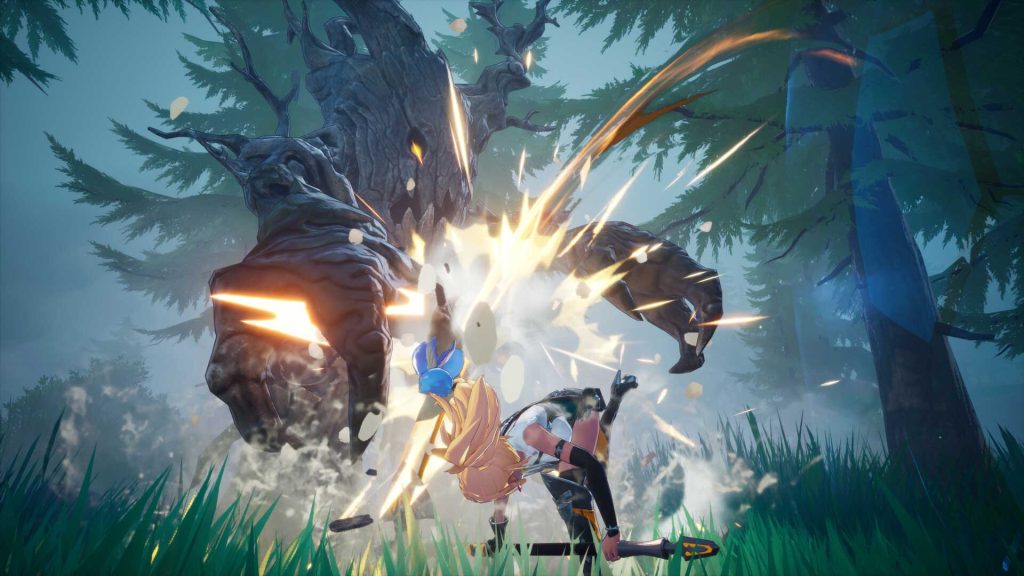
Awakening is a much simpler system. Every hero has six Awakening Stones that you must activate in order: 1 → 2 → 3 → 4 → 5 → 6.
You can’t jump straight to the fifth or sixth. The good news is that the materials are relatively easy to farm through quests, so the system isn’t particularly frustrating.
Open World
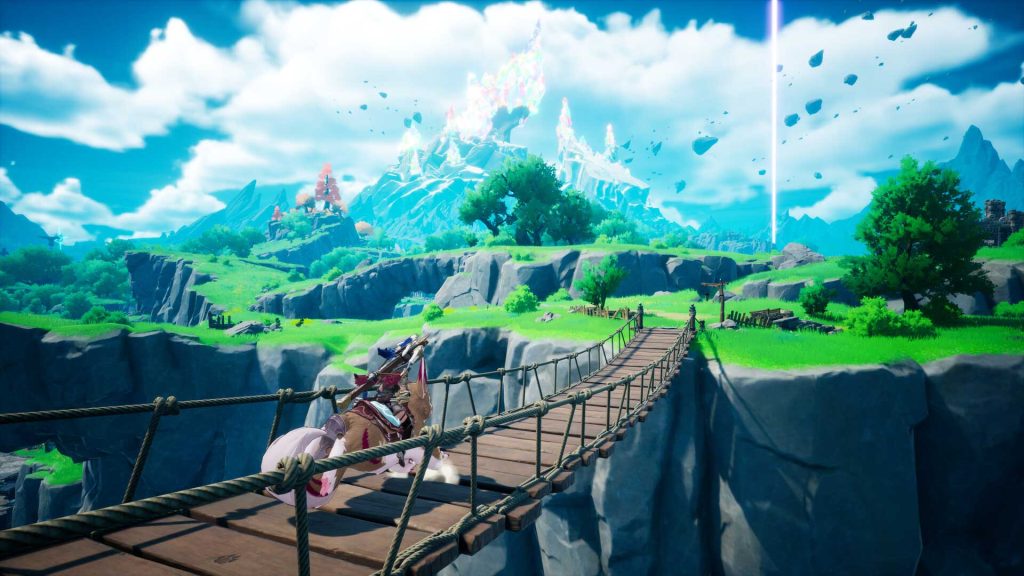
This is probably where the game surprised me the most with the amount of content. Besides the main campaign you have follower missions, side quests, regional missions, treasure quests, and various open-world events that you first have to discover yourself through exploration.
There are also: mining, hunting, herbalism, cooking, world bosses, treasure hunting, puzzle missions, mini-games, and special exploration challenges.
Cooking is a bit confusing at first because you combine three ingredients with different preparation methods like Slice, Boil, and Roast. Once you understand the system, it becomes fairly straightforward.
And then we come to the marmots. So many marmots. They’re hidden all over the world and give mini-games like Whac-A-Mole, flying through rings, and… jumping puzzles. @#%$#!@ jumping puzzles.
Familiar / Mount System
Mounts aren’t just cosmetics. There are currently a total of 29 mounts, including DLC ones and those you can earn normally by playing.
I especially like the collection system. Let’s say there’s a set of four cats. The first one can enable Swim Dash for that specific cat. The second can unlock Swim Dash for all familiars. The third reduces stamina consumption underwater. The fourth increases movement speed for all familiars underwater.
Because of this, there is a real reason to collect different mounts beyond just “this one looks cool.”
Endgame
After the campaign you spend a lot of time in the Mercenary Guide system. There you’ll find one-time Training tasks, regional missions, World Bosses with daily resets, Sudden Missions that you previously found during exploration, and special challenges.
There is an instant teleport option, thank god, so you don’t have to ride or fly across half the map every time.
Then we have the dungeon system. Trait Dungeons are for crafting and upgrade materials. Currency Dungeons are for money and other resources.
And then come the Hunts. There are six different bosses, each with difficulty levels from 1 to 5. Level 5 can already punish you quite hard. Hunts are designed for two players, but they can be soloed.
Raids
There are currently two main raids: STEELHEART FORTRESS DEFENSE and CHASE TOWARD THE END.
Both have multi-phase boss encounters and three difficulty levels. This is where some of the most valuable rewards in the game drop, including Legendary Runes, so you’ll have a reason to farm them multiple times.
Raids support 1–3 players, but they can also be done solo if you have a strong enough team. At the time of writing this review the Multiplayer Challenge update had also come out, which significantly made it easier to find other players. You no longer need to go to Discord and spam room codes every time you want to farm something. The community has been surprisingly responsive when someone needs help, by the way.
Is the Game Grindy?
Yes. Absolutely. The gacha DNA can be felt at every step.
But there’s a huge difference between: “Grind to progress” and “Pay so you don’t have to grind.”
Dragon Sword is currently the first case. Pay-to-win practically doesn’t exist, and everything can be ground out relatively quickly.
Fully maxing all 19 heroes will take a serious amount of time. But if you want two or three complete and strong teams, you’ll get more than enough materials through the campaign and exploration.
55/59 Achievements Later…
I’ve currently finished 55 out of 59 achievements. The remaining ones are mostly the kind where I look at the requirement and say: “You know what… maybe tomorrow.”
Complete 147 quests. Find a marmot and play its game 48 times. And similar stuff.
But jokes aside, a big part of those activities is actually fun. Finding hidden marmots, Whac-A-Mole, flying through rings… Just please don’t give me any more jumping puzzles.
And yes… we’ve reached the costumes. The developers have already started adding somewhat… gooner costumes. But let’s be real. This is an anime game from an Asian developer. We all knew this was going to happen.
The Situation with Webzen
Unfortunately, the biggest problem with Dragon Sword right now isn’t the game itself. It’s the drama between Hound13 and Webzen.
Dragon Sword was originally supposed to be a gacha/live-service game, but the relationship between the developer and publisher basically exploded. Contract termination, blocked purchases, refunds, accusations about unpaid money, alleged offers to take over the company…
The story has become far bigger than the game itself.
The biggest irony of the whole situation is that because of all this we ended up with something I actually like more: a premium anime RPG with gacha-style progression systems — but without the need to actually pay for the gacha.
The only question is what will happen to the game long-term. And I sincerely hope they find a way to continue development.
TLDR / Final Score
Dragon Sword: Awakening is not a game that will change the gaming industry. It’s not a 10/10 masterpiece either. But for €30? You get a very good package.
A solid anime campaign, 19 heroes, plenty of different builds, a surprisingly deep progression system, open world, exploration, mini-games, hunts, world bosses, co-op and raids.
And perhaps most importantly: 0 pay-to-win.
The Deluxe Edition is around €45 and brings additional mounts, but for normal play the Standard Edition is more than enough.
After 55/59 achievements and over 100 hours spent in the game, my conclusion is simple:
Dragon Sword: Awakening is a very solid 7/10.
For its price it offers more than enough content, the progression can seriously hook you, combat is fun, and the co-op bosses give enough reason to keep making stronger and stronger builds.
It’s not perfect. But it’s damn fun. And sometimes that’s more than enough.
If you enjoyed this review, be sure to check out our other game reviews on Buff Gaming for more in-depth coverage, honest opinions, and the latest gaming news.