When Japan and video games are mentioned in the same sentence, it is hard not to think of some of the biggest companies and franchises in the history of the industry. Nintendo, Sega, Capcom, Square Enix, Bandai Namco, Konami… The list is so long that, from the outside, it can sometimes seem as if all you need in Japan is a good idea, a computer, and sooner or later you will make a game that takes the world by storm.
Of course, reality is a little different.
When we look at Japan’s gaming industry from the outside, it is easy to get the impression that it is so well established that there must be a natural path to success for talented people. However, behind those major companies and famous franchises there are also countless smaller teams and individual creators who have ideas, talent, and the desire to create something of their own, but may not necessarily have the experience, contacts, or knowledge needed to turn that idea into a product that can find an audience. This is certainly not a problem unique to Japan, but it is interesting to see how a country with such a strong creative industry has chosen to support people who are only just beginning to find their place in it.
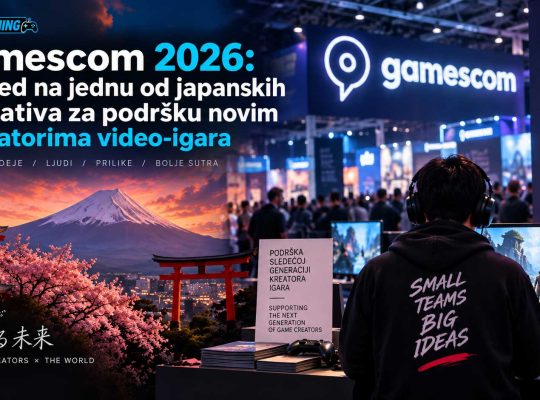
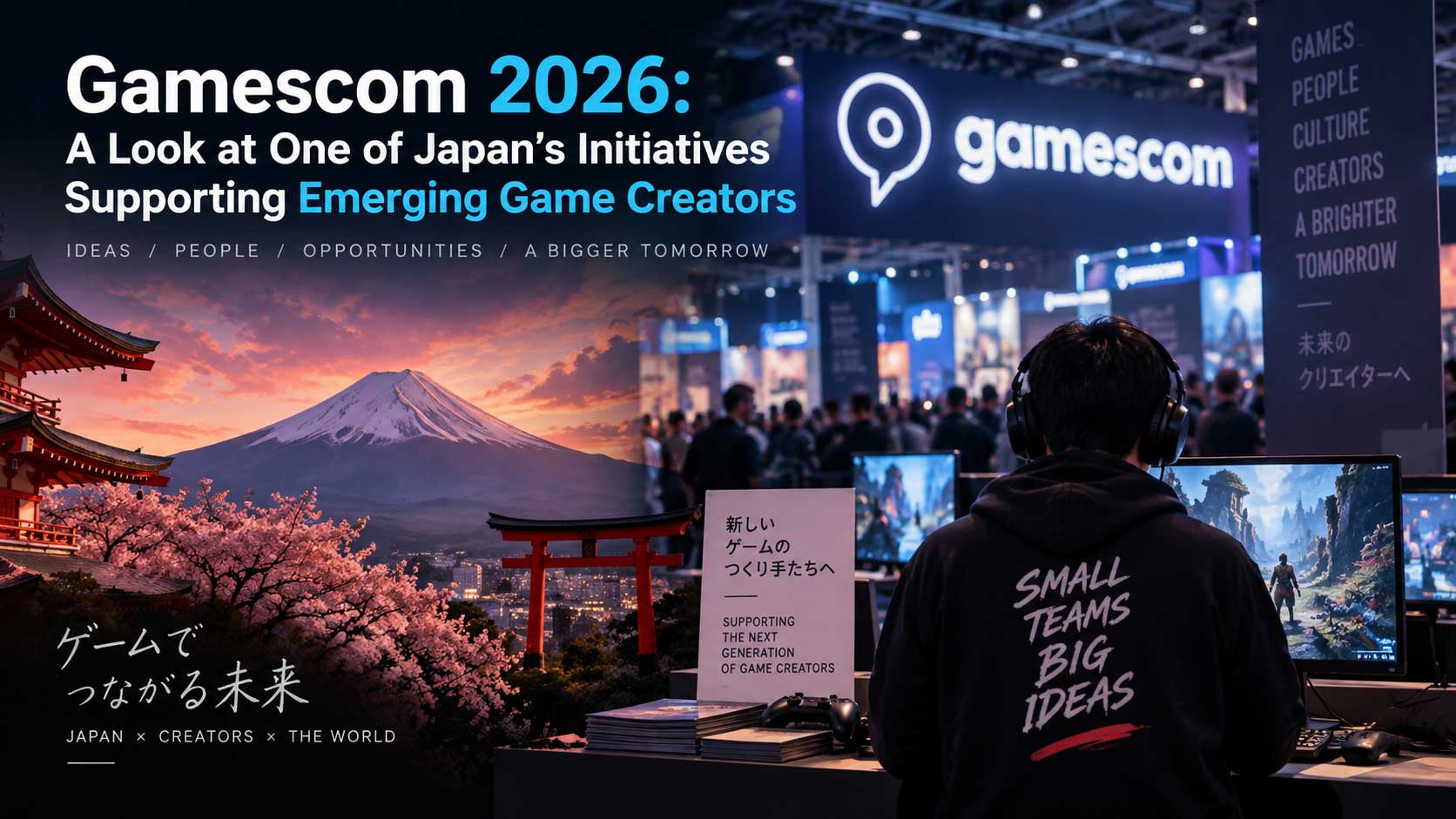
During Gamescom 2026, we had the opportunity to attend a presentation we were invited to by representatives of a program designed to support new video game creators. At first glance, it could have seemed like just another presentation featuring several indie titles, but behind it was actually a much more interesting story. The program behind these projects is trying to give creators something that can often be just as important as development funding itself – knowledge, mentorship, connections, and the opportunity to present their games outside Japan.
This is where the Japan Creator Support Fund, Top Game Creators Academy (TGCA), and Computer Entertainment Supplier's Association (CESA) come into the picture.
A Good Idea Is Only the Beginning
There is one thing that is very easy to forget when we look at major gaming companies. When we see a new game that looks fantastic, with a huge budget, famous actors, great music, and an enormous marketing campaign, we usually see only the finished product. We rarely think about how many people it takes to turn an idea into something we can actually buy and play.
For smaller creators, the situation is completely different.
Someone can be an excellent programmer but have no experience with marketing. Someone else might have a fantastic gameplay idea but have never managed a serious development project. Another creator might produce an incredible visual style but have no idea how to find a publisher or present their game to an audience outside their own country. When you work alone or as part of a small team, you often have to be the programmer, designer, producer, marketing manager, and business person all at once.
That is exactly why I found the Japanese approach so interesting. It does not start and end with the question of how to finance new creators, but also looks at how to help them learn the things they are missing. Money can allow you to continue developing your game, but it cannot teach you how to finish a project, how to approach a publisher, how to prepare a presentation, or how to find an audience on the other side of the world.
That is part of the challenge TGCA is designed to address, with support from the Japan Creator Support Fund.
When the State Decides That Creativity Is Worth Supporting
The Japan Creator Support Fund (JCSF) was established within the Japan Arts Council with funding from the Agency for Cultural Affairs, Government of Japan. It supports creator development initiatives across different cultural and creative fields, including games. TGCA is one of the creator development initiatives supported through the fund.
So why would a government want to invest in people who make games in the first place?
The answer is actually much broader than entertainment. Creative industries today represent culture, but also serious business and export potential, and Japan has spent decades building its position in that world through companies and franchises that have become famous around the globe.
Still, relying only on the existing big names is not enough. If you want to have new creators, new studios, and new franchises ten or twenty years from now, you need to give the people who are just starting out today a chance to take their first serious steps.
And that brings us to the Top Game Creators Academy.
It’s Not Just About Learning How to Make a Game, but What to Do With It Afterwards
The Top Game Creators Academy, or TGCA, is a program specifically focused on video game creators. What makes it particularly interesting is that it does not focus exclusively on the development of the game itself, but also on everything that comes before and after the actual production process.
Because, realistically, making a game is only one part of the challenge.
You can spend two or three years working on a project and create something genuinely good, only to reach the point where you realize you have no idea who to show it to. You may not know how to talk to publishers, how to put together a business presentation, how to approach marketing, or even how to explain to people why they should play your game. A major studio has entire teams dedicated to each of these areas, while a small developer often has only themselves.
That is why the opportunity to receive support with production, business, publishing, and promotion can be so valuable. Even more importantly, creators are given opportunities to present their projects outside Japan, and Gamescom is a very logical place for that. When we attended the presentation in Germany, this was one of the reasons I found the whole process particularly interesting. We were not simply looking at four games that someone wanted to show us. We were looking at the result of a system that is trying to give creators something that would be much harder for them to find on their own.
CESA as a Link to the Industry
CESA, or the Computer Entertainment Supplier's Association, may not be a name that immediately means much to the average gamer, but it plays an important role in Japan's video game industry. It is worth pointing out that CESA is not a government institution, but an industry association that brings together companies and professionals from Japan's gaming industry and works on its development, promotion, research, and education, as well as its connections with the international market.
That is precisely why CESA has such an interesting position within a program like this. It can create a bridge between people who are only beginning to find their place in the industry and companies that have already been part of that same industry for decades.
There is a big difference between telling a young developer, “Here is some support, now go make a game,” and giving them access to people who have already dealt with the problems they are likely to encounter and can show them how the industry works from the inside.
Industry Experience Can Help Emerging Creators
Perhaps this is the most interesting part of the entire idea.
Large companies and small indie teams often seem like two completely separate worlds. One side has huge budgets, hundreds of employees, and dedicated teams for every part of development, while the other might be working from a small studio or even from home, trying to create something people will want to play with very limited resources.
Here, however, the experience of people who come from Japan's established game industry is being used to help new creators. Someone who is just starting out can receive advice from people who have already worked through production, marketing, publishing, and game development at a much larger scale.
That does not mean every project will become a hit, nor does it mean every creator will make the next Resident Evil or Final Fantasy. That was never really the point.
The point is to give more people a chance to try.
From a Japanese Creator to Gamescom
During the presentation at Gamescom, we were shown four games – Near The Sun, Ghost in the brain, Out of Skull, and https://store.steampowered.com/app/4017030/Cyber_Janitor/Cyber Janitor. We will be covering each of these titles separately, as they are different enough to deserve their own articles, but their presence at Gamescom is already a good illustration of what a program like this is trying to achieve.
For a small creator, getting the opportunity to present their game to an international audience, journalists, and industry professionals is a big deal. Gamescom is an enormous event where the biggest companies, major publishers, independent developers, and thousands of other people trying to attract attention to their projects all come together. In an environment like that, it is very easy to go unnoticed.
That is why simply having the opportunity to be there is already a form of support. Not because someone at Gamescom will automatically discover your game and turn it into a worldwide hit, but because someone is helping you get through a door that you might have found very difficult to open on your own.
After that, it is up to you to walk through it.
Japan Doesn't Have a Magic Formula, but It Has an Interesting Approach
We should not come away from this thinking that the Japanese system is perfect or that Japan has some secret formula for creating successful video games. It doesn't. Even with this kind of support, some projects will fail, some creators will give up, and some games simply will not find a large enough audience.
But what is important is recognizing that talent alone is not always enough if you do not give people the opportunity to develop it. We often expect new creators to be creative, technically skilled, good at business, capable marketers, and able to understand how the international market works, all at the same time.
And quite often, we expect all of that from one person who may have simply wanted to make a game.
That is why programs like this make sense. They do not guarantee success, but they can reduce the number of obstacles between a good idea and a product that actually has a chance of reaching an audience.
Perhaps That Is the Most Interesting Thing We Saw
What I saw at Gamescom did not make me think so much that Japan has some perfect system. Instead, it made me think about how difficult it actually is for a small creator anywhere in the world to make the entire journey from a first idea to a finished game on their own.
As players, we usually discover games once they are already finished. We see a trailer, read a news story, maybe play a demo, and then decide whether we want to buy the game. We rarely think about how many projects never make it that far because their creators ran out of money, time, knowledge, or connections somewhere along the way.
Through programs like this, Japan is trying to make that journey a little easier. And that is exactly why this presentation felt more interesting to me than another standard Gamescom event where someone simply shows us a few new titles. Behind these games is a story about people who were given the opportunity to develop their ideas with support and then take those projects beyond Japan's borders.
For a country that already has one of the best-known gaming industries in the world, that is quite an interesting message. Not because Japan lacks big games, but precisely because it shows an understanding that maintaining a creative industry also means investing in the people who are still on their way up.
Whether Near The Sun, Ghost in the brain, Out of Skull, and Cyber Janitor will become games known around the world remains to be seen. What we can already say is that their creators have been given an opportunity to present their projects to an audience they might not have been able to reach so easily on their own.
And perhaps that is the best way to look at the entire program.
It is not a guarantee that every young developer will create the next major hit. It is an attempt to give people who have something to say or something to show a better chance of reaching the point where they can prove what they are capable of.
Because the next great Japanese game developer might not have a major studio behind them right now, or hundreds of people working on their game. They might simply have an idea, a computer, and enough determination to give it a shot.
And sometimes, what that kind of creator needs most is the right opportunity — and the support to make the most of it.