
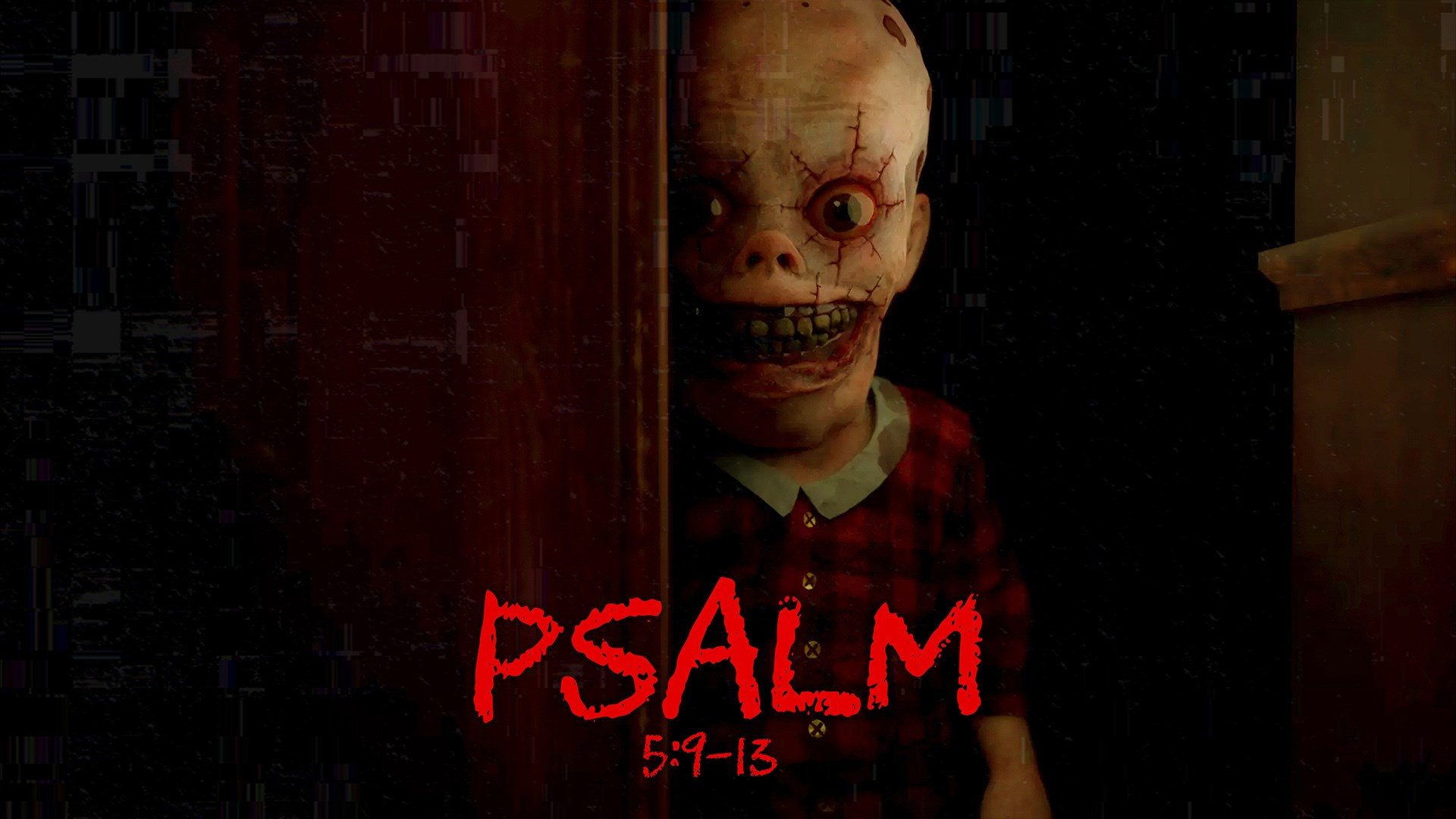
There is something special about short horror games. They do not have ten hours to build an atmosphere, develop a huge story, or introduce dozens of gameplay systems. They have to get to the point quickly, and when they work, they can leave a stronger impression than much larger games. Psalm 5:9-13 is exactly that kind of game.
We played Psalm 5:9-13 on PS5, following its original PC Steam release in March 2024 and its arrival on PlayStation in August 2026. The concept is deliberately simple. You enter a seemingly ordinary space, explore it, look for anomalies, and slowly realize that something is very, very wrong.
The entire experience lasts roughly 30 minutes, and that is probably the first thing you should know before buying it. This is not a traditional survival horror game, and it is definitely not trying to be the next Resident Evil or Silent Hill. It is closer to a short first-person horror experience, with exploration, observation, and atmosphere doing most of the heavy lifting.
And surprisingly, it works.

What is Psalm 5:9-13?
The basic idea is simple. Your character moves through a series of locations using an elevator, with each floor presenting another distorted version of reality. You are never given a huge amount of information about what is happening or exactly what you are supposed to be looking for.
You simply know that the elevator will not take you further until you find what is hidden.
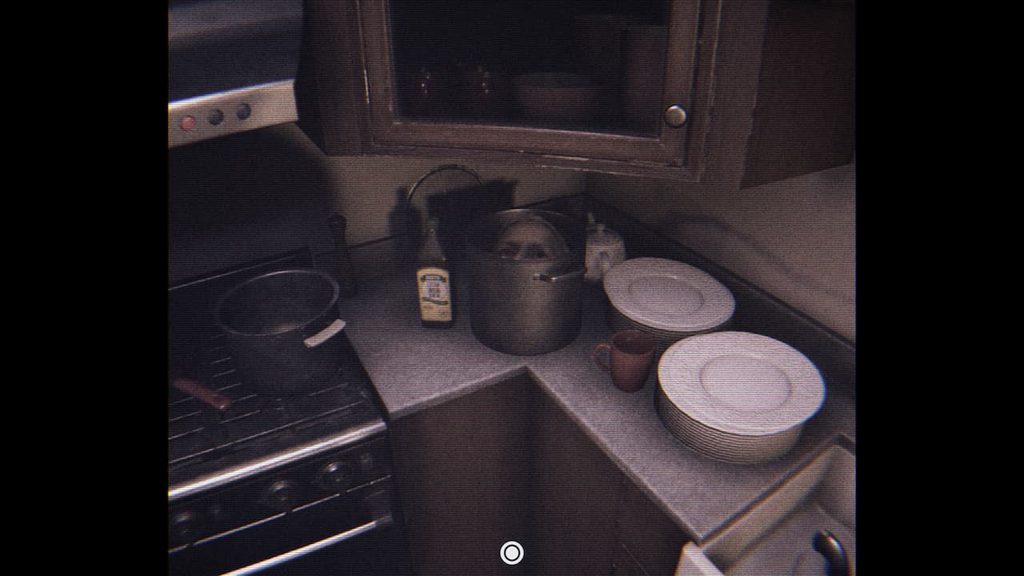
That turns observation into the main gameplay mechanic. You walk through rooms and corridors, paying attention to your surroundings and trying to spot anything that has changed. It might be an object that was not there before, something that disappeared, a strange figure, or a detail that looks completely out of place.
The interesting part is that the game relies on your memory. You might walk through the same room several times, only to realize that something is now different.
There is no combat system to master, no extensive inventory, no skill tree, and no character progression. You are basically left alone with the environment and whatever the game decides to show you.
And that is both the strength and weakness of Psalm 5:9-13.
Atmosphere is the biggest strength
If there is one thing Psalm 5:9-13 gets right, it is atmosphere.
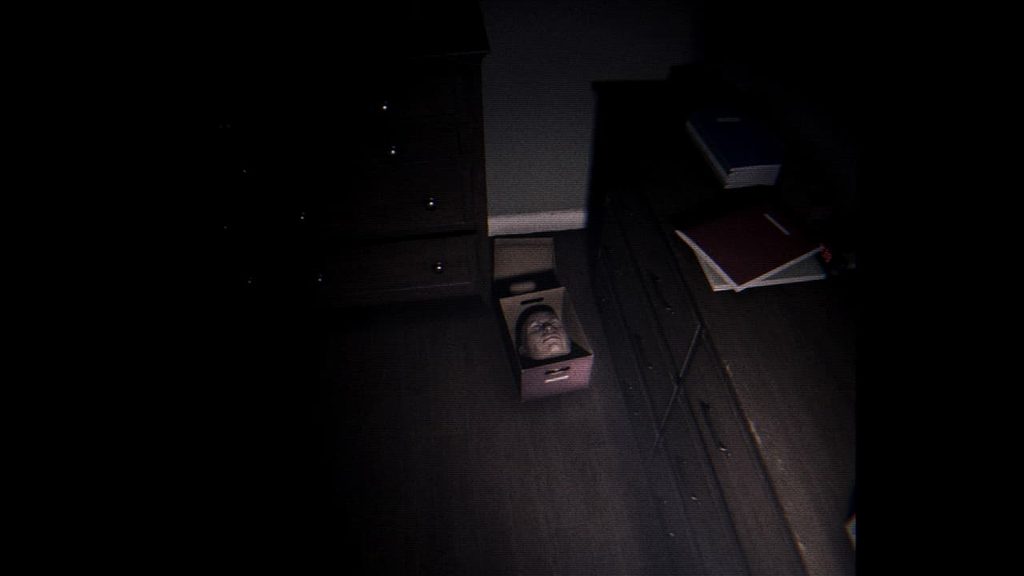
The VHS-style visual presentation gives the game a deliberately degraded, almost found-footage feeling. The image quality makes the environment look less reliable, while also making it harder to tell whether you really saw something in the distance or whether the visual noise simply fooled you.
It is a simple trick, but it works.
Sound is just as important. The game frequently uses audio to make you feel that something is wrong before you actually understand what you are seeing. A strange noise behind you, an unexpected change in ambience, or a sound that simply should not be there can be enough to make an otherwise ordinary room feel threatening.
That is where Psalm 5:9-13 is at its best.
It does not constantly throw monsters at you. Instead, it makes you question your surroundings.
And for a short psychological horror game, that is a very effective approach.
You do not fight. You pay attention.
One of the first things to understand is that Psalm 5:9-13 is not built around combat.
There are no guns, no melee weapons, no resource management and no traditional survival horror mechanics. The game wants you to explore and observe rather than fight. The horror comes from uncertainty.
Was that object there before? Why is that door open now? Did something just move? Why does this room suddenly feel different?
That makes the game feel more like a collection of short horror scenarios than a traditional adventure. The problem is that this concept is not deep enough to support a much longer game.
Fortunately, Psalm 5:9-13 does not overstay its welcome.
Thirty minutes, give or take
The game is extremely short, with the average playtime sitting around the 30-minute mark. That can be both a positive and a negative.
On the one hand, the short runtime means the basic idea does not have much time to become repetitive. The game delivers its concept, throws a number of strange and unsettling situations at you, and gets out.
On the other hand, you are still paying for an experience that can be finished in a single sitting. At around $10, that is going to be an important consideration for a lot of players.
Personally, I think the short runtime works in the game's favor, but only because Psalm 5:9-13 is clearly designed as a brief horror experience. If you go in expecting several hours of exploration, puzzles and story, you are almost certainly going to be disappointed.
Not every scare works equally well
Psalm 5:9-13 absolutely has some effective scares.
There are moments where the game takes its time, builds tension, and then delivers something genuinely unsettling. Those are the scenes that make the experience worth remembering.
But not every scare lands with the same impact.
Some moments are easier to anticipate, especially if you have played a lot of indie horror games built around VHS visuals, sudden appearances and environmental changes. A few sequences feel more like familiar horror tricks than genuinely surprising encounters. That does not ruin the experience, but it does prevent the game from reaching the very top tier of indie horror.
The strongest moments are the ones where the game makes you uncomfortable before it actually scares you.
The biggest problem is the gameplay
This is where I think Psalm 5:9-13 is going to divide players the most.
The gameplay is extremely simple. You walk around, look at things, interact with a handful of objects and figure out what the game wants you to find next. There are no deep puzzles and very little freedom. When the atmosphere is working, that simplicity is fine.
When it is not, you suddenly realize that there is not much else to do.
That makes Psalm 5:9-13 feel more like a horror experience than a fully developed game. Personally, I do not think that is necessarily a problem, but it is absolutely worth mentioning before recommending it.
The game knows exactly what it wants to be, and it never tries to become something bigger.
What about the story?
The story is probably going to be another point of disagreement.
Psalm 5:9-13 clearly wants to create a mystery. There are strange environments, disturbing images and a title that immediately makes you wonder what it means.
But the game does not give you many direct answers.
If you are looking for a traditional narrative with lots of dialogue, exposition and clearly explained events, you are going to be disappointed. Instead, the game leaves you to interpret much of what you see.
That can work very well in horror, but it also means that some players will finish the game feeling like they have been given more questions than answers.
Even the title itself is strange. The biblical Psalm 5 does not have verses 9 through 13, which has led players to speculate about what the name is supposed to represent. There is no clear official explanation that gives us a definitive answer, so I would rather leave that as part of the mystery than pretend there is a confirmed interpretation.
And honestly, I think that fits the game.
The visual style does more work than the gameplay
Psalm 5:9-13 is not a technically spectacular game, but the visual style suits it extremely well.
The VHS filter, ordinary environments and gradual introduction of disturbing elements create a good contrast. The world does not constantly scream “HORROR” at you.
Instead, things begin normally.
Then something changes.
That contrast is important. If every room were already filled with monsters and blood, the effect would be much weaker.
The game is at its best when it makes a familiar space feel wrong.
PS5 version
We played Psalm 5:9-13 on PS5, where the game arrived in August 2026.
The PlayStation version is straightforward and well suited to the game's structure. Because this is such a short experience, you can simply start it, sit down and finish the entire thing in one session without worrying about progression systems, complicated settings or long stretches between major moments.
That actually makes it a fairly easy game to recommend as a quick horror experience.
The bigger question is whether the amount of content is enough to justify the price.
Is it worth it?
That depends almost entirely on what you expect.
If you like short psychological horror games, VHS aesthetics, environmental anomalies and games that leave some things unexplained, Psalm 5:9-13 is worth checking out.
If you want a long survival horror game with deep mechanics, complex puzzles, extensive exploration or a detailed narrative, there is simply not enough here.
Its biggest strengths are its atmosphere, sound design, visual identity and ability to create tension with very little.
Its biggest weaknesses are its extremely simple gameplay, short runtime and deliberately vague storytelling.
I also think some of the scares are more predictable than others, especially if you have played a lot of similar indie horror games.
But the important thing is that the game never feels like it is trying to pretend to be something it is not.
It is a short horror experience, and it knows exactly how long it needs to be.
Verdict
Psalm 5:9-13 is not a perfect horror game, but I do not think it needs to be.
Its biggest flaws are obvious. The gameplay is extremely limited, the story is cryptic, the experience is very short, and not every scare lands equally well.
At the same time, the atmosphere is strong, the VHS presentation fits the concept perfectly, the sound design does a lot of the work, and there are enough genuinely unsettling moments to make the experience worthwhile.
Most importantly, the game ends before its core idea has time to become exhausting.
We played Psalm 5:9-13 on PS5, and after roughly half an hour, I felt like I had experienced exactly what the game was trying to deliver, a short, strange and unsettling horror experience that is not going to satisfy everyone, but does enough right to stand out.
Ako tražite povoljnije cene za igre, DLC-ove i druge digitalne proizvode, posetite Eneba i pogledajte aktuelnu ponudu.
Pre kupovine obavezno unesite naš promo kod BUFFGAMING i ostvarite dodatnih 5% popusta.
Kupi igre, poklon-kartice i dopune povoljnije