
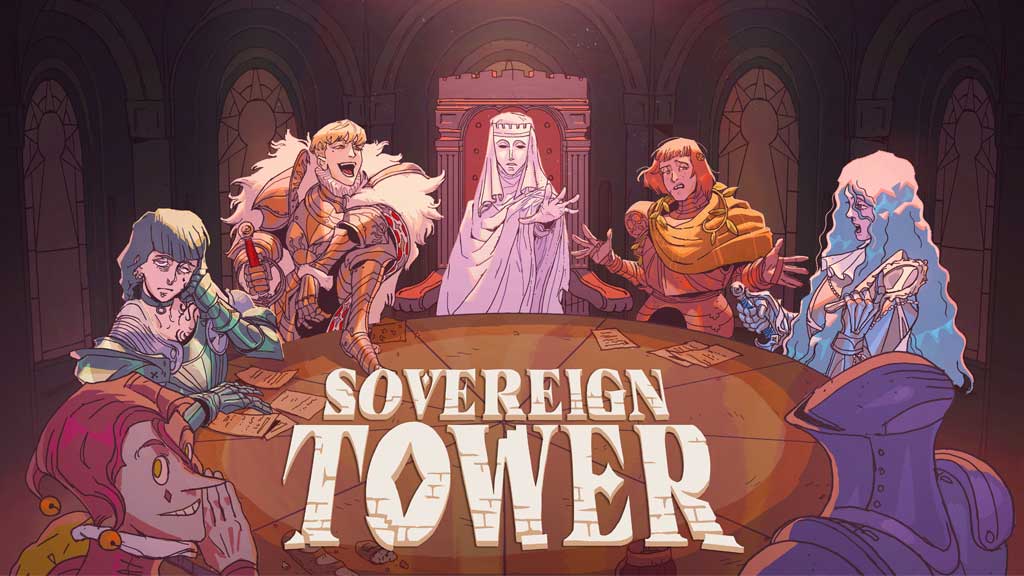
Sovereign Tower: Sovereign Tower is a charming management game with memorable characters, entertaining writing, and a clever time-rewind mechanic. Unfortunately, its repetitive gameplay loop and relatively shallow management systems keep it from reaching its full potential. Still, if you enjoy lighter fantasy management games and don't mind some repetition, it's worth checking out. – Igor Marković
Sovereign Tower is the kind of management game that immediately gives you a pleasant first impression. You sit on the throne, meet strange visitors, recruit eccentric knights and send them out on missions while trying to keep your kingdom running. It has a charming presentation and a genuinely interesting premise, but the longer you play, the more its limitations begin to show.
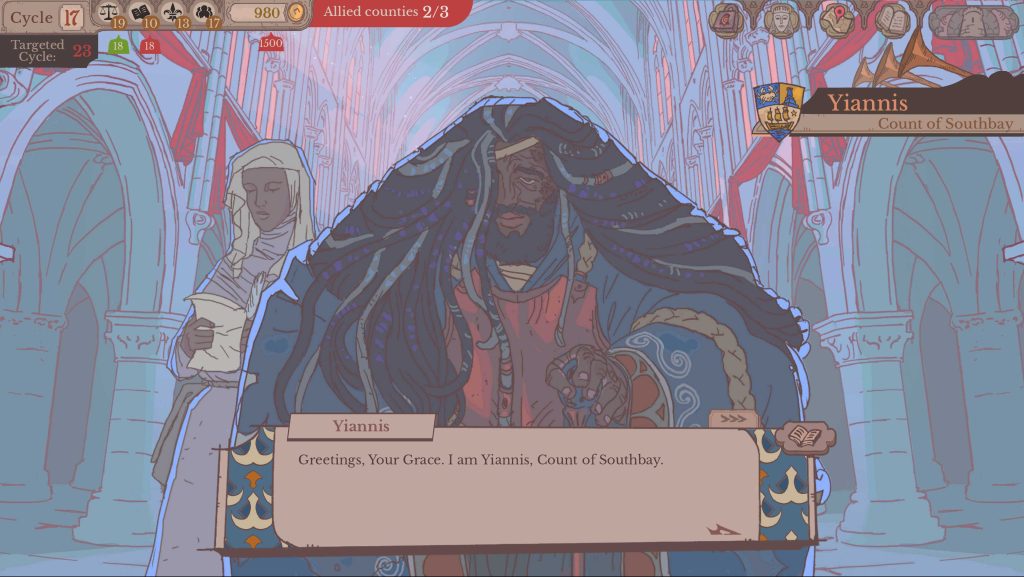
You take on the role of an ordinary wanderer who unexpectedly becomes the Sovereign of a magical tower. Suddenly, you're responsible for managing a kingdom, maintaining relationships with four different factions, recruiting knights and deciding which of them should take on dangerous missions. The concept is strong, and there are some clever ideas here. Unfortunately, the execution isn't always consistent enough to make the experience as deep as it could have been.
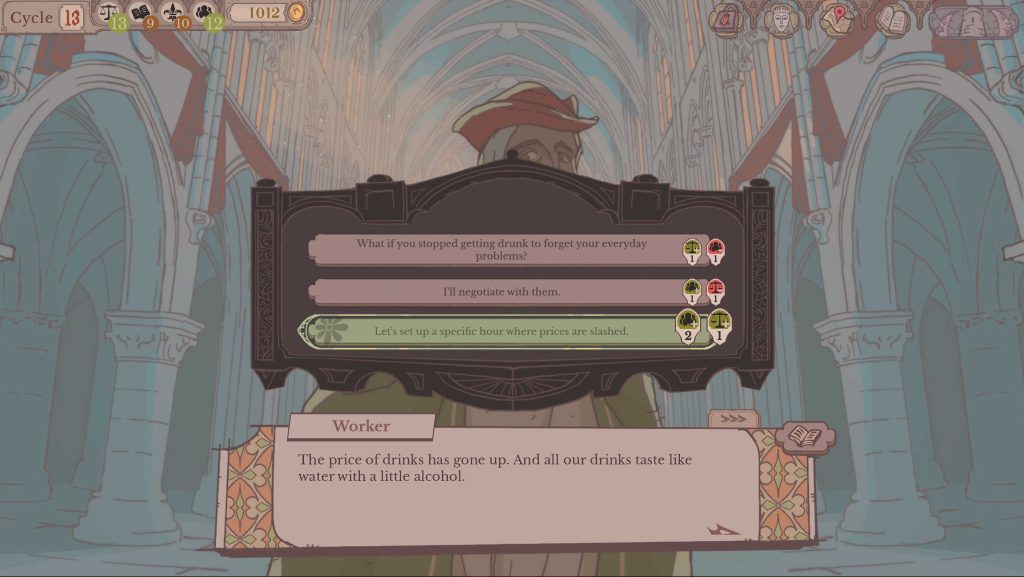
A Charming World Built Around Its Characters
The strongest part of Sovereign Tower is easily its cast of knights.
Each knight has their own personality, preferences and quirks. Some are arrogant, others insecure, while some are simply bizarre. As you learn more about them through conversations and spying, sending them on missions becomes more interesting.
You're not simply looking at their statistics and choosing whoever has the highest numbers. You also have to consider their personalities and how they might react to different situations. That gives the management side of the game a little more personality than you might initially expect.
The writing also deserves credit. It's generally light and entertaining, but there is a slightly darker and more cynical tone underneath the colorful presentation. That contrast works well and gives the game more personality than its cheerful appearance initially suggests.
The Time-Rewind Mechanic Is a Great Idea
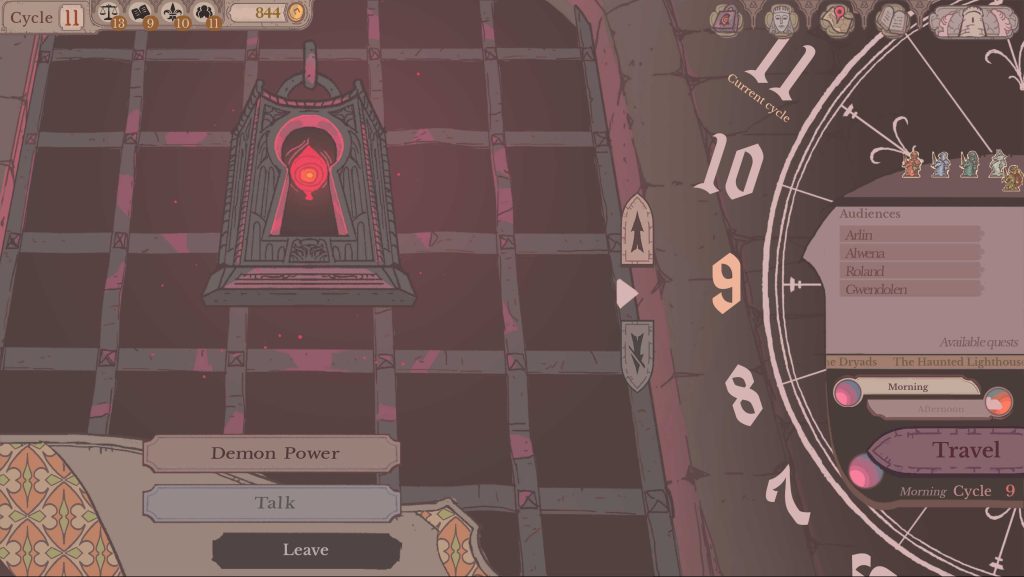
One of the more interesting mechanics is the demon hiding in the basement, which allows you to rewind time.
In theory, this is a fantastic addition. You can correct mistakes, save a knight who would otherwise be lost, experiment with different decisions and potentially discover new paths through the story.
It also fits naturally with the game's management structure. Sending the wrong knight on a mission doesn't necessarily mean you've ruined your entire playthrough. You have the opportunity to go back and try something different.
The problem is that the mechanic can also work against the game's sense of progression.
After rewinding several times, you can start to feel less like you're making strategic decisions and more like you're repeatedly correcting mistakes until you find the outcome you want. It's useful, but it can take away some of the tension that comes from knowing your decisions have consequences.
The Management Systems Don't Go Deep Enough
This is where Sovereign Tower starts to lose some of its momentum.
The basic loop is straightforward: receive visitors, make decisions, manage your relationships, send knights on missions and deal with the results.
It works well enough at first, but after you've spent enough time with the game, the structure starts to become predictable.
The four factions provide another layer to your decisions, but the relationships between them rarely create the kind of pressure or complexity that would make you feel like you're truly balancing a kingdom on the edge of collapse.
Too often, decisions feel like choosing between a few obvious options rather than solving a difficult political or strategic problem.
That's a shame because the basic idea has much more potential.
Missions Become Repetitive
The knights themselves are interesting enough to make you care about their success, but their missions don't always match the quality of the characters.
After a while, some of the assignments start to feel repetitive. You send a character out, wait for the result and then deal with whatever happened. Once you've understood how the system works, there isn't always enough variety to keep that process feeling fresh.
The possibility of permanently losing a knight adds some tension, but the rewind mechanic makes it easy to undo those consequences.
This creates an interesting contradiction at the heart of Sovereign Tower: the game wants your decisions to matter, but it also gives you a powerful tool for making those decisions reversible.
Where Sovereign Tower Falls Short
The biggest issue is ultimately the basic gameplay loop.
There are enough good ideas here to keep things entertaining for a while, but not quite enough depth to make the management systems feel consistently rewarding over a longer playthrough.
The game is at its best when you're learning about your knights, discovering their personalities and figuring out how they fit into your plans. It is less impressive once the novelty wears off and you're simply repeating the same sequence of decisions.
That doesn't make Sovereign Tower a bad game. It simply means that its strongest ideas aren't always supported by systems deep enough to carry the entire experience.
Final Verdict
Sovereign Tower has a lot going for it. Its colorful presentation, quirky knights and clever time-rewind mechanic give it a distinct identity, while the writing adds a darker sense of humor beneath the otherwise charming exterior.
The problem is that the management systems don't evolve enough to match those ideas. The basic loop becomes repetitive, faction relationships rarely feel as deep as they could, and the rewind mechanic can sometimes turn meaningful decisions into problems that can simply be undone.
Still, if you're looking for a lighter management game with a strong cast of characters and don't mind some repetition, there is plenty here to enjoy.
Sovereign Tower doesn't quite reach the strategic depth its premise promises, but it remains a charming and occasionally clever experience that is worth checking out if you enjoy management games with a narrative twist.
Score: 7/10
Ako tražite povoljnije cene za igre, DLC-ove i druge digitalne proizvode, posetite Eneba i pogledajte aktuelnu ponudu.
Pre kupovine obavezno unesite naš promo kod BUFFGAMING i ostvarite dodatnih 5% popusta.
Kupi igre, poklon-kartice i dopune povoljnije