
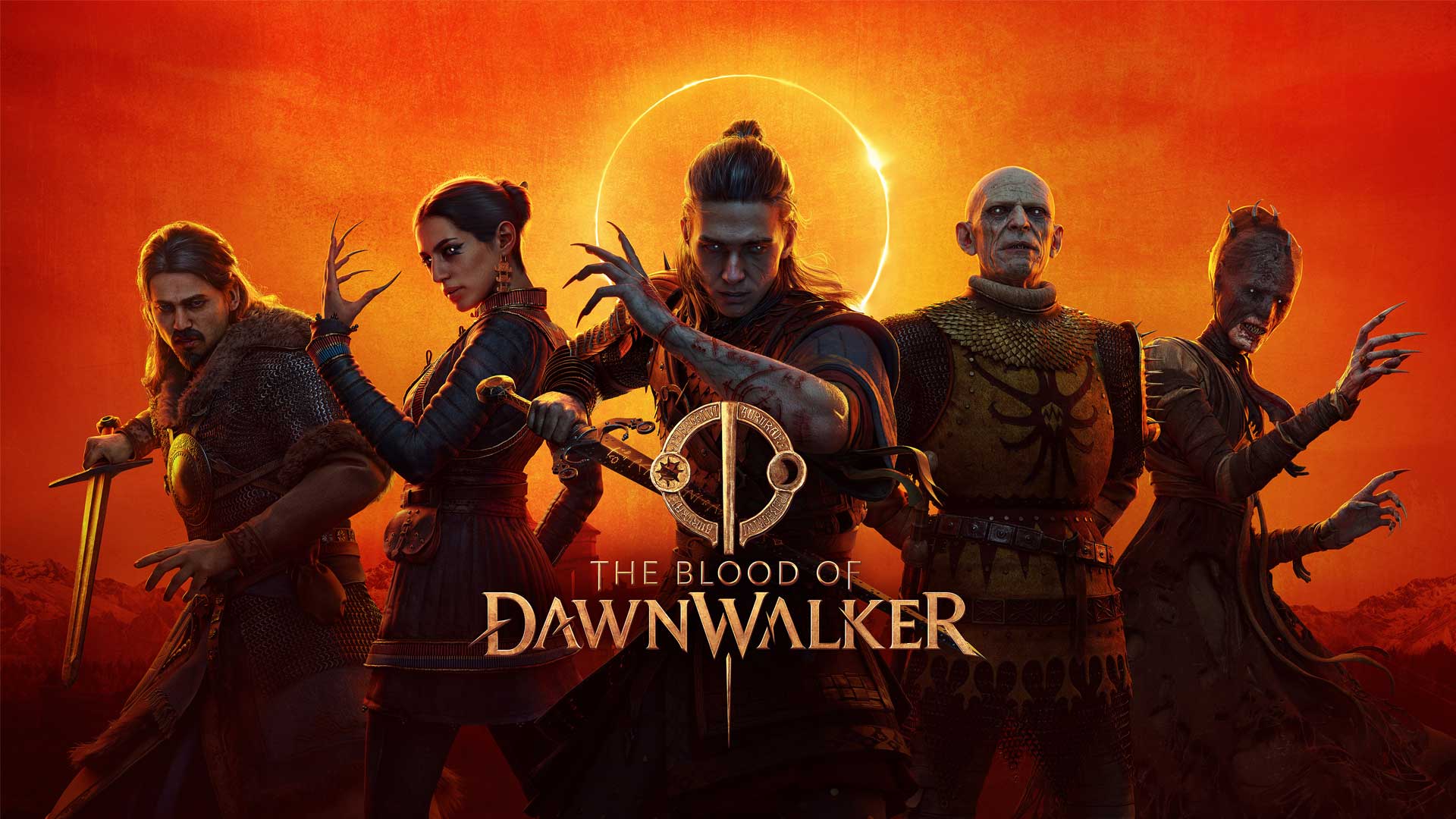
The Blood of Dawnwalker: The Blood of Dawnwalker is an ambitious vampire RPG that stands out thanks to its 30-day time limit, the tension between humanity and vampirism, and systems that attempt to make your choices matter. Unfortunately, repetitive combat, camera issues, limited enemy variety and an inconsistent open-world design prevent the game from reaching its full potential. Still, there is a genuinely interesting RPG underneath those problems, especially for players who enjoy games that force them to accept that they cannot see and complete everything in a single playthrough. – NikolaOtasevic
The Blood of Dawnwalker is one of those games that immediately catches your attention because of the ideas behind it. A vampire RPG from Rebel Wolves, a studio founded by former developers who worked on The Witcher 3, naturally comes with high expectations. Add an open world, a protagonist caught between his humanity and vampirism, a 30-day time limit and a story built around meaningful choices, and you have a game that sounds almost too good to be true.
Thankfully, The Blood of Dawnwalker does have some genuinely interesting ideas. The problem is that not all of them are executed equally well. There are moments when the game feels like the RPG I was hoping it would be, especially when its systems force me to make decisions rather than simply clean another map marker. At other times, however, repetitive combat, an awkward camera, limited enemy variety and some questionable open-world design choices get in the way.
Thirty Days to Change Your Fate
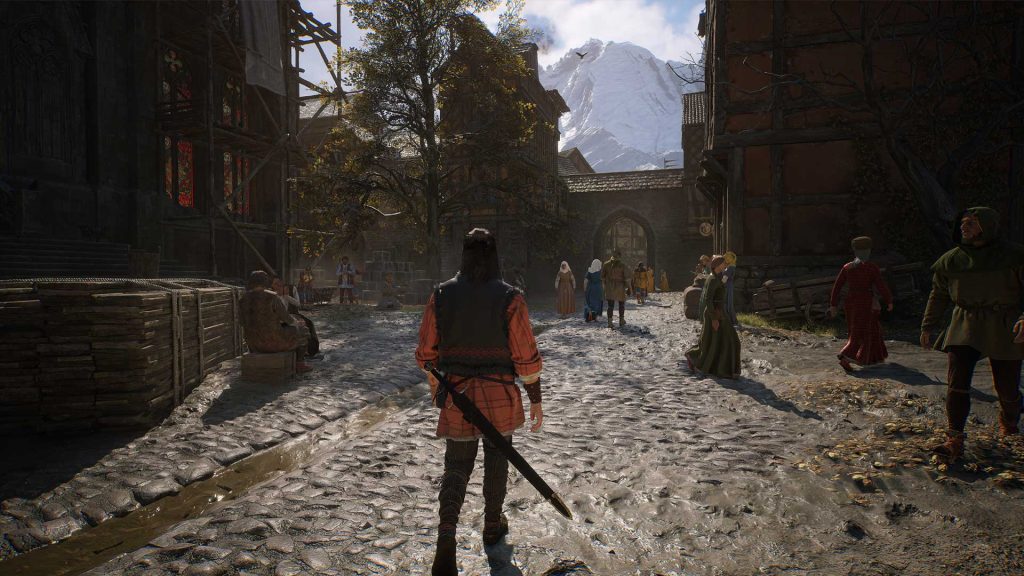
One of the most interesting ideas in The Blood of Dawnwalker is also one of the easiest to explain: you have thirty days. The game doesn't treat those thirty days as a traditional countdown where reaching zero simply means “Game Over.” Instead, time constantly moves forward as you explore, complete quests and make decisions. Some events are tied to particular times of day, while other opportunities can disappear completely if you spend too much time elsewhere.
This immediately changes the way you approach an open-world RPG. In most modern games of this type, you can take your time. A quest will wait for you, an NPC will remain exactly where you left them, and the world is essentially frozen until you decide to continue the story. Dawnwalker wants to break that habit. You cannot do everything, and the game knows it. That sounds simple, but it creates some surprisingly interesting situations. You might start helping one character and realize that the time you are spending with them means you will miss another event somewhere else. You might discover something that can only be investigated during the night, but reaching it means abandoning another activity you had planned. The important thing is that the game doesn't always punish you for these decisions. Missing something is often simply part of your story. And that is refreshing.
Coen Between Two Worlds
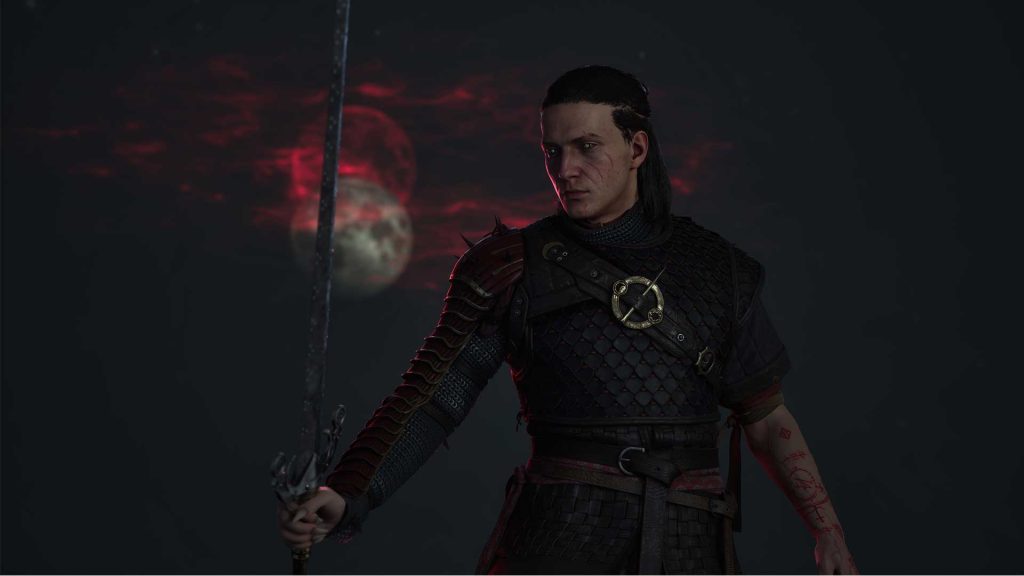
At the center of all this is Coen, a character who is constantly caught between his human side and his new vampire nature. The corruption system is one of the better parts of the game because becoming a vampire isn't simply a convenient way of unlocking another skill tree. Using your vampire powers and drinking blood gradually pushes Coen further toward his darker side, and the game makes that conflict part of the character rather than treating vampirism as nothing more than another gameplay mechanic.
The more you embrace your vampire nature, the more powerful you become, but there is a price. There are moments when Coen's hunger can influence his actions and even affect conversations and relationships with other characters. That creates a much more interesting dilemma than simply asking whether a particular ability does more damage. You have to consider what kind of character Coen is becoming. The game doesn't always take this idea as far as it could, but when the human and vampire sides of the character actually collide, Dawnwalker becomes much more interesting than a standard action RPG.
Vampire Powers Are More Than Another Skill Tree
The vampire abilities are also closely connected to exploration and combat, and this is where Dawnwalker's systems can work particularly well. Being a vampire gives Coen options that a traditional human character simply wouldn't have. Certain abilities can change how you approach encounters, while the difference between day and night influences what you can do and how dangerous particular situations become. This works especially well because the game doesn't completely separate exploration from character progression. Your supernatural abilities can open up possibilities that aren't necessarily obvious when you first enter an area. There is a sense that the developers wanted vampirism to affect the entire experience rather than simply give the player a different set of attacks. Unfortunately, some of these ideas are undermined by other systems in the game, especially combat.
The Combat Wants to Be More Than The Witcher
Combat initially made a good impression on me because it clearly isn't trying to be a direct copy of The Witcher 3. There is a directional blocking system, stamina management and a stronger emphasis on timing attacks and defenses. On PC, the combat can even feel somewhat reminiscent of games such as For Honor, especially when enemies begin adapting to your attacks and you have to pay attention to their patterns. There are some good ideas here, but the system starts to lose its charm after a while. A lot of encounters eventually fall into a familiar rhythm of blocking, attacking, using an ability and repeating the process. The problem becomes even more obvious when the game throws several enemies at you at once. Fighting a single opponent can be satisfying when you understand what they are doing. Fighting several enemies while trying to control the camera, switch targets and avoid attacks from different directions is a completely different story. And this leads directly to one of the biggest problems with the combat.
That Majora’s Mask kind of stress
There’s one other thing The Blood of Dawnwalker managed to bring back that I genuinely wasn’t expecting: that very specific kind of stress I remember from The Legend of Zelda: Majora’s Mask. Not because the two games are particularly similar, but because of the feeling that time is constantly slipping away and you simply cannot do everything. Knowing that quests, conversations, exploration and other activities all eat into your limited time changes the way you approach the world. It’s no longer just a matter of asking yourself what you want to do next, but what you can actually afford to do. Sometimes you’ll knowingly walk away from something interesting because there’s something else that feels more important. That sense of missing out isn’t necessarily comfortable, but it creates a tension that works surprisingly well. Dawnwalker understands that having too much to do can sometimes be more interesting than having a checklist you can comfortably clear.
A story-driven RPG at its core
If there’s one part of The Blood of Dawnwalker that deserves more attention, it’s the sheer emphasis the game puts on its story, characters and conversations. This is much more of a narrative RPG than the combat-focused marketing might initially suggest. A significant part of the experience revolves around talking to NPCs, learning about their problems, building relationships and making decisions that can have consequences much later. Some choices are obviously important, while others feel almost insignificant when you make them, only to come back hours later in a completely different context. The game also deserves credit for not always putting a giant sign over these moments telling you that you’ve just made an important decision. Sometimes you simply choose an answer, move on and only later realize that you’ve changed the way a quest is unfolding or affected your relationship with a character. Not every decision carries the same weight, and some ultimately amount to little more than different dialogue, but when Dawnwalker gets it right, it creates those wonderful RPG moments where you suddenly stop and think, “Wait… is this happening because of something I did hours ago?” Even Coen’s transformation into a vampire feeds into this design, with his hunger and supernatural nature affecting not just combat, but how he interacts with the people around him. It’s in these moments that Dawnwalker feels like the kind of RPG it clearly wants to be — one where the people you meet and the choices you make can be just as important as the enemies you kill.
Sometimes the Camera Is a Bigger Enemy Than the Vampires
The camera can be incredibly frustrating during certain encounters.
The lock-on system doesn't always behave the way you want it to, and switching between targets can become especially annoying when several enemies are attacking simultaneously. There are also situations where the environment or combat arena makes it difficult to understand exactly where an attack is coming from. The problem isn't that the combat is inherently bad. There is a solid foundation underneath it. The problem is that the camera and targeting system often make the player fight the controls instead of the enemy. There are also invisible boundaries around some combat encounters that make it surprisingly difficult to simply leave a fight. You can find yourself wanting to reposition or escape an unfavorable situation, only to discover that the game has decided you are staying in that particular arena. That becomes increasingly irritating when you are already dealing with several enemies at once.
Brencis Is More Than Just Another RPG Villain
The vampire hierarchy is one of the more interesting parts of the narrative.
Characters such as Brencis and his lieutenants aren't simply enemies that exist to give Coen something to hit. The game connects them to its Infamy system, which can influence how the world sees you and how certain characters react to your actions. Killing important figures increases your notoriety, and your reputation can gradually move through different levels. The more infamous you become, the more people know about you and the more your actions can affect relationships, allies and even potential romances. This is exactly the kind of system that makes a world feel more reactive. It isn't revolutionary, but it gives some weight to actions that would otherwise simply be another completed quest objective. If you start becoming a known threat, the world has a reason to react to you differently. It is one of those systems where I wish the rest of the game had been as confident.
An Open World That Sometimes Forgets It's a Sandbox
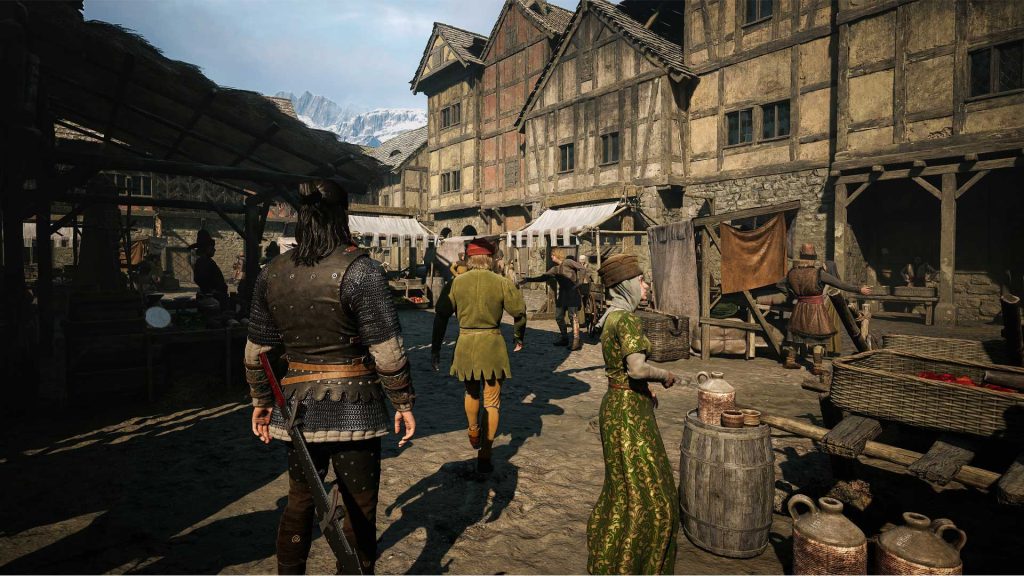
This is perhaps the biggest irony of The Blood of Dawnwalker. The game has a genuinely good idea about time and consequences, but at the same time it uses the structure of a familiar open-world RPG that constantly reminds you how much content is still waiting for you. The map is full of activities, side quests, clues, characters who need help and enemies to hunt. It is very easy to fall into the usual open-world habit of heading toward one objective, noticing something else on the way, following another clue and eventually ending up somewhere completely different from where you originally intended to go. Normally, that is exactly what makes open-world games enjoyable. Here, however, every detour has a cost.
Dawnwalker wants you to understand that you have to choose how you spend your time, but the game is also constantly showing you everything you could potentially be doing. You see a new quest and naturally want to complete it. You find a clue and want to investigate it. You notice an activity that is only available during a certain part of the day and don't want to miss it. The problem is that every one of those decisions consumes time, and while you are dealing with one thing, something else may become unavailable. That creates an interesting conflict between the traditional open-world philosophy and Dawnwalker's central idea. Most games tell you to explore everything. Dawnwalker sometimes tells you that you shouldn't. And strangely enough, the game is at its best when it forces you to miss something.
The Problem With the Open-World Formula
The map itself is familiar territory. You have locations to discover, quests to complete, investigations to follow and plenty of smaller activities scattered around the world.
Investigations use a special vision mode that allows Coen to examine footprints, objects and other clues. The idea is good, but the execution can sometimes feel too mechanical, with investigations turning into a sequence of highlighted objects and button presses rather than genuine detective work.
There is also a considerable amount of lore hidden in books and manuscripts. For players who enjoy digging deeper into the world, there is plenty to discover, but those looking for a more direct narrative may occasionally find themselves overwhelmed by information. The city and surrounding areas are interesting enough to explore, but they don't always feel as reactive or interconnected as the game's best systems suggest they should. The result is an open world that sometimes feels caught between two different identities: one that wants to give you freedom and another that wants to control how you experience its time-based narrative.
Enemies Need More Variety
Enemy variety is another area where the game starts to show its limitations. You will encounter humans, wolves, boars, bears, specters, goblins and several more important enemies connected to the story. The problem is that, after spending enough time in the world, these encounters begin to feel familiar. The lack of variety becomes particularly noticeable later in the game, when some of the final sections throw you into consecutive combat encounters without introducing enough new challenges. The final parts of the game can therefore feel much more repetitive than the earlier sections, especially when the same enemy types start appearing again and again.
Allies Sound Better Than They Fight
The game also gives you the ability to recruit people who can help with your cause, but this system doesn't always live up to its potential. On paper, having citizens and soldiers fighting alongside you sounds great. In practice, their contribution can feel rather limited, and they don't always seem capable of matching the importance the story gives them. It is another example of an idea that sounds better than it works in the actual gameplay.
When the Game Starts Repeating Itself
One of the biggest problems comes toward the end. Without getting into major spoilers, some later sections rely heavily on repeated combat encounters and narrative situations that can make the final hours feel much longer than they need to be. There are moments where the story itself creates reasons for repetition, but from a gameplay perspective that doesn't make the repetition any less noticeable. A game that spends so much time talking about consequences, choices and a limited number of days ultimately becomes surprisingly linear in some of its final sequences. That contrast is unfortunate because the earlier parts of the game do a much better job of making you feel like your decisions are shaping your own version of the story.
Technical Problems Get in the Way
The technical state of the game also depends heavily on the platform you are playing on.
On PS5, the initial performance was one of the bigger concerns. The game did not initially provide the kind of stable 60 FPS experience many players would expect, while the 40 FPS Balanced Mode could look noticeably soft. Texture pop-in, clipping and facial animation issues could also take you out of the experience.
A later update introduced a 60 FPS option, and that made a significant difference. Going from 30 FPS to 60 FPS can feel like a completely different game, particularly during combat. However, the improved performance doesn't magically solve every technical problem. There are still moments where characters or objects behave strangely, and some environmental clipping remains. The game also has smaller issues that can become surprisingly annoying. There were situations where UI inputs didn't register properly, shops could stop responding until you interacted with a character again, and certain visual bugs could completely ruin the atmosphere.
One particularly strange bug could cover the entire screen in an orange tint. It was possible to continue playing, but it obviously wasn't exactly the intended vampire aesthetic.
PC and PS5 Are Not the Same Experience
The PC version generally provides a better technical experience, especially after the performance updates. But PC also has another major advantage: the 30-day time system becomes much more interesting when the game is running smoothly enough that you can focus entirely on the decisions being presented to you. Almost everything you do consumes time. Travel, quests, investigations and other activities can all push the clock forward. That creates genuine pressure.
You can miss quests. You can fail to meet certain characters. You can arrive somewhere too late. And although the game doesn't simply punish you with a Game Over when the thirty days end, the consequences become part of your personal playthrough. For some players, this system will probably be frustrating. For me, it is one of the game's strongest ideas.
Difficulty Settings Are a Welcome Addition
The game offers several difficulty levels, including Story, Fair, Challenging and Duelist, while also allowing players to adjust individual enemy parameters such as health, damage and attack speed. That flexibility is a welcome addition, especially because combat can sometimes feel inconsistent depending on the situation. If you enjoy a challenge, there are options for that. If you are more interested in the story and exploration, you can adjust the experience accordingly. It doesn't solve the fundamental combat issues, but it does give players more control over how they experience them.
The Best Thing About The Blood of Dawnwalker
Perhaps the biggest strength of The Blood of Dawnwalker is that it occasionally makes you forget how modern RPGs normally work.
Most open-world games teach you that almost everything exists for your benefit. If there is a quest, you can complete it. If there is a character, they will usually wait for you. If there is an area on the map, you can return to it whenever you want. Dawnwalker tries to break that pattern. You simply cannot do everything. Thirty days isn't just a number on the screen. It changes the way you think about your decisions. If you decide to help one person, you may spend enough time doing it to miss another event. If you choose to explore a particular location, something else may happen without you.
The game encourages you to accept that missing content is part of the experience rather than something you have to “fix” by reloading a save. The same philosophy applies to Coen's vampirism. You are not simply collecting every ability because the game expects you to eventually unlock everything. Your powers are connected to the character you are becoming. These are genuinely good ideas. The problem is that there are too many obstacles between those ideas and their full potential.
A Game That Wants You to Think Differently
Maybe the greatest value of The Blood of Dawnwalker is that it occasionally forces you to forget the way you are used to playing RPGs.
Most modern open-world games teach you that almost every piece of content is there for you to consume eventually. You clear the map, finish the quests, collect the rewards and move on. Dawnwalker tries to interrupt that routine.
Here, you simply cannot see everything in one playthrough. The thirty-day limit means that your decisions have consequences not because the game constantly tells you that they matter, but because time continues moving regardless of what you do. If you decide to help one person, you might spend enough time doing so that another event becomes unavailable. If you spend an afternoon investigating a mystery, you might arrive too late for something that only happens at night. That can be frustrating, but it is also the point.
Dawnwalker wants you to accept that missing content is part of your story. You don't have to reload your save every time you realize that something has happened without you. You simply continue and live with the consequences. That is a surprisingly rare approach in modern RPGs. The same idea is present in Coen's struggle with his vampire nature. Becoming stronger isn't necessarily a completely positive development, because power also pushes him further away from the person he was.
There is a genuinely good foundation here. The problem is that between those excellent ideas and their full realization, The Blood of Dawnwalker still has several obstacles to overcome.
Conclusion
The Blood of Dawnwalker is an ambitious vampire RPG with several ideas that make it stand out in a crowded genre. The 30-day time limit is easily its most interesting system, while Coen's struggle between his human and vampire sides gives the story a strong foundation. The Infamy system and the way choices can affect relationships also show that Rebel Wolves wanted to build something more reactive than a traditional open-world RPG.
Unfortunately, repetitive combat, camera problems, limited enemy variety and an inconsistent open-world structure prevent the game from reaching its full potential. The technical issues, particularly on PS5 at launch, add another layer of frustration, while some of the later sections become noticeably repetitive.
Still, there is a genuinely interesting RPG underneath all of those problems. The Blood of Dawnwalker is at its best when it asks you to make a choice, accept that you cannot experience everything and live with the consequences. It doesn't always succeed in turning those ideas into equally strong gameplay systems, but when everything comes together, it offers something that many modern RPGs are missing: the feeling that your playthrough is actually your own.
Score: 8.5/10
The game was played on: PS5.
Ako tražite povoljnije cene za igre, DLC-ove i druge digitalne proizvode, posetite Eneba i pogledajte aktuelnu ponudu.
Pre kupovine obavezno unesite naš promo kod BUFFGAMING i ostvarite dodatnih 5% popusta.
Kupi igre, poklon-kartice i dopune povoljnije