
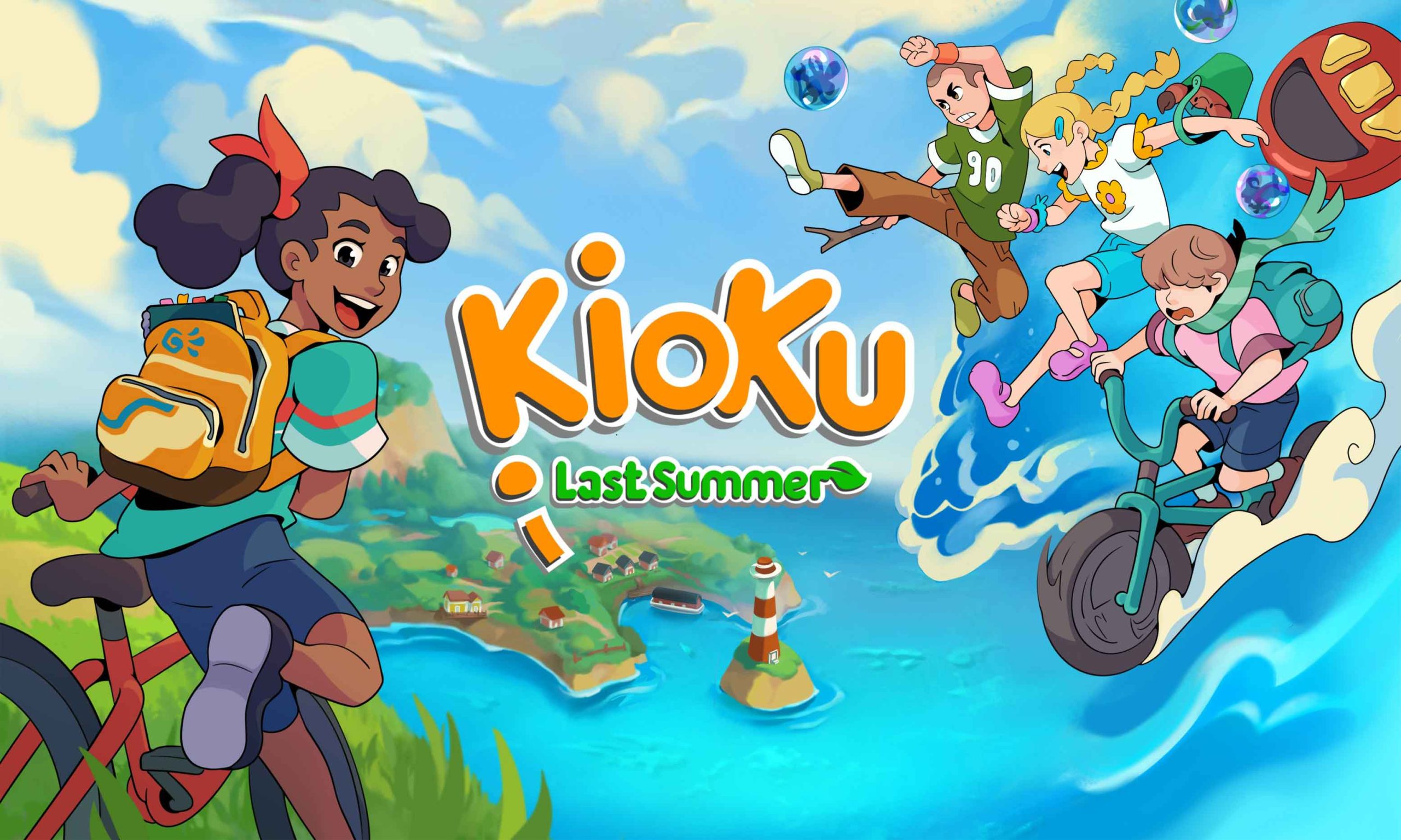
Kioku: Last Summer: Kioku: Last Summer may not offer deep mechanics or particularly challenging gameplay, but it succeeds at delivering what matters most — the feeling of a carefree childhood summer. Its charming characters, relaxing atmosphere, and nostalgic tone make it a delightful adventure, even if repetitive tasks, unclear objectives, and technical issues prevent the game from reaching its full potential. Still, fans of cozy games and younger players will find plenty of reasons to enjoy this heartfelt experience. – NikolaOtasevic
Do You Remember Summer Vacation?
At first glance, Kioku: Last Summer looks like a game that comes straight from Japan. Its title, visual style, and atmosphere immediately evoke memories of Studio Ghibli films, classic Pokémon games, and the anime adventures many of us grew up with. Surprisingly, however, the game is developed by the Norwegian studio Lugn Games, which successfully blends Japanese inspirations with its own identity to create something that feels both familiar and refreshing.
Many games try to win players over with epic stories, massive battles, or spectacular set pieces. Kioku: Last Summer takes a completely different approach. Instead, it focuses on capturing the feeling of a carefree summer vacation and those small childhood adventures that once felt incredibly important.
The story begins when a young girl named Asti arrives on Kioku Island with her father, a place that will now become her new home. Before long, she starts attending a new school, meets future friends, and gradually adapts to life in an unfamiliar environment.
Of course, this wouldn’t be a summer vacation story without all the activities that make such memories special. Throughout the adventure, players discover Marubi, a marble-based game played by every child on the island. You’ll steal apples, investigate who threw fish guts at the unfortunate Luis, solve riddles for an eccentric old man, and take part in countless small adventures that make up daily life on the island.

Capturing the Spirit of Summer
One thing Kioku: Last Summer does exceptionally well is recreating the feeling of summer.
Accompanied by a pleasant, albeit somewhat repetitive soundtrack, the game takes players across a charming island that cleverly combines Japanese aesthetics with Norwegian influences. The Japanese inspiration is obvious, but the Norwegian roots are equally present.
Whether you're riding your bicycle or running through clusters of houses, forests, docks, and crab-catching spots, it’s difficult not to feel nostalgic for simpler times.
Days on the island pass quickly. You constantly travel between locations, speak with locals, and participate in small adventures that gradually build the larger narrative while helping you get to know your new friends.
This is easily the aspect of the game I enjoyed the most.
There are no world-ending threats or grand dramatic conflicts. Instead, we follow a group of children doing what children naturally do: arguing over trivial things, getting into trouble, coming up with silly ideas, and eventually making up as if nothing ever happened.
There’s something remarkably honest and nostalgic about it all that frequently reminded me of my own childhood.

Marubi – A Fun Idea That Needs More Depth
The game also includes several mini-games, with Marubi serving as the most important one.
It’s an interesting mix between traditional marbles and the kind of collection mechanics often found in Pokémon games. Players collect small monster-themed marbles and use them in board-based battles where each side controls three marbles.
The concept itself is genuinely interesting.
Unfortunately, it lacks depth.
Throughout my playthrough, I never managed to lose a single match, making the entire system feel predictable fairly quickly. It feels like several additional mechanics could have made it much more engaging in the long term.
It's enjoyable at first, but eventually starts feeling more like an obligation than an activity you look forward to.
Interestingly, I also let several younger players try the game while I was reviewing it.
While I noticed the lack of guidance, repetitive objectives, and technical shortcomings, those issues barely seemed to bother them. They quickly became absorbed in exploring the island, meeting characters, and participating in everyday activities.
Their reactions reminded me that Kioku: Last Summer may not appeal to every adult player, but it could easily find an audience among younger gamers who are likely the game's primary target demographic.

A Cozy Adventure That Sometimes Loses Direction
Unfortunately, not every aspect of the game is equally successful.
The biggest issue is that the experience occasionally becomes repetitive.
A significant amount of time is spent traveling from one side of the island to the other, while many objectives are relatively simple and similar to one another.
The situation becomes even more frustrating because the game rarely tells you exactly where to go next.
Sometimes the necessary information appears during dialogue, but if you happen to miss it, you’re often left wandering around the island trying to figure out the next objective.
As a result, you'll frequently find yourself crossing the entire island searching for a specific character or location marked by a small visual cue that triggers the next event.
Thankfully, the island itself isn't particularly large, so these detours rarely consume too much time.
However, when the same process repeats over and over, it can become tiring.
Your backpack includes a map, but it doesn't display active quests or important character locations. There is also a journal designed to help track progress, but during my playthrough I encountered several bugs that prevented it from properly displaying active objectives.
Technical Issues Hold It Back
Unfortunately, those aren’t the only technical problems.
I occasionally encountered visual elements disappearing, appearing out of nowhere, or randomly changing size without explanation.
These aren’t game-breaking issues, but they are noticeable enough to create the impression that the project could have benefited from additional polishing before release.
The good news is that none of these problems fundamentally ruin the experience.
They simply prevent the game from reaching its full potential.
Final Verdict
Kioku: Last Summer is a charming and heartfelt adventure that successfully captures the feeling of carefree childhood summers.
That atmosphere is unquestionably its greatest strength.
The problem is that beneath that wonderful presentation there isn’t always enough engaging gameplay to maintain everyone's interest in the long term. Repetitive objectives, occasional lack of player guidance, and various technical issues often slow down the pacing and make the adventure less compelling than it could have been.
Despite those shortcomings, Kioku: Last Summer still manages to strike an emotional chord.
Its visual style is pleasant, its world is lovable, and the overall experience frequently reminds me of those smaller, less ambitious PlayStation 2 games that may not have been perfect but were filled with heart.
Lugn Games has taken a very solid first step here.
The game has identity, personality, and a clear vision of the stories this studio wants to tell. With more experience, additional creativity, and further refinement of its mechanics, their next project could be something truly special.
If you enjoy cozy games, nostalgic atmospheres, and relaxed adventures that prioritize feeling over challenge, Kioku: Last Summer is definitely worth keeping on your radar.
A review copy of the game was provided by Lugn Games.
Ako tražite povoljnije cene za igre, DLC-ove i druge digitalne proizvode, posetite Eneba i pogledajte aktuelnu ponudu.
Pre kupovine obavezno unesite naš promo kod BUFFGAMING i ostvarite dodatnih 5% popusta.
Kupi igre, poklon-kartice i dopune povoljnije