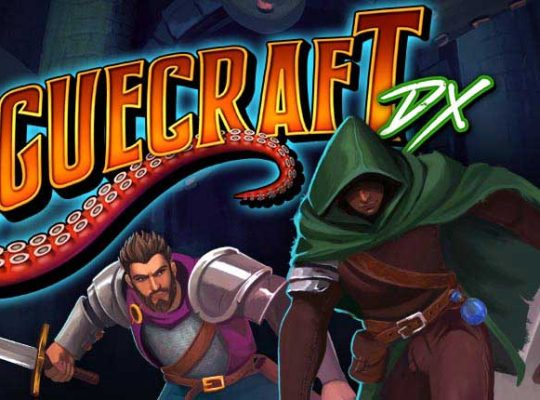

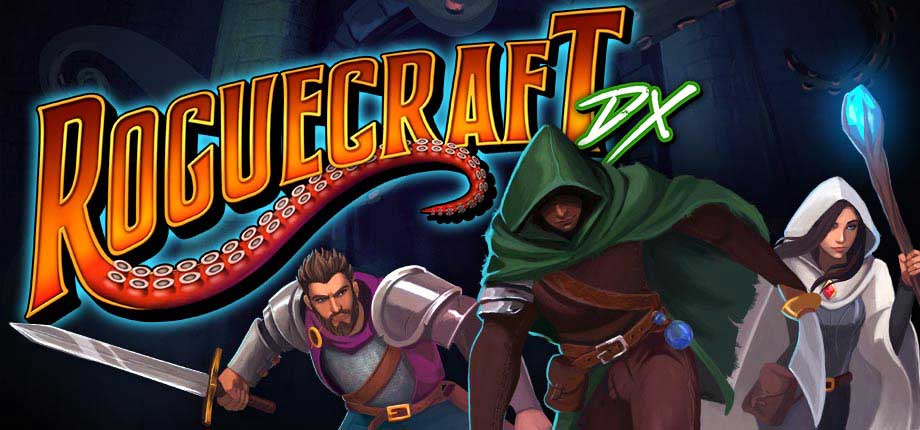
Roguecraft DX: Roguecraft DX is a great example of how a simple roguelike can become incredibly addictive when its core mechanics are designed well. Randomly generated dungeons, exploration and turn-based combat provide plenty of challenge, while the retro visuals and excellent soundtrack complete the experience. If you enjoy retro games and roguelikes, this is an Evercade title worth checking out. – NikolaOtasevic
There are games that immediately show how heavily they are inspired by the retro era, but Roguecraft DX takes things a step further because it doesn’t just try to look like an old game. Instead, it takes a very simple idea from the classic roguelike genre and turns it into an experience that is surprisingly easy to keep playing “just one more run.” Behind the charming pixel art is a game that asks you to think carefully, move cautiously and accept the fact that one wrong decision can completely change the course of a run.
Roguecraft DX was developed by Badger Punch and represents an enhanced version of their earlier game Roguecraft, which was originally designed as a kind of new-retro title for the Commodore Amiga. This version has been adapted for the Evercade platform and adds extra content, new enemies and additional levels, but what matters most to me is that the basic idea remains simple and clear, without trying to bury the game under unnecessary systems.

A Simple Idea That Becomes a Serious Challenge
If you are familiar with classic roguelike games, you will quickly understand what Roguecraft DX is trying to achieve. You are presented with a randomly generated dungeon that you must explore, find the necessary items, defeat enemies and locate the key that leads to the next level.
On paper, all of this sounds very simple, but the way movement and combat are connected to the turn-based system makes the whole thing much more interesting. When you move, the world reacts to your move, meaning enemies and traps get their turn as well. Because of this, you can’t simply run through a room without thinking and attack everything in your path. Instead, you have to think several moves ahead and decide whether a particular moment is really the right time to attack or whether it might be better to wait.
This is where Roguecraft DX shows just how effective simple design can be when the rules are properly constructed. The game doesn’t over-explain everything or try to turn every mechanic into a separate system. Instead, it gradually teaches you how the world works and then lets you make mistakes and learn from them yourself.
Every Run Feels Different
Randomly generated levels give the game exactly what it needs to make every new run feel different. You never know in advance where you will find what you need, what the layout of the rooms will look like or what is waiting around the next corner, which makes exploration feel like much more than simply moving from one point to another.
I particularly like the fact that the game rewards curiosity, as there are hidden rooms that can be found throughout the levels and they are not necessarily part of the shortest route to the exit. They can contain useful items, but every bit of extra exploration also carries a certain amount of risk. The longer you remain inside the dungeon, the more opportunities you give enemies and traps to stop you, so you are constantly balancing your desire to see what is behind the next door with the need to survive long enough to reach the next level.
That decision of “should I keep going or should I turn back?” is a major part of the game’s charm. Exploration never feels completely free, because even when you think you have enough resources and room to continue, one bad decision can cost you the entire run.
Retro Visuals, but a Much More Modern Experience
Visually, Roguecraft DX relies on pixel art that fits its character extremely well. Unlike older games where this kind of visual style was often the result of technical limitations, it is clearly a deliberate artistic choice here.
The isometric perspective also separates the game from the classic presentation of the earliest roguelike titles and gives the dungeons more personality. Everything remains clear enough for you to understand what is happening, while the animations, enemies and environments make the game look much richer than you might expect from a title that so openly draws inspiration from the past.
The music also fits the overall package very well. Instead of simply trying to imitate the sound of a specific retro system, the soundtrack gives the game its own identity and works nicely alongside the dungeon exploration. When the music, pixel art and level design come together, the result is an experience that can easily trigger a sense of nostalgia, even for players who didn’t grow up with the computers and consoles of that era.
Three Characters, Different Ways to Play
One addition that contributes significantly to the value of this version is the inclusion of three playable characters. While the basic rules remain the same, choosing a different character can change the way you approach certain situations and gives you another reason to return to the game after you have already mastered its basic principles.
There are also achievements and a high-score leaderboard, which fit this type of game perfectly. Roguecraft DX isn’t necessarily something you finish once and then permanently put aside, because the randomly generated levels and the desire to achieve a better score naturally encourage repeated play.
That is exactly why I often had that familiar feeling of wanting to try one more time, even after the previous run ended in failure. When a game manages to make failure feel less like a reason to turn it off and more like a motivation to immediately start another attempt, it is clear that the core gameplay loop is doing something right.

It Doesn’t Forgive Every Mistake, but It Doesn’t Punish You Without a Reason
A large part of the enjoyment comes from the fact that you have to be careful. Enemies have their own patterns of behavior, attacks are not always guaranteed to succeed, and the turn-based movement system means you have to think about what will happen after every decision.
That doesn’t mean Roguecraft DX was designed simply to frustrate you. When you lose, you can usually recognize what you did wrong, whether you took an unnecessary risk, explored for too long or entered a fight without leaving yourself enough room to retreat. This kind of design makes failure easier to accept because you feel that you are responsible for what happened.
Because of that, exploration is both the most enjoyable and the most dangerous part of the game. You never know whether the next room will contain something useful or a situation that will be difficult to escape from.
One Thing I Was Missing
The only major criticism I have concerns the ability to save your progress. The initial version didn’t offer a traditional way to save an active run, meaning that once you started, you essentially had to finish the attempt in a single session or abandon it.
Fortunately, this was later addressed through an update that added a single suspend point. Technically, this isn’t a traditional save system, but functionally it solves the biggest problem, especially on Evercade devices where it is perfectly normal to put the console down and continue playing later.
This is an important addition because Roguecraft DX can easily keep you playing longer than you originally planned. It is much more convenient to know that you can pause a run and continue later instead of having to choose between losing your progress and playing for longer than you intended.

A Small Game That Earns Its Place on Evercade
What perhaps surprised me most about Roguecraft DX is how easy it is to forget that there is only one game on the cartridge. Evercade is known for collections that often include multiple titles in a single package, so a standalone cartridge naturally needs to provide a strong enough experience to justify its place in the library.
Here, it works precisely because Roguecraft DX doesn’t try to be a huge game. Its value comes from the fact that you can pick it up, play a run, turn off the device and come back the next day to try to get a little further. At the same time, if the game grabs you, you can easily spend much more time with it than you originally planned.
That is probably the best way to describe the entire concept. Roguecraft DX takes a relatively simple formula, gives it better visuals, more content and a few modern additions, and then packages everything into an experience that is accessible enough for short sessions while still being deep enough to make you keep coming back.
Conclusion
Roguecraft DX is a very good example of how retro inspiration doesn’t have to mean that a game itself feels outdated. Badger Punch has taken the simple foundation of classic roguelike design and turned it into a much more visually appealing experience that works extremely well on the Evercade platform.
The randomly generated dungeons, exploration, hidden areas and turn-based system come together to create gameplay that makes you think, while the additional characters, achievements and leaderboard provide enough reasons to return for new runs. The initial problem with saving a run has also been addressed through a later update, making the experience much more practical to play.
If you enjoy roguelike games, retro aesthetics or simply want a title that you can pick up for a few minutes only to realize that you have been playing for much longer than planned, Roguecraft DX has a very good formula. It doesn’t need to be a huge game to justify its existence, because it finds its greatest strength precisely in that simplicity.
The game was played on: PC.
Score: 7/10