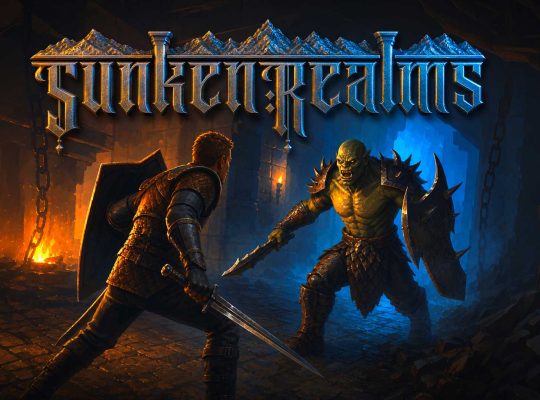

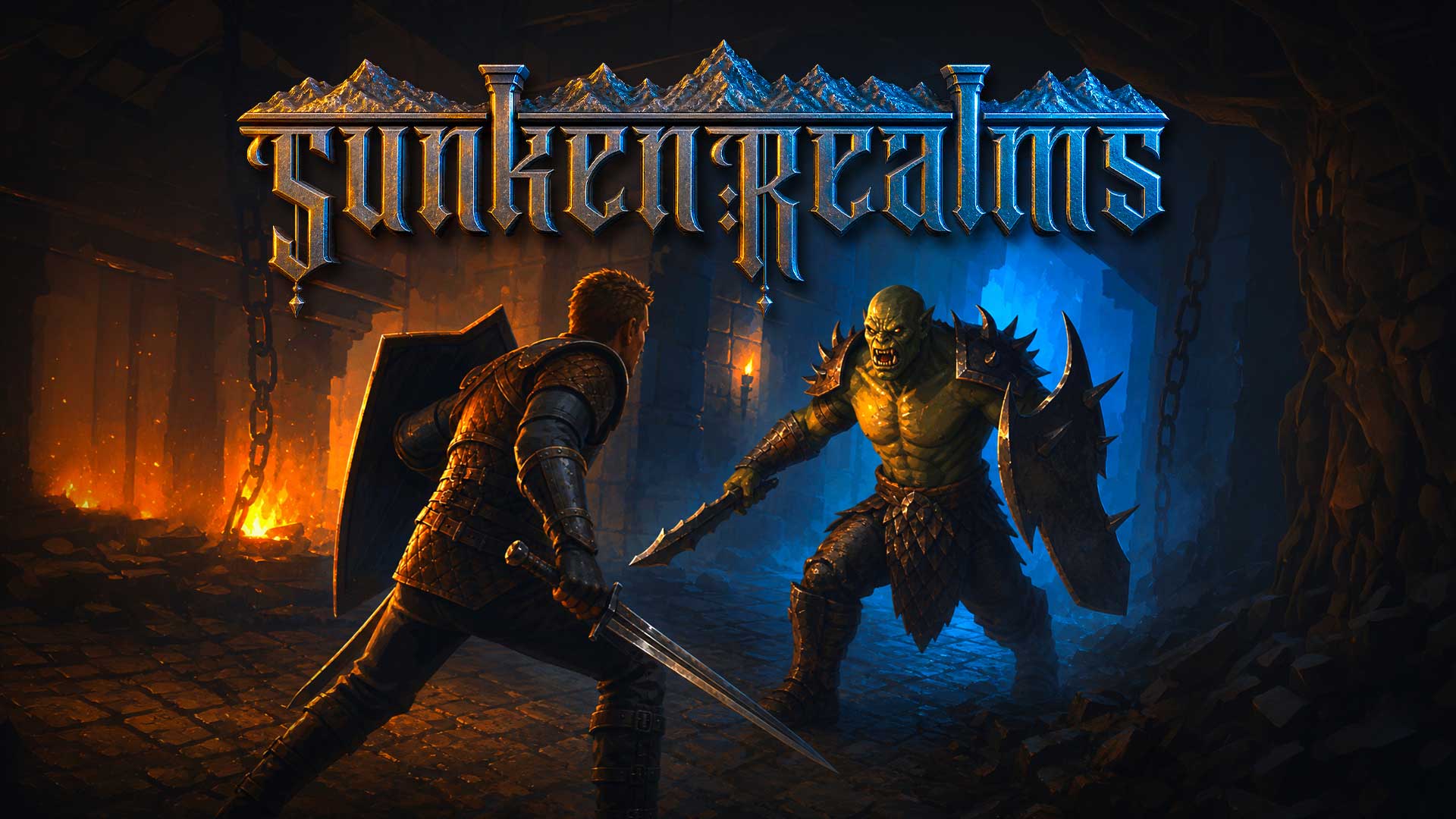
Sunken Realms: Sunken Realms is an ambitious solo project that successfully combines exploration, roguelite structure, crafting and a narrative-driven adventure. Its hand-designed rooms, procedural layouts and story about searching for a missing father give it plenty of character, although the repetitive gameplay loop may depend on how much you enjoy the genre. – NikolaOtasevic
There are games that attract attention because of their large budgets, famous names or massive marketing campaigns, and then there are projects like Sunken Realms, where the story behind the game is interesting enough on its own to make you want to see what is actually hiding beneath the surface. Brad Warren spent roughly six years developing this game entirely on his own while working full-time as an animator and developer on Star Atlas. Once you know that, it becomes difficult not to look at Sunken Realms from a slightly different perspective, because the amount of content one person managed to create during their free time is genuinely impressive.
At the center of everything is Aedaria, an underground city that has been cursed for decades and is largely avoided because of stories claiming that it swallows anyone who dares to enter its depths. Of course, that reputation hasn’t stopped adventurers from searching for the wealth and secrets hidden beneath the surface, and among them is Alric, the protagonist who descends into Aedaria in search of the truth about what happened to his father.
At first glance, Sunken Realms looks like another dungeon crawler with roguelite elements, but the combination of hand-designed rooms, procedural layouts, exploration, crafting and a story that develops between expeditions gives the game enough personality to stand out from the crowd.
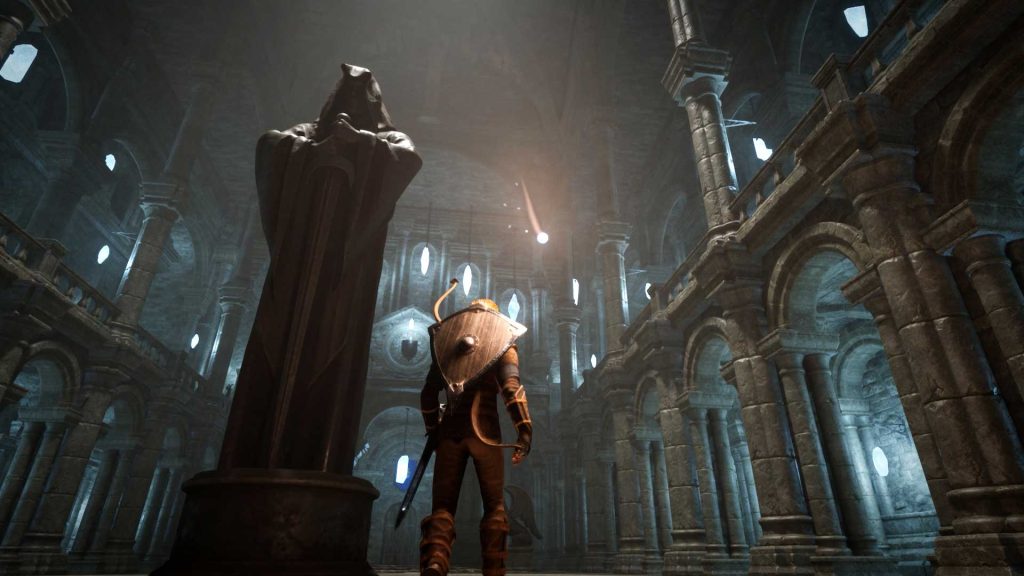
Aedaria Hides Much More Than an Ordinary Dungeon
The basic gameplay loop is fairly straightforward, but it works precisely because its individual elements are connected so well. You leave your camp and venture into the depths of Aedaria, explore rooms, fight enemies and collect resources before returning to camp to upgrade your equipment and prepare for the next expedition.
The problem with this kind of system is that it can easily become repetitive, especially when procedurally generated levels are based entirely on randomly assembled rooms. Sunken Realms tries to solve this by taking a different approach, as the individual rooms are hand-designed while their arrangement changes whenever you enter the dungeon.
There are 109 individually designed rooms spread across six different zones, which is quite an impressive amount of content when you consider that the entire project was created by one person. Because of this, the game manages to maintain a certain level of unpredictability without making the world feel completely random.
You never know exactly what will be waiting beyond the next passage, while at the same time you can tell that someone deliberately designed that particular room and the situation taking place inside it.
The Camp Is Much More Than a Place to Return To
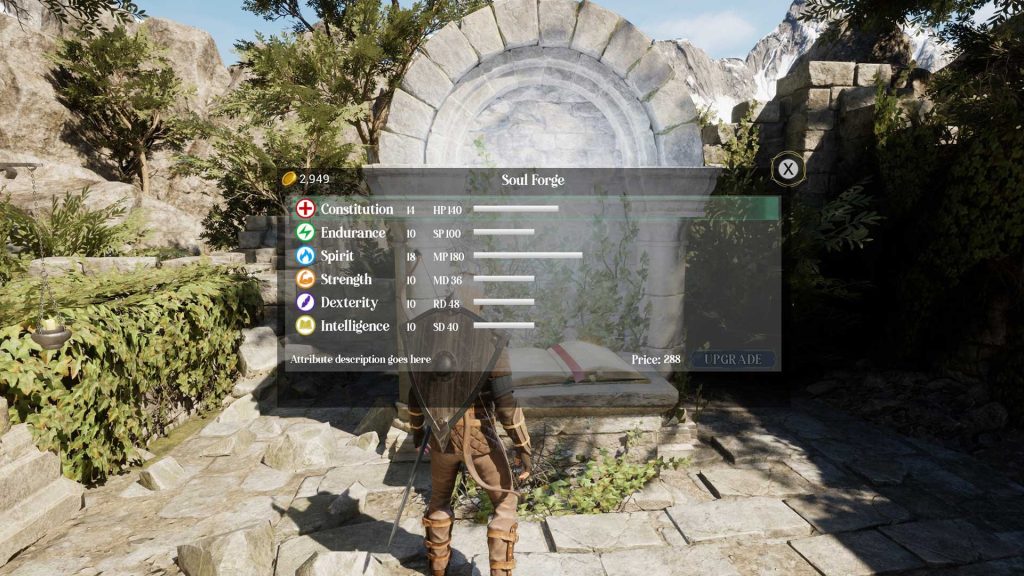
Once you return from a dungeon run, the resources you have collected finally become useful. The camp serves as your central hub for upgrading equipment, crafting weapons and armor, brewing potions and improving certain stats through the Soul Forge system.
This part of the game is extremely important because it directly affects how far you can go during your next expedition. Better equipment allows you to take on tougher enemies, while deeper dungeon runs can then provide better resources that feed back into the crafting system.
You get the familiar progression loop that roguelite fans will immediately recognize, but here it makes enough sense within the world that it doesn’t feel like a system that exists simply because it is popular. Every expedition has a purpose, because even when you fail to make it as far as you planned, what you managed to collect can still help make your next attempt more successful.
That is why failure doesn’t necessarily feel like a complete waste of time, but rather like part of the process through which you become stronger and gradually understand the world you are exploring.
The Inspirations Are Clear, but the Game Has Its Own Ideas
The creator openly talks about the games that influenced the development of Sunken Realms, and their influence can be fairly clearly recognized in the structure of the game itself. Outward was the initial inspiration, particularly because of its sense of adventure and exploration of an unknown world, which encouraged Warren to create his own game.
However, Sunken Realms is not an attempt to simply copy Outward. Those ideas evolved in a different direction over the six years of development, while additional influences came from Hades and The Legend of Zelda series.
You can especially feel Hades in the way the story and relationships between characters develop through returning to the hub, while exploration and discovering the world clearly draw some inspiration from Zelda. Instead of delivering all the information through large cutscene sequences, part of the story is built through conversations between characters around a campfire.
It is a simple approach, but it fits the structure of the game well, because between expeditions you get a moment to slow down and focus on the characters and story before heading back into the dark depths.
Exploration Is Just as Important as Combat
Although Sunken Realms is an action RPG and dungeon crawler, the game doesn’t try to rely exclusively on combat. A large part of the experience revolves around exploring the environment, searching for resources and discovering new areas of Aedaria.
The procedural arrangement of hand-designed rooms plays an important role here, because it prevents you from simply memorizing an ideal route through the dungeon and following the same path every time. Each new entry requires a certain degree of adaptability, turning exploration into a constant question of risk versus reward.
If you decide to push deeper, you can potentially find better resources and make more progress than during your previous attempt, but at the same time you increase the chance of losing what you have collected. This creates a constant dilemma between continuing forward or returning to camp and making use of what you already have.
That balance is one of the main reasons why the game manages to maintain tension even when nothing particularly spectacular is happening.
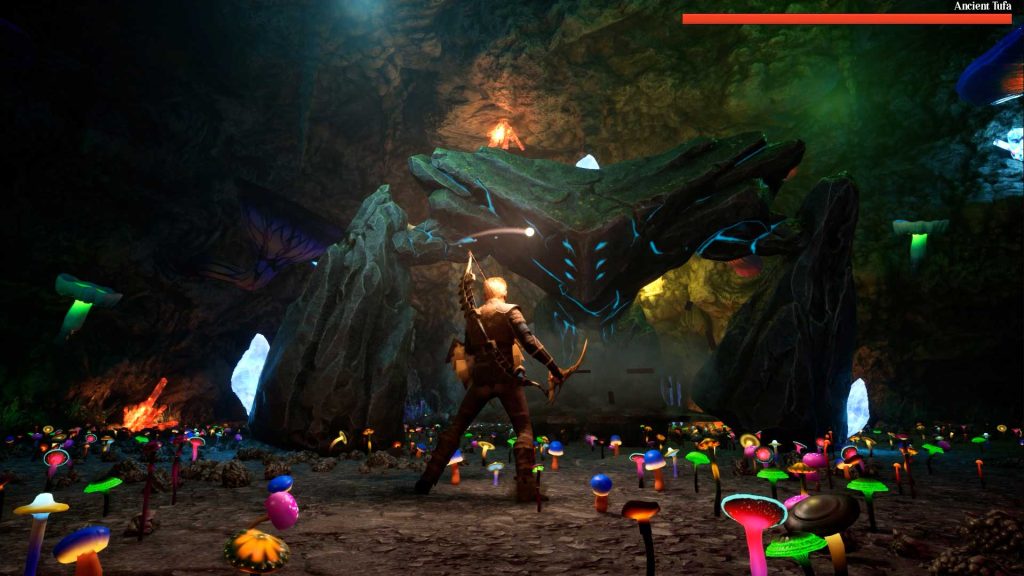
The Story About His Father Gives Everything More Weight
Alric’s search for his father serves as the main narrative motivation and gives the game something beyond the usual dungeon-crawling experience. The mystery surrounding Aedaria and the fate of his father give you a reason to keep exploring, while the story gradually develops through the structure of the game itself.
I particularly like the fact that the narrative isn’t completely separated from the gameplay loop. The camp isn’t simply a place where you repair your equipment; it also becomes a space where the story gradually develops and where conversations between characters provide additional context for what is happening during expeditions.
That balance between action and quieter moments at the campfire is reminiscent of the approach popularized by Hades, but here everything is adapted to a different atmosphere and setting.
The Biggest Strength Is Actually the Fact That It’s a Solo Project
It is difficult to ignore the fact that Sunken Realms was developed as a solo project over roughly six years while its creator was also working full-time. When you look at how much content is packed into the game, that fact becomes even more interesting.
109 hand-designed rooms, six zones, procedural arrangements, crafting, equipment upgrades, the Soul Forge system, a story and an original soundtrack represent a serious workload even for a small team, let alone for one person working on the project in their spare time.
Of course, the fact that someone spent six years working on a game doesn’t automatically make it perfect, nor should that be the main reason to buy it. However, in the case of Sunken Realms, the way the project was created provides useful context for everything the game is trying to achieve.
This isn’t a game that appeared overnight, nor is it a project trying to hide its more modest production behind huge promises. Its biggest value lies in its ideas and in the amount of carefully crafted content that one developer managed to bring together into a single experience.
Is This a Game for Everyone?
Probably not, and that isn’t necessarily a problem. If you don’t enjoy roguelite structures where you repeatedly return to the same world, gather resources and gradually become stronger, Sunken Realms probably won’t convince you to change your mind.
The same applies to players who want completely handcrafted levels or, on the other hand, those who expect fully randomized roguelike maps. Sunken Realms sits somewhere between those two approaches and attempts to find its own formula precisely in that space.
It is also primarily designed as a solo experience and doesn’t include multiplayer, so you shouldn’t expect something the game was never trying to provide. Its idea is to send you into the depths of Aedaria on your own and then gradually make you want to see what lies even deeper through exploration, progression and story.
Conclusion
Sunken Realms is an interesting dungeon crawler that successfully combines several familiar ideas into an experience with enough personality of its own. The inspiration from games such as Outward, Hades and The Legend of Zelda is fairly obvious, but the game doesn’t feel like a simple combination of their mechanics. Instead, it feels like a project that found its own direction over six years of development.
What I like most is the way the hand-designed rooms are combined with procedural layouts, keeping exploration unpredictable without making it feel completely random. Crafting and equipment upgrades fit naturally into the gameplay loop, while the camp and campfire conversations give the story room to develop between expeditions.
Of course, the repetitive nature of the roguelite structure won’t appeal to everyone, but if you enjoy dungeon-crawling adventures where exploration, progression and story work together as one experience, Sunken Realms has enough interesting ideas to deserve your attention. And when you consider that the entire project was created by one person over six years, it’s difficult not to appreciate the sheer amount of work that went into it.
The game was played on: PC.
Score: 7/10