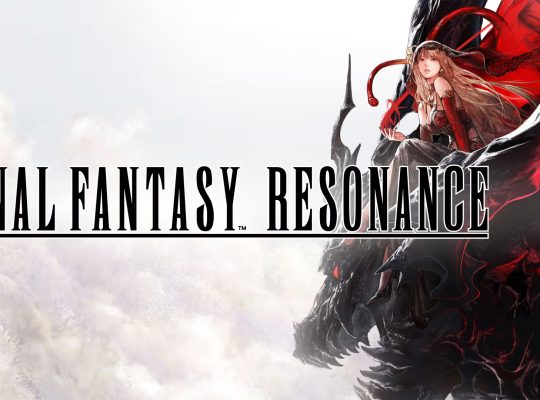

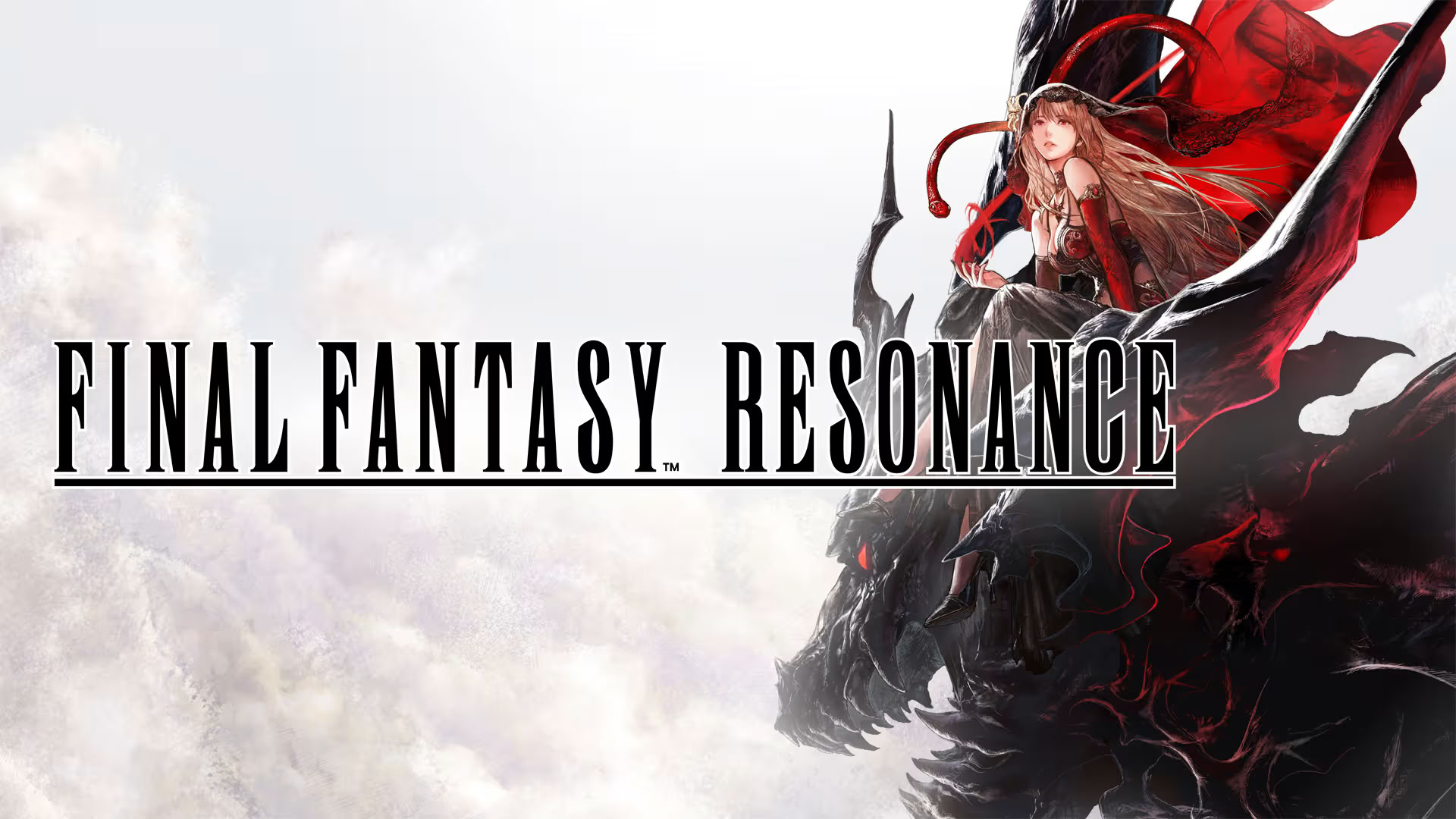
Final Fantasy Resonance: is a love letter to classic JRPGs, combining satisfying turn-based combat, gorgeous HD-2D visuals, and a soundtrack full of nostalgia. Its predictable story keeps it from a perfect score, but this is still an adventure worth experiencing. – NemanjaKocica
Some games roll credits, and you move on to whatever is next in your backlog. Others leave you thinking about starting a second playthrough before you've even had time to process the ending. Final Fantasy Resonance is firmly in the latter category. After spending more than 60 hours completing the game on PlayStation 5, I'm already looking forward to playing through it again. This time, I'll be picking it up on Nintendo Switch 2.
That should tell you plenty about how much I enjoyed my time with it. Final Fantasy Resonance delivers almost everything I want from a classic JRPG: satisfying turn-based combat, a world worth exploring, gorgeous visuals, an enjoyable progression system, and a soundtrack that hits me right in the feels. It isn't perfect, though. The story is predictable, the characters lean heavily on familiar genre archetypes, and fighting regular enemies can become a bit of a chore.
Still, when a game keeps me hooked for more than 60 hours and leaves me wanting to start all over again, it's doing something right. Final Fantasy Resonance reminded me that great games don't always need revolutionary ideas or elaborate storytelling. Sometimes, they just need to understand what makes their genre special.
And in this case, Square Enix has delivered a lovely reminder of why I fell in love with Final Fantasy in the first place.
Story and Characters: Familiar Faces, Familiar Problems
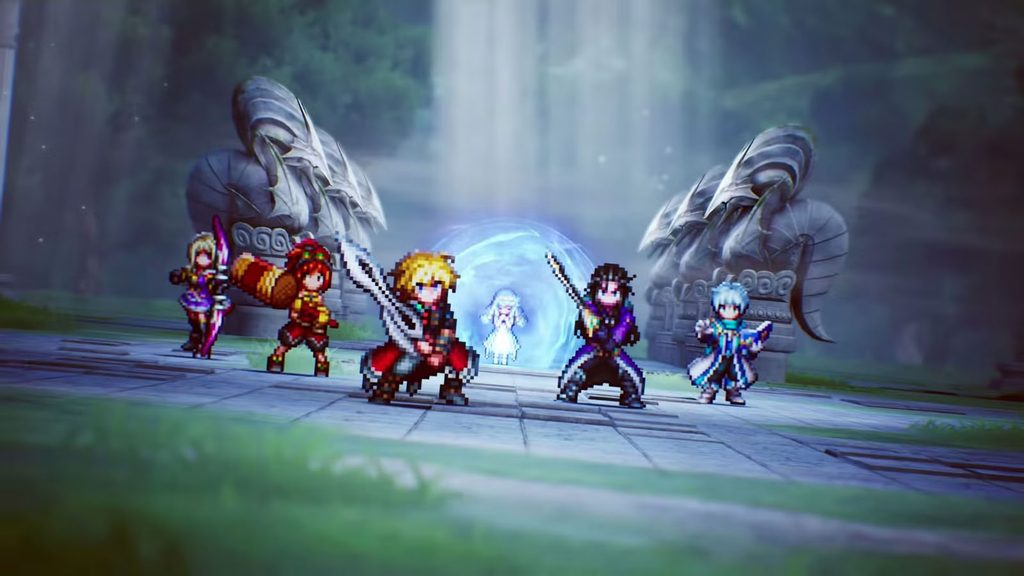
If you've played your fair share of JRPGs, you'll recognize plenty of familiar character archetypes and story beats in Final Fantasy Resonance. We've got kind-hearted heroes, a world threatened by mysterious forces, a seemingly unavoidable destiny, and a party of adventurers who gradually discover that their personal struggles are tied to something much bigger. And, of course, no classic Final Fantasy adventure would feel complete without crystals playing an important role in saving the world.
There's a good side and a bad side to all of this.
On the one hand, I appreciate that Resonance embraces its roots instead of trying to reinvent everything for the sake of being different. There's something comforting about starting a JRPG and immediately recognizing its structure, its sense of adventure, and the roles its characters are expected to play. Familiar conventions aren't inherently bad. In fact, they can be a huge part of a game's charm when they're handled well.
The problem is that Resonance leans on these conventions a little too heavily. The story is predictable, and I often found myself anticipating what would happen long before the game got around to revealing it. Certain character developments and major plot points are so familiar that it's difficult to feel genuinely surprised when they finally happen.
The cast doesn't always fare much better. The characters have recognizable personalities and distinct roles within the party, but most of them struggle to rise above the archetypes they're built around. After spending so many hours with them, I wanted more meaningful character development, more unexpected twists, and a few moments that would make me rethink my assumptions about where the story was heading.
That's not to say the writing is terrible. The problem is that it rarely takes enough risks to make the narrative feel fresh. I've played plenty of games that use familiar JRPG conventions, but the best ones find ways to make those conventions feel personal and emotionally engaging. Resonance doesn't quite manage that consistently.
It's a shame, because the rest of the game gave me plenty of reasons to keep playing. The story never became such a problem that I wanted to put the controller down, but it remained the one thing holding the experience back.
Ultimately, the predictable narrative is the biggest weakness of Final Fantasy Resonance and the only reason I can't justify giving it a perfect score. Everything else won me over far more than I expected.
Combat: A Turn-Based System That Rewards Smart Play
Combat is one of the main reasons I enjoyed Final Fantasy Resonance as much as I did. At first glance, the formula seems straightforward: choose an attack, cast a spell, use a special ability, and wait for your opponent's turn. However, the system gradually opens up as you unlock more abilities and encounter enemies with different weaknesses.
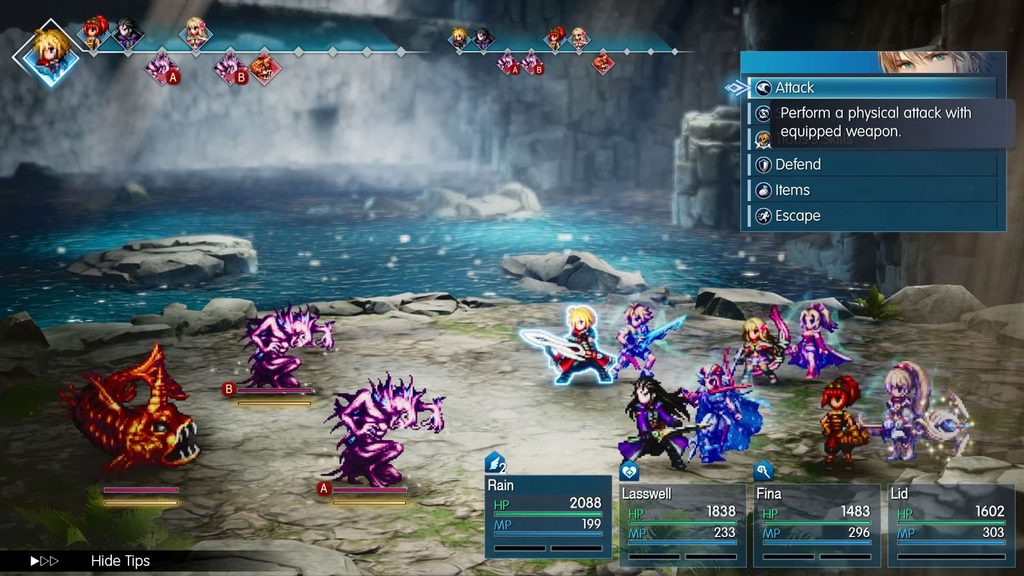
Battles are fully turn-based, meaning you don't have to worry about perfectly timed button presses or dodging attacks through split-second reactions. A timeline at the top of the screen shows the order in which your party members and enemies will act, allowing you to plan several moves ahead.
That extra information matters. You can anticipate an enemy's next move, decide whether to focus on dealing damage or weakening your opponent, and work out how to set up a more devastating attack. Sometimes, the smartest move isn't the one that deals the most immediate damage. It's the one that gives you control over what happens next.
At the heart of the combat system is the Stagger gauge. Every enemy has its own weaknesses, and exploiting them is the fastest way to fill that gauge. If an enemy is weak to a particular element, hitting it with the appropriate spell will help you build Stagger much more efficiently than simply throwing random attacks at it.
Once the Stagger gauge is depleted, the enemy enters the Stagger state, loses its upcoming action, and becomes more vulnerable to your attacks. That's when the fun really begins. You're not just trying to chip away at an enemy's HP; you're setting up an opportunity to unleash as much damage as possible while your opponent is at a disadvantage.
The system rewards you with bonus actions when you successfully Stagger enemies. If you manage to Stagger every remaining opponent, you trigger Sweeping Stagger, giving your party a round of bonus actions. This is where a carefully planned battle can turn into a spectacular offensive.
You can unleash powerful abilities, use Vision-specific attacks, or summon an Esper at just the right moment. Instead of repeatedly selecting the same attack until an enemy finally drops, you're encouraged to think ahead and build toward a powerful sequence of moves.
It's a straightforward system to learn, but there's enough depth here to keep combat engaging well into the game. Of course, not every encounter is equally exciting. When you're facing another group of familiar, low-level enemies, you'll often want to get the fight over with as quickly as possible. Against tougher opponents, however, the different mechanics come together beautifully.
And that brings us to one of the game's most important systems: Visions.
Visions: A Flexible System With Plenty of Build Potential
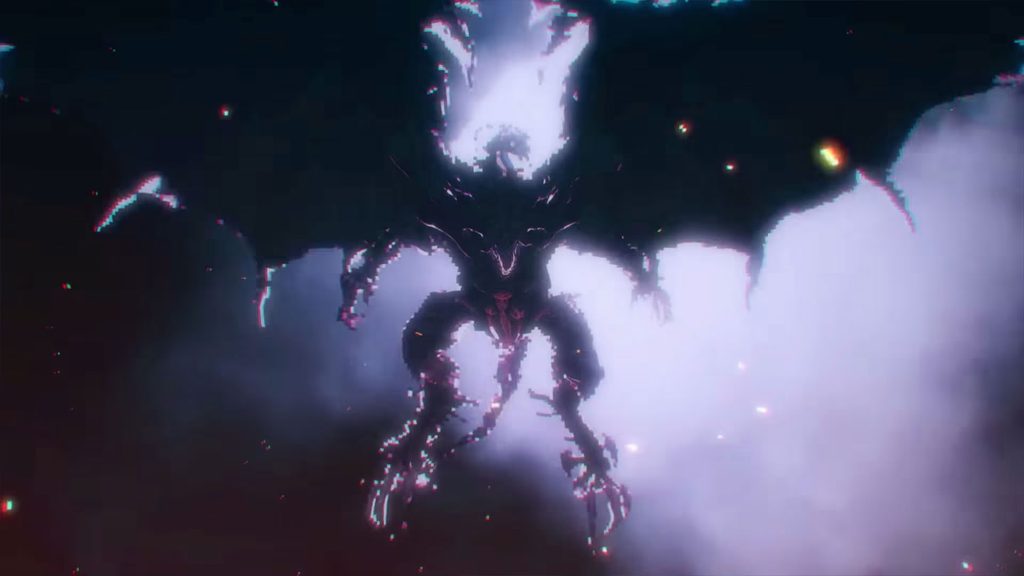
Visions are one of the defining features of Final Fantasy Resonance. These crystalized manifestations of legendary Final Fantasy heroes give you access to additional abilities, spells, and passive effects, while also providing a healthy dose of fan service for longtime fans of the franchise.
Each party member can equip a Vision that determines which additional abilities and combat options are available to them. Some Visions focus on physical damage and breaking through enemy defenses, while others specialize in elemental magic, healing, or support abilities.
The real depth comes from the way abilities can be learned and carried over between different Visions. As you progress, you'll unlock new skills and improve the ones you already have. Abilities learned through Vision Mastery can then be equipped alongside abilities from other Visions, allowing you to create builds that aren't restricted to a single role.
This system uses AP, or Ability Points, as a limit on how many learned abilities a character can equip at once. Each ability has an AP cost, so you'll need to decide which skills are most useful and how they fit into your overall strategy.
It's a simple idea, but it creates plenty of room for experimentation. A character who primarily deals physical damage can learn magical abilities or pick up useful support skills. A magic-focused character can gain additional tools for exploiting enemy weaknesses. Rather than locking each party member into a single role, Resonance encourages you to experiment and adapt your team to different situations.
Visions also have two progression systems. Awakening unlocks additional skills and passive effects using the appropriate resources, while Mastery improves as you use a Vision in battle. As its Mastery Rank increases, you'll gain further bonuses and more AP, making it possible to equip a wider selection of learned abilities.
The result is a progression system that rewards experimentation without making character development unnecessarily complicated. You don't need to constantly rebuild your party to enjoy the game, but the freedom is there when you want to optimize your setup for a particularly challenging encounter.
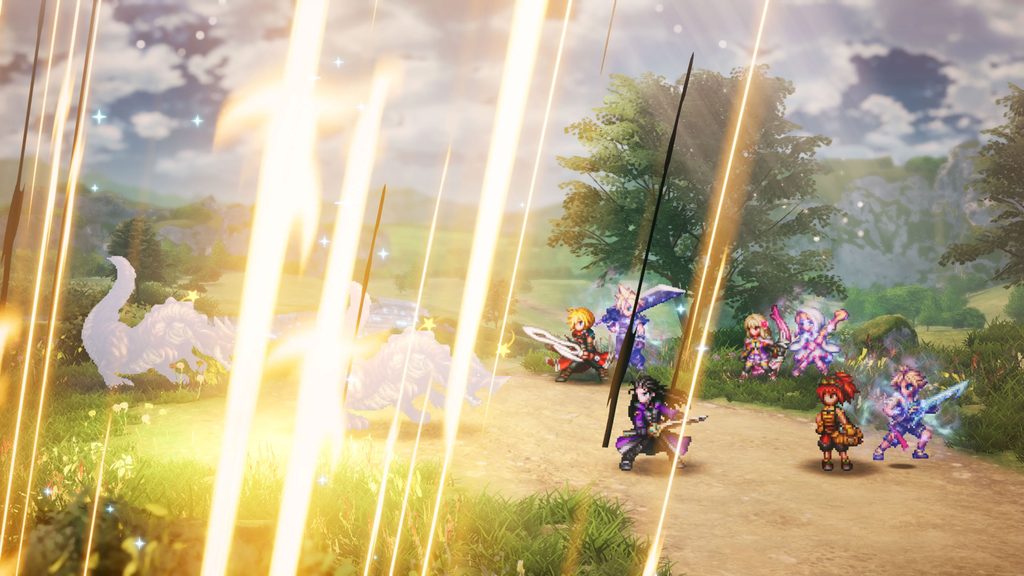
Then there are Resonance attacks, which give Visions an additional role during combat. When Sweeping Stagger creates an opportunity for a bonus offensive phase, you can unleash a Vision's signature attack. These moves come with distinctive animations and can dish out substantial damage, hit multiple enemies, or provide other tactical benefits.
For longtime Final Fantasy fans, seeing familiar heroes and their signature abilities return in a new context is a nice bonus. More importantly, Visions aren't just there for nostalgia. They form a major part of the combat and character progression systems, giving you plenty of reasons to experiment with different combinations throughout the adventure.
Espers, summons, Guardian Forces, Eidolons, Aeons, Avatars, Astrals, Primals, Eikons
Alongside Visions, Final Fantasy Resonance features traditional summons known as Espers. It's important to distinguish between the two systems. Visions primarily influence your characters’ abilities and progression, while Espers provide temporary assistance during combat.
Espers are unlocked as you progress through the story and complete certain optional challenges. Once summoned, an Esper joins the battle as an additional combatant for three turns before unleashing a powerful finishing attack and leaving the battlefield. You can have only one active Esper at a time.
Their usefulness goes beyond simply dealing a lot of damage. A well-timed summon can help you capitalize on a vulnerable enemy, strengthen your offensive push, or get you out of a difficult situation when a boss fight isn't going according to plan.
As with most of the game's combat systems, timing is important. Summoning an Esper as soon as the option becomes available isn't always the best approach. Waiting until an enemy is vulnerable or until you need an extra burst of damage can make a significant difference.
The combination of Visions, Espers, Stagger, and Resonance attacks gives battles several overlapping layers. Each system serves a different purpose, and learning how to combine them effectively makes combat feel much more engaging than simply selecting commands from a menu.
It's a particularly satisfying setup when everything clicks. You exploit an enemy's weakness, build the Stagger gauge, open up a window of opportunity, and then unleash your strongest attacks while the opponent struggles to recover.
It's not the most revolutionary combat system in the genre, but it's an excellent example of how a classic turn-based formula can remain engaging without resorting to unnecessary complexity.
Equipment and Character Progression
Visions are only one part of character development. Weapons, armor, and accessories also play an important role, affecting your party's stats and sometimes providing additional passive effects.
Weapons primarily improve your offensive capabilities, while armor and accessories help strengthen your defenses or provide bonuses to other attributes. However, simply equipping whichever item has the highest number isn't always the best approach. The most useful equipment depends on how you've built each character and what you need them to do in battle.
Strength improves physical offense, Magic affects magical damage, Stamina contributes to physical resilience, Spirit is important for magical defense and related effects, and Speed influences turn order. These attributes can make a noticeable difference, particularly when you're facing enemies that demand a more considered approach.
Some pieces of equipment offer additional effects that can be more valuable than a straightforward increase to your stats. An accessory that complements a character's role or helps them exploit enemy weaknesses may be more useful than an item that provides a slightly higher basic stat boost.
That's why equipment works best when considered alongside your Vision setup. If you're building a character around quickly filling the Stagger gauge, you'll want equipment that supports that role. A character specializing in magic or support abilities benefits from a different approach.
Character progression is spread across several interconnected systems. Leveling up improves your basic stats, equipment adds further bonuses, and Visions unlock new abilities while offering additional customization options. You don't need to analyze every single item to make progress, but there's enough flexibility to reward players who enjoy fine-tuning their party.
The best part is that none of this feels like an unnecessary obstacle. You can experiment with different builds, change your approach when you encounter a particularly difficult enemy, and gradually develop a party that suits your playstyle.
A Return to Turn-Based Roots
For years, Final Fantasy fans have debated whether the series should return to turn-based combat or continue moving toward action-oriented gameplay. I understand why Square Enix wants to experiment with the formula and attract players who might not normally be interested in traditional JRPGs. However, I feel pretty strongly about this: turn-based combat is one of the foundations of Final Fantasy, and I'd love to see it return to the franchise's mainline entries.
I'm not saying every game needs to look or play exactly like Final Fantasy X, nor do I think the series should stop experimenting. But turn-based combat allowed players to approach battles thoughtfully, analyze their opponents, and make every command count. That's an important part of the series’ identity, and it's something I miss when combat shifts toward action systems that rely more heavily on reflexes and constant button-pressing.
Final Fantasy Resonance reminded me of just how enjoyable a well-designed turn-based system can be. It doesn't ask you to prove how quickly you can react. Instead, it rewards you for understanding the mechanics, identifying weaknesses, and using the tools at your disposal effectively.
When you successfully Stagger an enemy and follow up with your strongest attacks, the satisfaction comes from knowing that you planned your moves well. It's not about how quickly you can press a button, but how intelligently you've approached the encounter.
That's why I believe Square Enix shouldn't be afraid to make a mainline Final Fantasy game with fully turn-based combat. The company has spent years exploring ways to bring the franchise to players who prefer action games, but I'm still not convinced that this is necessarily the best direction for the series.
Experimentation isn't the problem. The problem is losing sight of the very elements that made people fall in love with Final Fantasy in the first place.
What I'd really like to see is a brand-new mainline entry with turn-based combat and a more realistic visual presentation, taking inspiration from what Final Fantasy X represented in its time. I'm not talking about another remaster, a smaller spin-off, or a nostalgic trip back to the past. I want a full-scale Final Fantasy adventure that combines the depth of classic turn-based combat with the production values of a modern AAA release.
Final Fantasy Resonance isn't that game, but it serves as a fantastic reminder that this direction still has plenty of potential.
Difficulty: An Approachable Adventure With a Few Tough Tests
Final Fantasy Resonance isn't a particularly difficult game. Most regular encounters can be handled without much trouble once you've learned the mechanics and developed your characters. In the later stages, I often found myself simply choosing a basic attack to get through another group of enemies as quickly as possible.
That's probably the combat system's biggest weakness when it comes to pacing. The mechanics are interesting enough to encourage experimentation, but regular encounters don't always give you a reason to use everything at your disposal. When you know you can defeat a group without much effort, battles can start to feel like filler between exploration, story moments, and boss fights.
Thankfully, some of the tougher encounters show how well the system works when it's properly challenged. These fights require you to pay attention to enemy weaknesses, turn order, equipment, and the abilities you've chosen to bring into battle. You can't always rely on the same attack and expect it to solve every problem.
Compared with Clair Obscur: Expedition 33, the difference is immediately noticeable. Expedition 33 demands a much more active approach to both offense and defense, particularly through its parry and dodge mechanics. In Resonance, the focus is on planning your actions and choosing the right commands rather than reacting with precise timing.
I wouldn't say one approach is automatically better than the other. They simply offer different kinds of challenges. Expedition 33 can punish you for a mistimed reaction, while Resonance tests how well you understand its systems and use your available options.
Personally, I enjoy this approach. I don't expect every JRPG to be brutally difficult, nor do I need every regular encounter to demand my full attention. Still, I wish more of Resonance's standard battles had enough bite to encourage me to use its deeper mechanics instead of occasionally falling back on the basic attack just to get things over with.

Exploration: A World Worth Getting Lost In
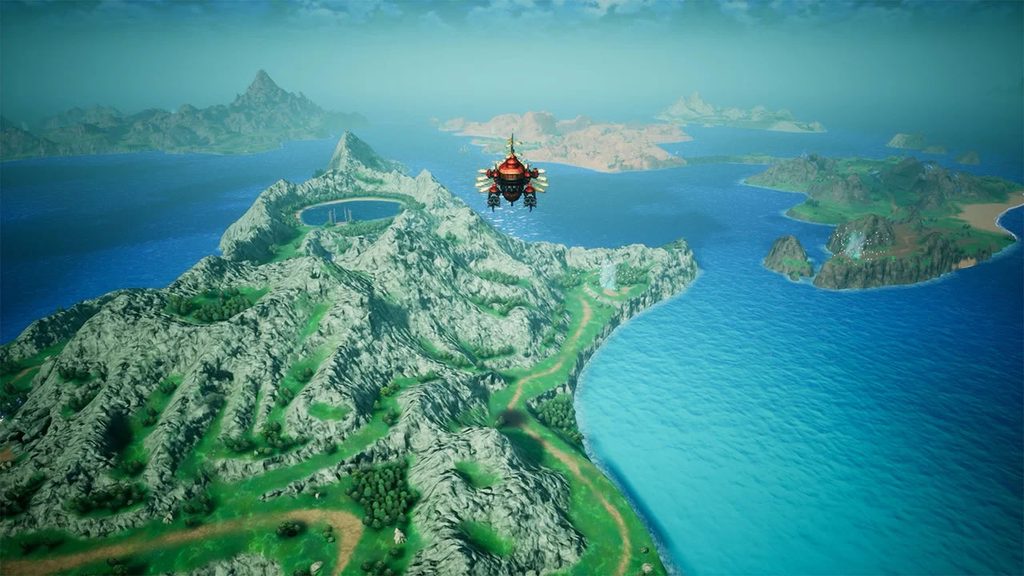
Exploration is another aspect of the game that really won me over. The world of Final Fantasy Resonance isn't merely a series of corridors connecting one battle to the next. It's a place that encourages you to look around, search for hidden rewards, and occasionally step away from the main objective to see what else is out there.
I particularly like the map. It's well designed, easy to read, and makes navigating the world a genuinely pleasant experience. It's simple to keep track of your current objectives and identify areas that might still have something worth discovering, without feeling as though the game is constantly holding your hand.
There are plenty of reasons to venture off the beaten path, from treasure chests containing useful equipment to side quests and optional challenges that give you additional incentives to improve your party. Not every piece of optional content is equally interesting, but the overall exploration experience kept me engaged.
After dozens of hours, I never felt as though I was simply moving from one mandatory battle to another. I frequently wanted to explore another location, check what was hiding around the next corner, or finish something I'd left for later.
The map also makes the experience more accessible without taking away the pleasure of discovery. You're not forced to waste time wandering around just to find your next objective, yet there's still enough room to explore independently and discover things you might otherwise have missed.
That sense of adventure is a big part of why I'm looking forward to a second playthrough. I enjoyed spending time in this world, and revisiting it feels like an opportunity to enjoy the experience again rather than simply repeat a checklist.
Visuals: HD-2D at Its Best
The visual presentation is one of the game's biggest strengths. Final Fantasy Resonance uses Square Enix's HD-2D approach, combining pixel-art characters and environments with three-dimensional spaces, modern lighting, depth-of-field effects, and dynamic camera work.
The result is a game that feels nostalgic without looking dated. It captures the charm of classic RPGs while making the world feel more alive through its lighting, detailed environments, and cinematic presentation.
The battle animations are particularly impressive. When you unleash a powerful Resonance attack or summon an Esper, the game can shift into a much more spectacular presentation, with dramatic camera angles and elaborate effects. These moments contrast nicely with the more traditional pixel-art look of the world and give the most powerful abilities an extra sense of impact.
I absolutely love the visual style. Resonance doesn't try to compete with photorealistic games, and it doesn't need to. Instead, it understands its own identity and makes the most of it.
If you're building a game around the legacy of classic RPGs, a style like this makes far more sense than trying to make every character and environment look as realistic as possible. The result is distinctive, colorful, and full of personality.
I played the PS5 version and had no technical issues that negatively affected my experience. Everything ran smoothly during my playthrough, and I had no reason to complain about the technical side of the game.
That's my experience with the PS5 version, of course, but from a presentation and performance standpoint, I came away thoroughly impressed.
Music and Sound: Nostalgia That Makes You Feel Something
If the visuals caught my attention immediately, the music is what made me fall even harder for the game.
Final Fantasy has a distinctive sound that has been built up over decades. Sometimes, all it takes is a familiar musical motif or the recognizable sound of a menu to take you back to the first time you played one of the older entries. Resonance understands just how much these little details matter.
The familiar menu sounds, battle effects, and other audio cues bring back memories, but the soundtrack is the real highlight for me.
This isn't simply a case of the music being good or fitting whatever is happening on screen. It gave me an incredibly warm feeling throughout the game. There were moments when I caught myself smiling while exploring the world, and others when I genuinely felt my heart skip a beat because the music made me so happy.
That might sound overly sentimental for a video game review, but I'm not going to pretend otherwise. I've been playing games for decades, and moments like these are a big part of why I still love this hobby. It's not always about whether a mechanic is well designed or whether the visuals are impressive. Sometimes, a game just makes you feel something that isn't easy to put into words.
That's what Final Fantasy Resonance achieved for me through its music. The familiar melodies and atmosphere remind me of everything I've loved about this series over the years, but they aren't there merely to make me reminisce about older games. They also make exploring this world an enjoyable experience in its own right.
For me, the soundtrack is one of the most important parts of the entire package. Plenty of games are fun while you're playing them but don't leave much of a lasting impression once they're over. Others stay with you because of how they made you feel.
Final Fantasy Resonance belongs firmly in the second category.
Verdict: A Nine Out of Ten That Could Have Been a Ten
After spending more than 60 hours with the PS5 version, Final Fantasy Resonance is a game I don't want to leave sitting in my library while I move on to the next release. I want to play it again.
I'm planning to pick it up on Nintendo Switch 2 and experience the adventure all over again on another platform. That alone should tell you how much I enjoyed it. Despite the predictable story and the occasional tedium of regular encounters, Resonance made such a strong impression that starting over doesn't feel like a chore. I'm genuinely excited to hear the soundtrack again, explore the world, and return to a combat system that kept me entertained for most of my playthrough.
Of course, I can't overlook the game's weaknesses. The story relies heavily on familiar ideas and rarely surprises, while the characters don't always manage to rise above their established archetypes. Regular battles can become repetitive, and the overall difficulty is relatively low. These are legitimate criticisms, and they deserve to be acknowledged.
However, the things Final Fantasy Resonance gets right matter much more to me. The turn-based combat is satisfying, Visions offer excellent character customization, Espers add another tactical layer, and the equipment and progression systems give you plenty of room to experiment. Exploration is a genuine pleasure, the visuals are gorgeous, and the soundtrack made me feel a level of nostalgia and happiness that I don't experience with every game I play.
Compared with Clair Obscur: Expedition 33, Resonance doesn't try to keep you constantly on edge with perfectly timed parries and dodges. Instead, it offers a different kind of satisfaction built around planning, patience, and understanding the turn-based system. More importantly, it reminded me how much I want to see that approach become a central part of future mainline Final Fantasy games.
Had the story been more original and the characters managed to surprise me a little more throughout the adventure, I probably would have given this game a perfect score.
As it stands, Final Fantasy Resonance earns a 9/10. It's a game with clear flaws, but it gave me more than 60 hours of genuine enjoyment and left me wanting to return to its world as soon as possible.
And the fact that I'm planning to play through it again on Nintendo Switch 2 immediately after completing it on PS5 says more about my experience than any additional explanation ever could.
Ako tražite povoljnije cene za igre, DLC-ove i druge digitalne proizvode, posetite Eneba i pogledajte aktuelnu ponudu.
Pre kupovine obavezno unesite naš promo kod BUFFGAMING i ostvarite dodatnih 5% popusta.
Kupi igre, poklon-kartice i dopune povoljnije