
Shinjuku Anomaly: offers an intriguing premise built around nighttime exploration, photographing supernatural phenomena, and following rules that determine how far you can go. Its Japanese horror atmosphere and multiple endings show promise, but the simple concept and limited information about its mechanics make it difficult to stand out from the competition. – Miloš Markovic
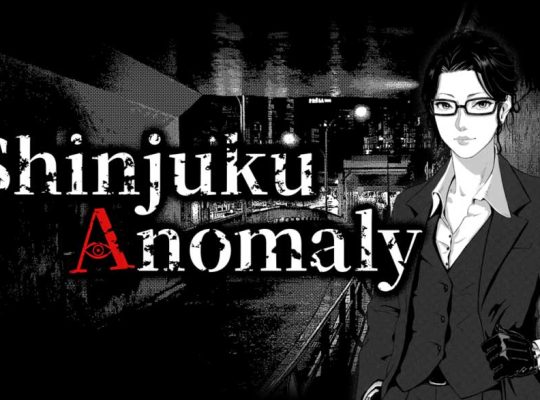
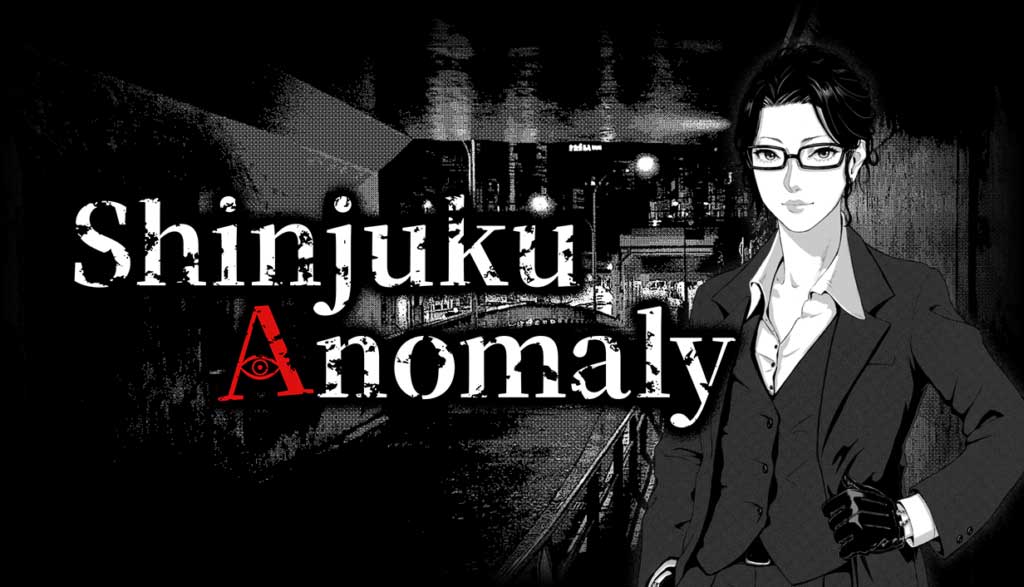
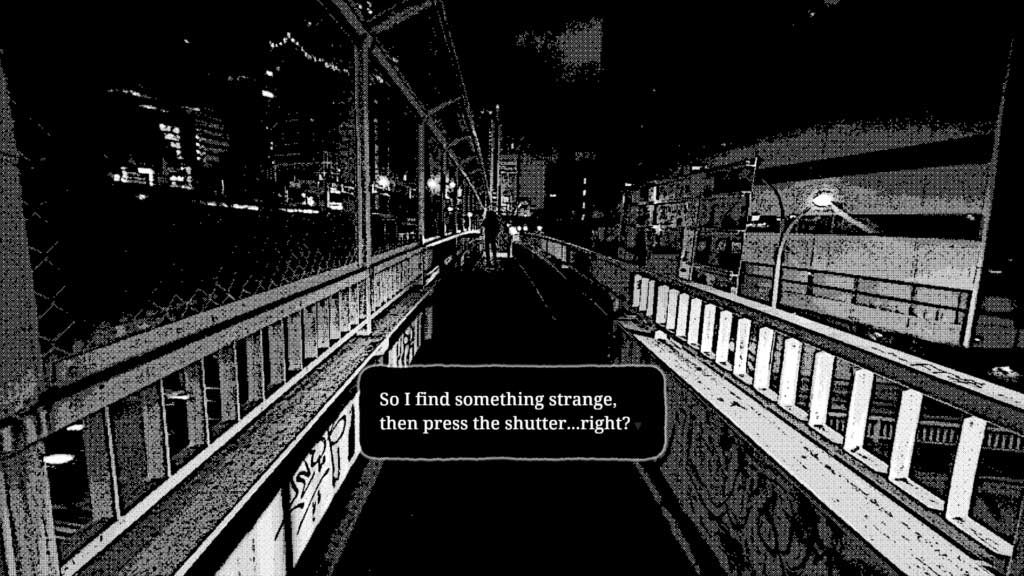
Nighttime Tokyo already has an atmosphere that could easily serve as the foundation for a horror game, and Shinjuku Anomaly takes the familiar streets and neon signs of one of the Japanese capital’s busiest districts and turns them into a place where it is best to keep your distance from anything that seems unusual. In this short horror visual novel, you take on the role of a freelance photographer hired to document supernatural phenomena in Shinjuku after dark. The job seems simple enough at first: find the anomalies, photograph them, and follow the rules. The problem is that your curiosity might bring you one step closer to something best left alone.
The game comes from AMATA Games, the publishing label of Japanese studio AMATA K.K., which was founded in 2008. Rather than relying on the traditional horror formula of sudden scares and loud sound effects, Shinjuku Anomaly builds tension through restrictions, uncertainty, and the feeling that something incomprehensible is hiding behind the familiar urban environment. This simple premise gives the game the potential to leave a lasting impression without requiring dozens of hours to complete.
Photographing the Supernatural Is Not a Job for the Curious
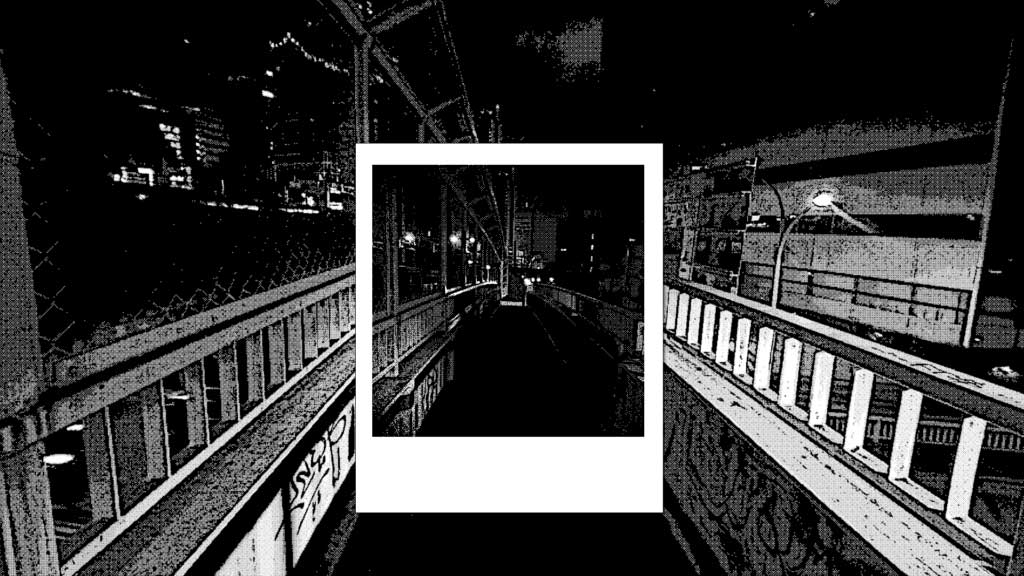
The core gameplay revolves around exploring the streets of Shinjuku at night and using a film-based camera to document supernatural phenomena. Instead of being expected to fight everything you encounter, your task is to identify anomalies and capture the appropriate photographs. This changes the way you observe your surroundings, as every alley, street corner, or unusual sight could potentially conceal something worth investigating.
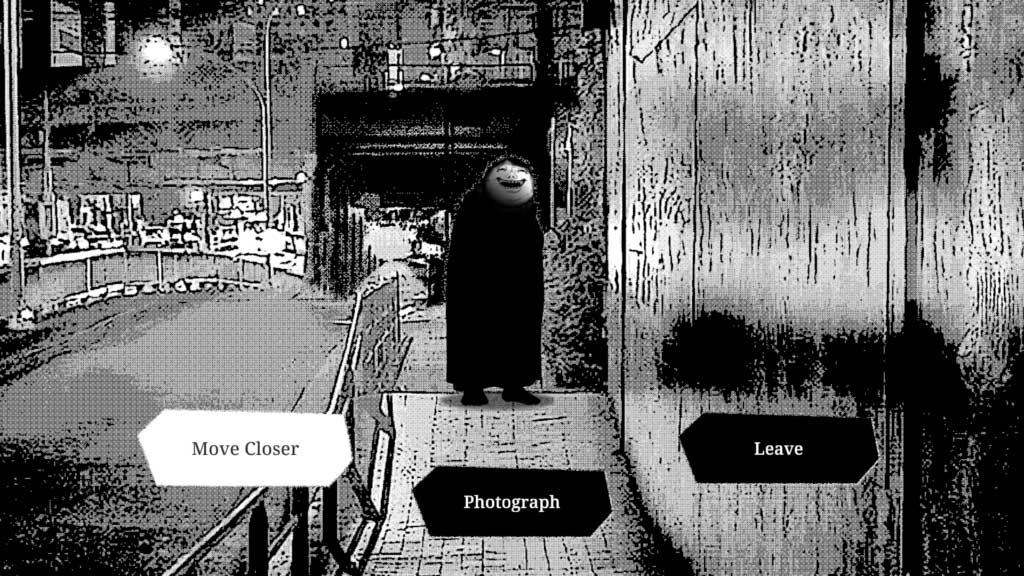
The most interesting part of the concept is built around four rules you must follow during each shift. They determine how you should behave, how close you can get to certain phenomena, and what you should never photograph under any circumstances. The game transforms what appears to be an ordinary assignment into a test of discipline, where finding what you are looking for is not enough; you must also judge how far you can go without facing the consequences.
This approach is particularly well suited to horror that relies on atmosphere and anticipation. When you do not know what awaits you around the next corner, even the simple decision to raise your camera can become a source of tension. Rather than relying exclusively on direct threats, the game uses its rules to make you question your own curiosity.
Familiar Streets in a Completely Different Light
Shinjuku is an interesting setting for this type of game precisely because it is a real, recognizable district of Tokyo, known for its neon signs, busy streets, and narrow alleyways. When this environment is transformed into a nighttime horror setting, the familiar urban atmosphere takes on an entirely different meaning. Streets that seem perfectly ordinary during the day can become unsettling when things that should not exist begin to appear.
Shinjuku Anomaly attempts to take advantage of this contrast and create unease through exploration rather than relying solely on overt scares. The camera reinforces this idea by encouraging you to observe scenes carefully and look for details you might otherwise overlook. In a horror game built around anomalies, the difference between what appears normal and what feels subtly wrong is often the most important source of tension.
However, the atmosphere’s ultimate effectiveness will depend on how interesting the supernatural phenomena are and how successfully the game changes the way you perceive its familiar surroundings. The premise itself is promising, but the variety of anomalies and the quality of their presentation will be crucial in determining whether exploration remains engaging until the end.
Multiple Endings Encourage Replayability
Shinjuku Anomaly features several different endings, with your decisions and how closely you follow the rules influencing how the story unfolds. This structure is particularly appropriate for a game of this kind, as it naturally encourages replaying. You can devote your first playthrough to carefully following every restriction, while a subsequent run gives you the opportunity to discover what happens when you start taking risks and breaking the rules.
This structure can be highly effective in a short horror game. Rather than artificially extending the content, different outcomes give players a reason to return and explore the consequences of their actions. However, how different the endings actually are and how significantly your choices affect the experience remain open questions that the available information does not fully answer.
It is also worth noting that Shinjuku Anomaly does not attempt to be a massive adventure. It is designed as a short experience, allowing it to focus on one clear idea and build its horror around atmosphere, rules, and exploration. If you are in the mood for something you can finish in a relatively short amount of time, this approach could be one of its biggest strengths.
Japanese Horror Accompanied by YAMIKUMO
The game’s atmosphere is further complemented by its theme song, “Hyakkiyakou” (百鬼夜行), which can be translated as “Night Parade of One Hundred Demons” and is performed by the Japanese group YAMIKUMO. This nine-member act is known for its more aggressive sound, which fits the game’s unsettling atmosphere. A dedicated lyric video is also available, combining footage of the group with scenes from the game, giving interested players an early impression of its musical direction and visual style.
The song is an interesting addition to the project, particularly because it draws on Japanese motifs and an aesthetic that naturally complements a story about supernatural phenomena in an urban setting. However, how much the music contributes to the atmosphere during gameplay will depend on how it is integrated with the sounds of the city, exploration, and encounters with anomalies.
It is also worth mentioning that the development team has stated that some of the game’s background imagery was created using artificial intelligence. This is relevant information for players who follow the use of AI tools in video game development, although the statement alone does not reveal how extensively such content is used or what impact it has on the final visual presentation.
Is Shinjuku Anomaly Worth Your Attention?
Shinjuku Anomaly has a simple but appealing foundation: exploring Shinjuku at night, photographing supernatural phenomena, and following four rules that determine how safely you can carry out your job. The combination of these elements promises a horror experience built around uncertainty and careful observation, while multiple endings provide an additional reason to replay it.
At $3.99, the game is an affordable option for fans of short horror experiences. Support for Japanese, English, Simplified Chinese, and Traditional Chinese also makes it easier for players from different regions to follow the story. However, since the available description does not reveal enough about the total playtime, the variety of anomalies, or the quality of the individual endings, a final judgment on the game’s overall quality will have to wait until it can be experienced firsthand.
For now, Shinjuku Anomaly looks like an interesting choice for fans of Japanese horror who prefer unsettling atmospheres, mysterious phenomena, and the feeling that something is wrong over constant action sequences. Sometimes, all you need is a camera, a few clear rules, and a street you would rather not walk down alone after midnight.
The game was played on: PC.
Ako tražite povoljnije cene za igre, DLC-ove i druge digitalne proizvode, posetite Eneba i pogledajte aktuelnu ponudu.
Pre kupovine obavezno unesite naš promo kod BUFFGAMING i ostvarite dodatnih 5% popusta.
Kupi igre, poklon-kartice i dopune povoljnije