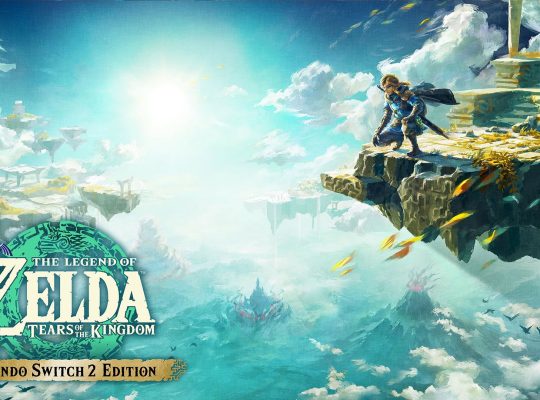

The Legend of Zelda: Tears of the Kingdom – Switch 2 Edition: Tears of the Kingdom is an enormous and endlessly creative adventure, and the Switch 2 Edition finally lets it shine with improved visuals and a stable 60 FPS. – NemanjaKocica
If Breath of the Wild was a celebration of space and freedom, then Tears of the Kingdom is a celebration of everything that world can become. Nintendo took what was already an incredible foundation and built something even more ambitious on top of it.
But before getting into just how massive and creative Tears of the Kingdom is, there is something I need to explain about my own experience with the game.
I never finished it on the original Nintendo Switch.
Not because I disliked it. Quite the opposite.
The problem was performance.
Tears of the Kingdom targets 30 FPS on the original Switch, but in demanding situations the frame rate can drop to around 20 FPS, with Ultrahand being one of the most obvious examples. The issue is that Ultrahand, Fuse, Ascend, Recall and Autobuild are not optional gimmicks you occasionally use. They are at the heart of the game, and you will be using them constantly.
That made those performance drops impossible to simply ignore.
Every time I built something more complicated with Ultrahand, combined multiple objects, or used some of the game's more demanding abilities, I could feel everything slowing down. When a game is built around physics, experimentation and creativity, having its core mechanics accompanied by noticeable slowdowns makes it difficult to enjoy the experience the way it was intended.
So I stopped playing.
I waited.
And now I can say that it was worth it.
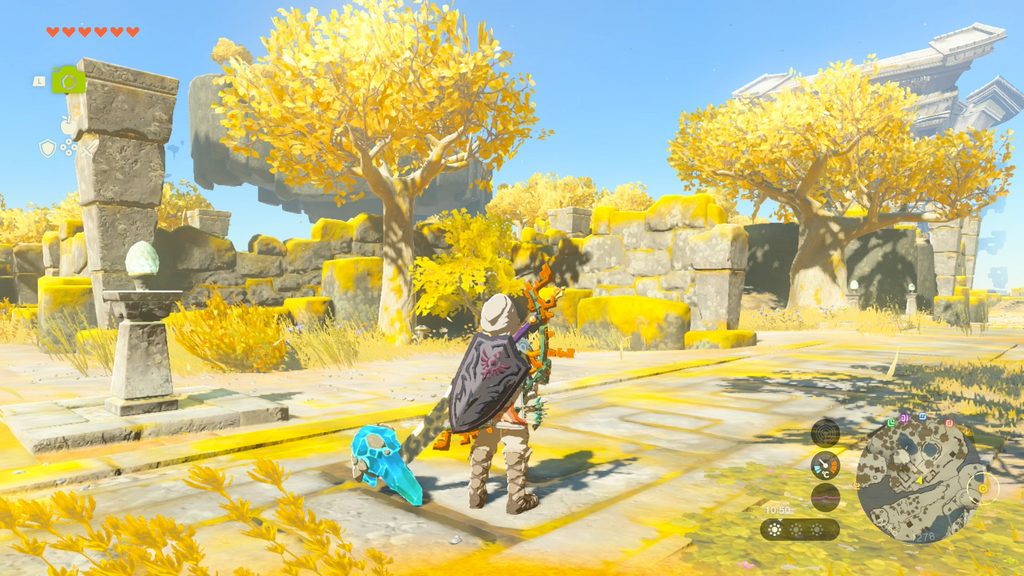
On Switch 2, Tears of the Kingdom finally feels like the game I always wanted it to be. The stable 60 FPS makes an enormous difference, especially in a game where you are constantly moving, building, combining objects and manipulating the world around you.
Ultrahand is no longer the moment when you brace yourself for the frame rate to take a hit. Instead, it becomes one of the most enjoyable parts of the game again.
Everything simply feels better.
Link moves more smoothly, the camera feels more responsive, combat is cleaner, and all those systems that encourage you to experiment finally keep up with your imagination instead of feeling like the hardware is struggling to keep up.
The Switch 2 Edition also brings improved resolution, visuals, textures and HDR support, giving Hyrule an even cleaner and more impressive presentation.
And once you start playing, you are reminded just how enormous this game really is.
If Breath of the Wild was a world that encouraged you to look toward the horizon and wonder what was out there, Tears of the Kingdom constantly gives you a reason to change direction.
There is always something.
You might spot a Shrine in the distance. Maybe you come across a side quest. Perhaps there is a sign someone needs help putting back upright. Then you notice a cave. Or a well. Or a hidden path. Or something else entirely that you never planned on finding.
That is what makes Tears of the Kingdom feel almost endless.
I genuinely think I could keep playing this game indefinitely and still have things left to do.
Nintendo created a world that constantly rewards curiosity.
And just as Breath of the Wild was a celebration of space, Tears of the Kingdom feels like a celebration of content, creativity and interaction.
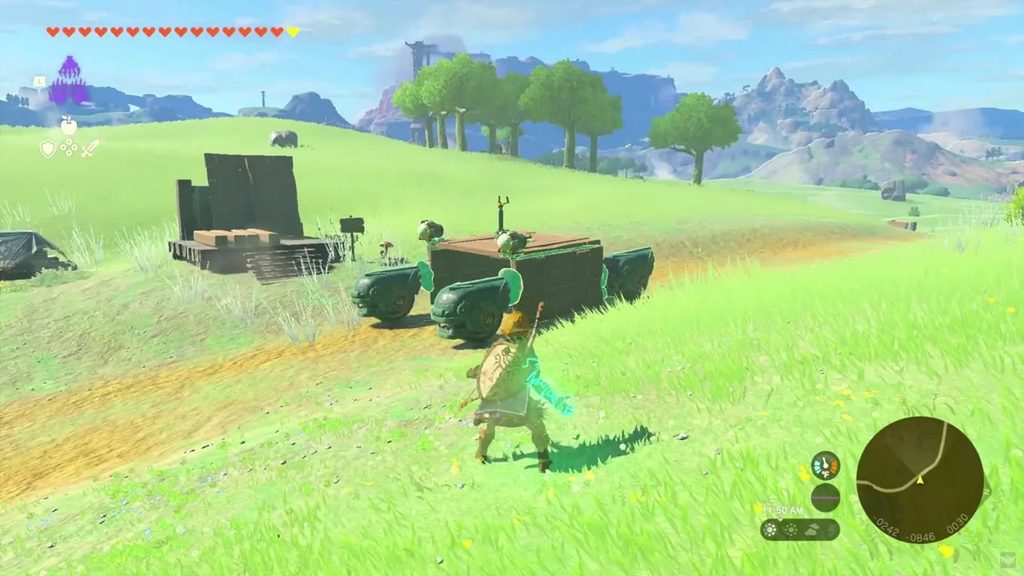
Combat is also more interesting than it was in Breath of the Wild, largely because of the freedom Fuse gives you.
You can attach almost anything to a weapon, shield or arrow, creating an absurd number of combinations. Some are genuinely useful, some are completely ridiculous, and some are so much fun that you make them simply because you can.
That is the beauty of Tears of the Kingdom.
The game does not just ask what you want to do.
It gives you the tools and says: figure something out.
Then you add Zonai devices, vehicles, aircraft, traps and all the other contraptions you can build, and the possibilities become almost ridiculous.
That is also why every player can have a completely different experience.
One person builds an aircraft. Another creates a tank. Someone else constructs a bizarre machine that barely makes sense even to its creator. Somehow, they can all work within the same world.
And that is arguably Tears of the Kingdom's biggest achievement compared to Breath of the Wild.
It does not simply give you a bigger world.
It gives you more ways to interact with it.
That world is now split across three major layers.
There is Hyrule itself, a familiar but significantly expanded version of the world we explored in Breath of the Wild. Then there are the Sky Islands.
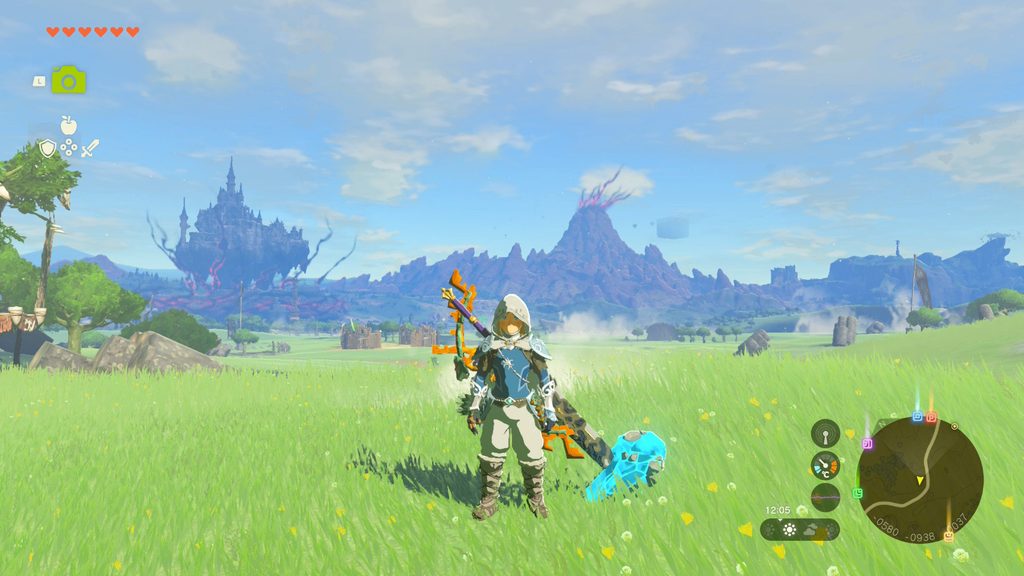
Unfortunately, this is probably my biggest criticism of the game.
The Sky Islands look fantastic and contain some great ideas, but many of them feel smaller and less numerous than they should have been. With the way Nintendo presented the game's verticality before launch, I expected the skies to play an even larger role.
Thankfully, there is another side to this new world.
The Depths.
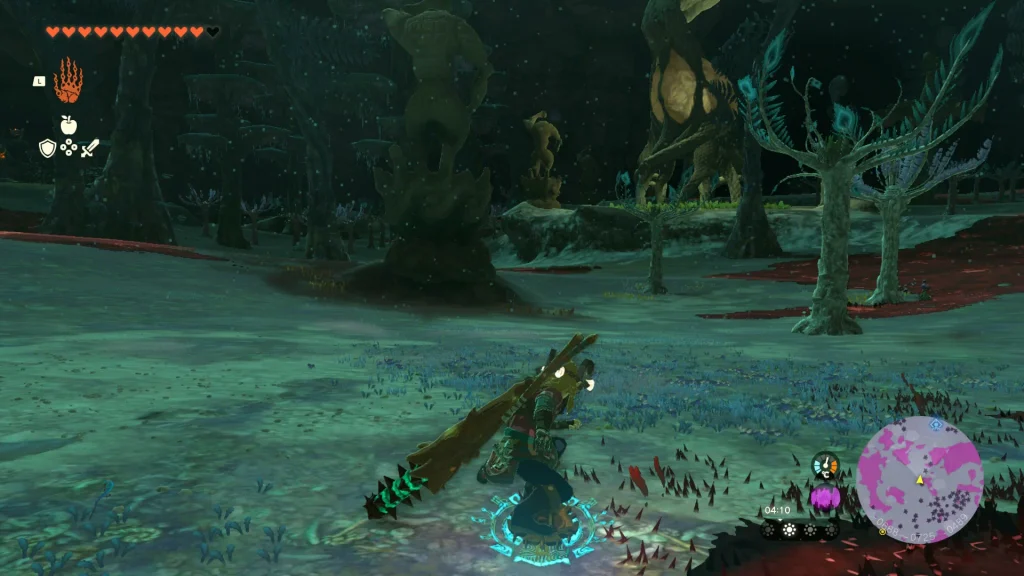
A huge underground region hidden beneath Hyrule, almost completely covered in darkness.
The Depths bring an entirely different atmosphere to the game. While the surface can sometimes feel familiar, going underground creates a constant sense of uncertainty. You have to illuminate your surroundings, deal with different enemies and navigate enormous areas where you never quite know what you are going to find.
There is something genuinely fascinating about the idea that Hyrule is no longer simply a wide world.
It has height.
It has depth.
And that extra dimension adds an entirely new layer to exploration.
The story, however, does not leave quite the same impression.
It is perfectly serviceable and has some good moments, but it also has its share of weaknesses and missed opportunities. There are interesting ideas here, but the narrative is not the reason I will remember Tears of the Kingdom.
The world is.
The freedom is.
The sheer number of things you can do is.
That is also why playing the Switch 2 Edition makes such a significant difference.
When a game constantly asks you to manipulate physics, combine objects, build machines and experiment with different systems, performance is not simply a visual bonus. It directly affects how you play.
I can now use Ultrahand without constantly thinking about whether the game is about to slow down. I can build more complicated machines, test them and experiment with the game's systems without feeling like I have pushed the original hardware beyond its limits.
And that is why I am especially glad I waited.
Because now that I can finally experience it the way I wanted to, Tears of the Kingdom has become one of those games I simply do not want to turn off.
There is also another major advantage that comes with the Switch 2 version.
It is still a handheld game.
That matters more than it might sound.
One of Nintendo's biggest and most ambitious adventures can now sit in your backpack.
You can play Hyrule on your terrace with a coffee. You can spend two hours exploring the world on a train. You can finish a Shrine on a bus. You can take the game on holiday and play it on the beach.
And now you can do all of that with a much smoother experience, improved visuals and a stable 60 FPS.
That may sound like a small detail when compared to technical specifications, but to me it is one of the best things about the Switch 2.
It is not just about making Zelda look better on a TV.
It is about being able to carry a game of this scale with you and play it almost anywhere without feeling like you are compromising the experience.
Tears of the Kingdom is not perfect.
The Sky Islands could have been larger and more numerous. The story could have been stronger. Some ideas are not used as effectively as they could have been.
But the sheer amount of content, freedom and creativity on offer is still remarkable.
Breath of the Wild made me want to explore.
Tears of the Kingdom makes me want to experiment.
And Switch 2 is finally the console that lets me do both without constantly worrying about the game slowing down.
That is why I am actually glad I waited to finish it.
Because now I can finally say that I experienced Tears of the Kingdom the way it should have been experienced.
It is enormous, endlessly creative and packed with so much to do that I genuinely believe I could play it for an absurd amount of time and still discover something new.
And when you can build an aircraft, a tank, a flying death machine and who knows what else, it is hard to complain.
The Legend of Zelda: Tears of the Kingdom is an enormous, creative and almost endlessly replayable adventure. On Switch 2, it finally feels like the technical experience this game always deserved.
And let's not forget: Link can build pretty much anything. What more do you need?
And now I am ready for Ocarina of Time.