


Ved: Recure: Ved: Recure successfully combines action combat and roguelite progression through its interesting Buff Chain system, while its large selection of buffs, playable characters and boss fights provide plenty of room for experimentation. However, some repetition and technical issues prevent the game from reaching its full potential. Even so, its solid combat and several genuinely interesting ideas make it a worthwhile option for fans of the genre. – NikolaOtasevic
After 27 consecutive nights spent working, the last thing anyone would expect is for another game they bought to completely change their life. The protagonist returns to an empty apartment, sits down at his computer and, despite already having more than enough unplayed titles, buys yet another game that he probably will not even get around to playing. This time, however, things do not end with another title gathering dust in his Steam library. Instead, he is pulled directly into the world of the game and soon realizes that getting back out will not be quite as easy as he expected.
That unusual premise is where Ved: Recure builds its story, combining meta humor with action, roguelite elements and an anime-inspired aesthetic. What initially feels like a joke about one of every gamer's eternal problems – an enormous backlog that never seems to get any smaller – quickly develops into a much more serious adventure in a world on the verge of complete collapse. The longer you spend there, the clearer it becomes that finding a way out is not the only thing that matters; understanding what actually happened to this world is just as important.
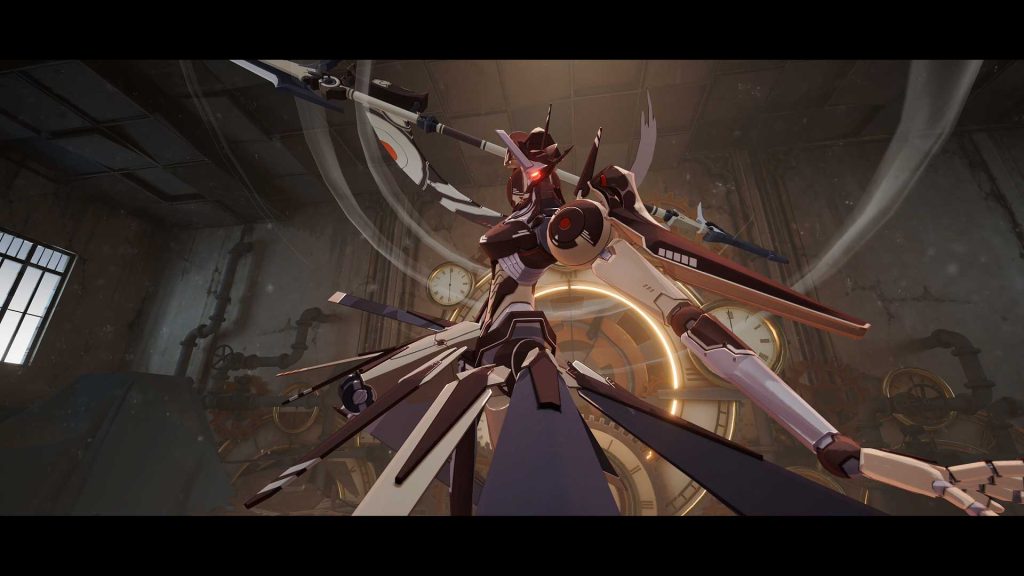
Combat Is the Heart of the Game
If there is one part of Ved: Recure around which the entire game is essentially built, it is combat. At first, the system feels familiar – you attack, dodge, block and wait for the right opportunity to parry – but the real twist comes from the Buff Chain system. Instead of buffs simply being passive bonuses you collect during a roguelite run, here you decide which actions will activate specific effects. A buff can be tied to a regular attack, a finishing blow, a dodge counter, a parry or another specific action.
Because of this, simply collecting the strongest abilities is not enough. You have to think about how you are going to activate them and in what order. One buff might control an enemy, another might deal damage, while a third waits for a particular action before joining the chain. When everything comes together, combat can look and feel very satisfying, as several properly connected effects begin triggering almost like a small automated combo system.
This is also where Ved: Recure tries to distinguish itself from more traditional roguelite games. The developer has deliberately designed the system so that the player's skill becomes the link between the action combat and the roguelite mechanics. In other words, even when you find a powerful buff, it will not necessarily do all the work for you. You still need to properly execute a parry, dodge or finishing attack in order to trigger it.
When the Build Finally Comes Together
Ved: Recure offers more than 150 buffs, nine core attributes and more than 50 pieces of equipment with additional hidden traits. On paper, that sounds like a huge number of possible combinations, and the system does provide plenty of room for experimentation. Equipment is not simply there to increase your stats, as it can also influence your buffs and the way you build your character.
The most interesting part comes when you stop thinking about individual buffs and start looking at them as one complete system. At that point, the question is no longer “which buff is the strongest?” but rather “which buff works best with the way I play?” If you prefer an aggressive approach, you can create a chain that rewards attacks and finishing blows, while players who prefer a more defensive style can build around parries and evasive moves.
The problem is that the game does not always manage to turn that potential into a genuine sense of depth. There are plenty of possibilities, but not every combination is equally interesting, and after a while you can start feeling like you are simply searching for a more efficient version of the same approach. This is where Ved: Recure begins to show the limitations of its system.
Seven Characters, Seven Ways to Play
One of the things that helps prevent the experience from becoming too monotonous is the roster of seven playable characters. Each character has their own combat style, mechanics and progression path, meaning that switching characters is more than simply changing the appearance of your protagonist.
This is a good way for the game to extend its lifespan, because what works with one character will not necessarily be the best approach with another. When you combine that with different buffs, equipment and the ability to create your own chains, there is enough room to experiment even after you have become familiar with the game's basic systems.
At the same time, I would not say that every character is enough of a reason to immediately jump into another run. The differences are there, but the fundamental philosophy of combat remains the same, so a lot will depend on how much you enjoy the core combat system in the first place.
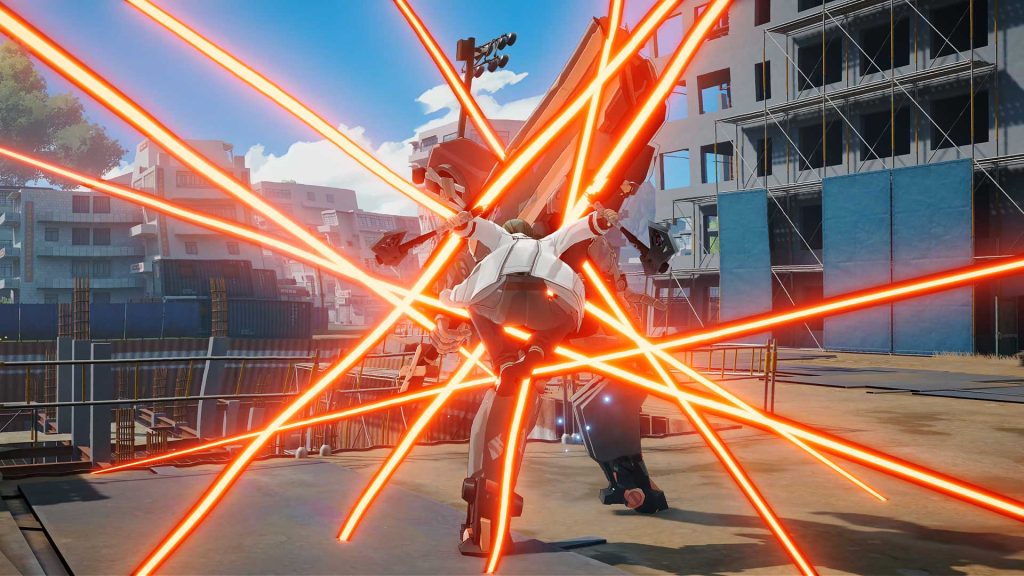
Boss Fights Are Where the Game Shows What It Can Do
Ved: Recure features four major stages and no fewer than 16 bosses, and boss fights are where you can best see why parrying, dodging and the Buff Chain system are so important. You cannot simply rely on one attack and hope the enemy goes down before it manages to hit you. You need to study their patterns, react to their attacks and find the right moment to counter.
Because of this, the bosses serve as a test of everything you have been doing up to that point. If you have built your buffs properly and understand how your character works, a fight can feel extremely satisfying. If you have not, the game is very quick to remind you that having a good build on paper is not enough.
There are also Boss Rush, Endless Mode and Training Grounds, giving the game additional content beyond the main story and allowing players to further test their combinations and combat skills.
An Anime Aesthetic That Works
Visually, Ved: Recure clearly knows what it wants to be. The characters feature an anime-inspired design, while battles are filled with effects, weapon trails and impressive counter attacks. Enemies also have sufficiently different models and attack patterns that they can be relatively easy to distinguish during combat. One of the more recent PC impressions particularly highlights the quality of the character models, attack animations and visual effects of counters, suggesting that the game looks more ambitious than you might expect from a production of this size.
That is probably one of the game's stronger elements. Ved: Recure does not have the budget of a major AAA action RPG, but it does not behave as though it is trying to hide that fact. Instead, it uses a stylized presentation and focuses on what matters most – the characters, combat and visual effects that are meant to make every encounter visually appealing.
A Roguelite That Can Become Repetitive
The biggest problem comes from the combination of all the elements mentioned above. When you play the same core combat system repeatedly and your builds begin to resemble one another, the initial excitement can start to wear off. One recent impression of the game also points out that Ved: Recure can begin to feel repetitive over time, while its builds do not always provide the overwhelming sense of power you might expect from a roguelite system.
That does not mean the gameplay is bad, but rather that the game sometimes struggles with the pace at which it introduces and develops its systems. Buff Chain is a great idea, but once you understand its basic principle, experimentation does not always result in a completely new way of playing. At that point, you are more focused on optimizing what you already know than discovering entirely new possibilities.
For players who enjoy build crafting and repeating runs precisely because those are the main reasons they enjoy roguelite games, this will not necessarily be a major problem. For those who expect every new run to dramatically change the way they play, however, the experience can become somewhat less interesting.
Technical Problems Hurt the Experience
This is the part that is difficult to ignore, particularly because Ved: Recure does not allow you to save your progress in the middle of a run and continue later from where you stopped. That is already important when individual runs can take a considerable amount of time, while several recent PC impressions following release have reported memory-usage issues during longer sessions, including cases where the game crashed after roughly an hour and a half.
The developer has already released patches following launch that address some of the excessive memory-usage problems, including issues related to certain cutscenes and playing as Daria with certain system languages. This shows that the technical side is being worked on, but the fact that the game launched with these problems still has an impact on the overall experience.
There have also been reports of problems maintaining a stable 30 fps on Steam Deck, but I would not automatically apply that to the PC version as a whole. On standard PC hardware, the game requires a minimum of a GTX 1060 and 4 GB of RAM, while the recommended specifications call for a GTX 1660 Ti and 8 GB of RAM.
Conclusion
Ved: Recure has one very good idea at the center of its gameplay. The Buff Chain system successfully combines action combat and roguelite progression in a way that feels like more than just another system built around collecting random buffs. Once you start connecting parries, dodges, finishing attacks and different effects, the game can be genuinely fun, while seven characters, 16 bosses, four major stages and a large number of buffs provide enough content to keep you busy for a considerable amount of time.
However, the game is not without its problems. The repetition becomes noticeable over time, the depth of the builds is not always as substantial as the number of available buffs might suggest, and technical issues can be particularly frustrating in a game where losing an entire run to a crash means having to start over. The good news is that SummerClip is already working on patches, so Ved: Recure could become a considerably better experience with some additional polish.
Even so, there is enough personality here, along with several genuinely good ideas, to prevent Ved: Recure from feeling like just another roguelite destined to disappear among hundreds of similar games. Its strongest moments are not necessarily about the sheer amount of content it offers, but rather those moments when a carefully constructed Buff Chain and a perfectly timed parry come together in one smooth sequence. That is when the game truly shows what it was trying to be.
Score: 7.5/10
The game was played on: PC.