
Arthurian legends have been a part of videogames for decades, and by now we have seen just about every possible interpretation of Camelot, King Arthur and the Knights of the Round Table, from traditional fantasy RPGs and strategy games to much darker takes on the familiar mythology. Because of that, it is becoming increasingly difficult for a new game to approach the subject and immediately feel different, which is exactly why Wardens of Avalon caught my attention during Gamescom 2026.
I had the opportunity to attend a presentation of Runes Studio's upcoming action RPG, published by The Arcade Crew, and what I particularly enjoyed about the presentation was the way the developers explained how all of the game's different systems are supposed to work together rather than simply throwing a collection of familiar mechanics into an Arthurian setting. By the time the presentation was over, I found myself much more interested in the game than I initially expected to be, largely because Wardens of Avalon seems to have a very clear idea of what kind of experience it wants to deliver.
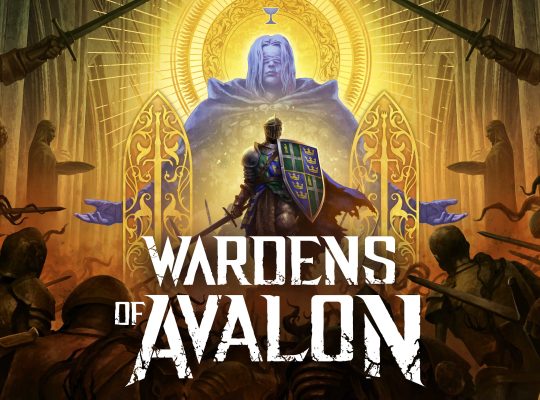
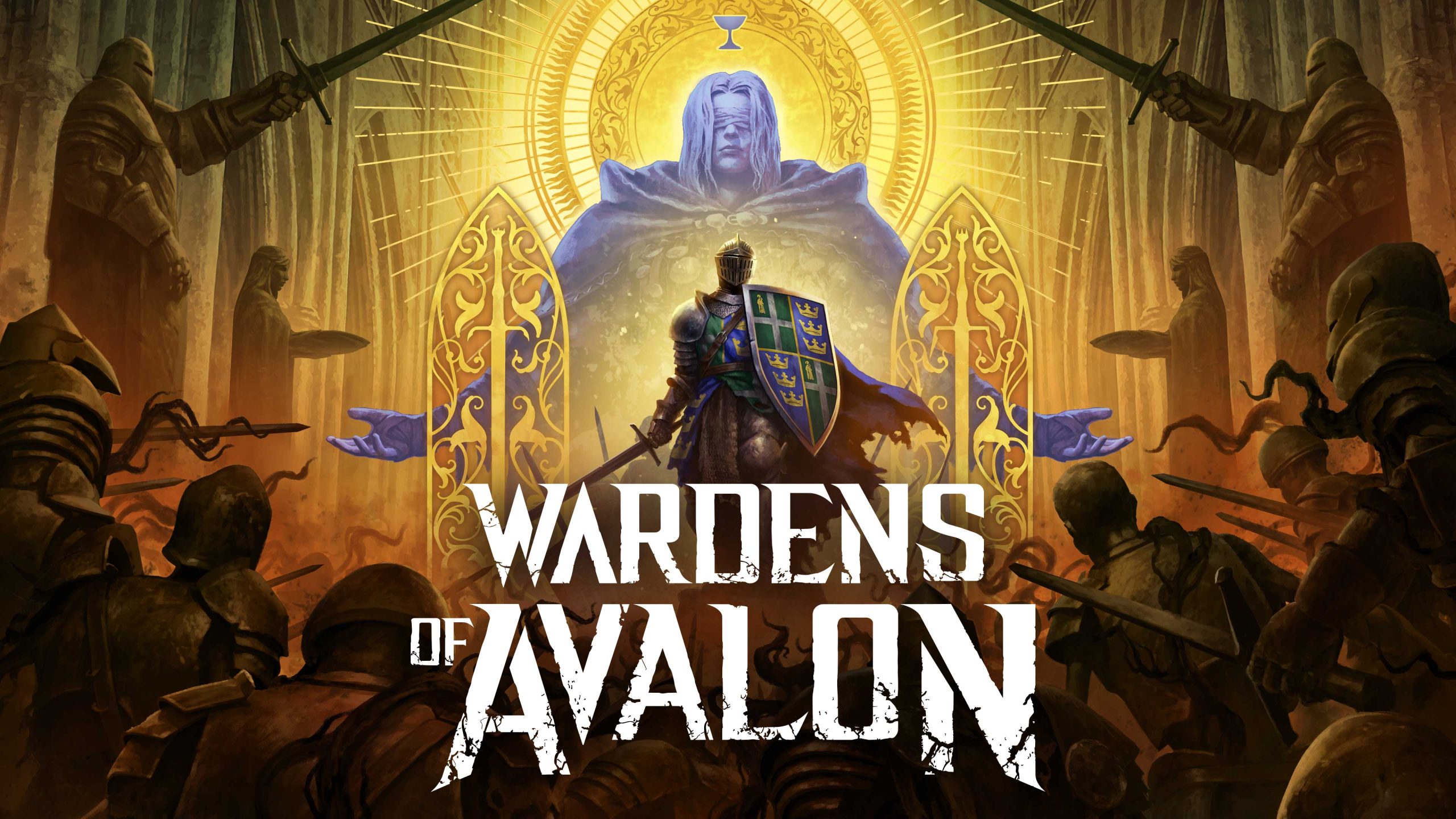
The story takes place after Camelot has already fallen, with Avalon suffering under a terrible corruption that has affected the legendary Knights of the Round Table and transformed the once-glorious kingdom into something far more dangerous and unfamiliar. Instead of stepping into the shoes of an already established legendary hero, players take on the role of a new Twilight Knight who is chosen by Morgan Pendragon and given the task of helping restore what remains of the kingdom.
That immediately creates an interesting starting point, because Wardens of Avalon isn't really about witnessing the rise of Camelot or defending a kingdom at the height of its power; instead, you're entering a world that has already experienced its downfall, and much of your journey is going to be about understanding what happened and gradually attempting to undo some of that damage.
A Different Way of Looking at Camelot
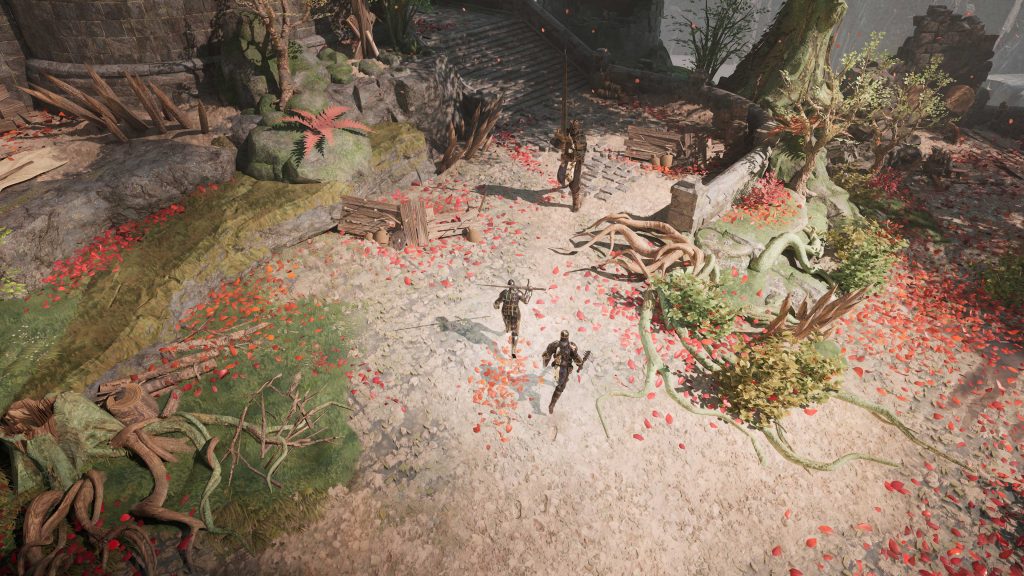
What I found particularly interesting is that the ruined state of Avalon isn't simply being used as an excuse for creating a dark fantasy environment filled with monsters and abandoned locations. The destruction of Camelot is actually connected to the game's progression systems, which means that the world you're exploring and the settlement you're rebuilding are directly connected to the overall journey.
As you explore Avalon, defeat enemies and collect resources, those resources can be brought back and used to rebuild your own part of the kingdom, with new buildings and districts gradually becoming available and opening up additional possibilities as your settlement grows. At first, I'll admit that the building aspect wasn't the part of Wardens of Avalon that immediately appealed to me, because we've seen settlement construction and crafting systems added to countless games over the years, sometimes with very little reason beyond giving players another progression bar to fill.
However, the more the developers explained what they were trying to accomplish with the system, the more I started to understand why it actually makes sense here, and by the end of the presentation I had completely changed my mind about it.
The important thing is that you're not rebuilding Camelot simply because the game needs a base where you can upgrade your equipment; you're rebuilding it because restoration is one of the central ideas of the entire game. When you return from an expedition with the materials you've gathered and use them to restore another part of your settlement, you're not just improving a collection of statistics or unlocking another crafting station, but actually seeing the place you're supposed to be protecting slowly come back to life.
That connection between the narrative and the gameplay is what makes the building system work for me, because it gives those otherwise familiar mechanics a reason to exist within the world. Instead of feeling like a completely separate minigame that interrupts the action, rebuilding your settlement becomes another part of your journey through Avalon, and I genuinely didn't expect that to be one of the aspects of the game that I would find most interesting.
A Combat System That Isn't Afraid to Challenge You
While the settlement mechanics surprised me, combat is still very much at the heart of Wardens of Avalon, and this is where the game takes a noticeably more demanding approach than its presentation might initially suggest.
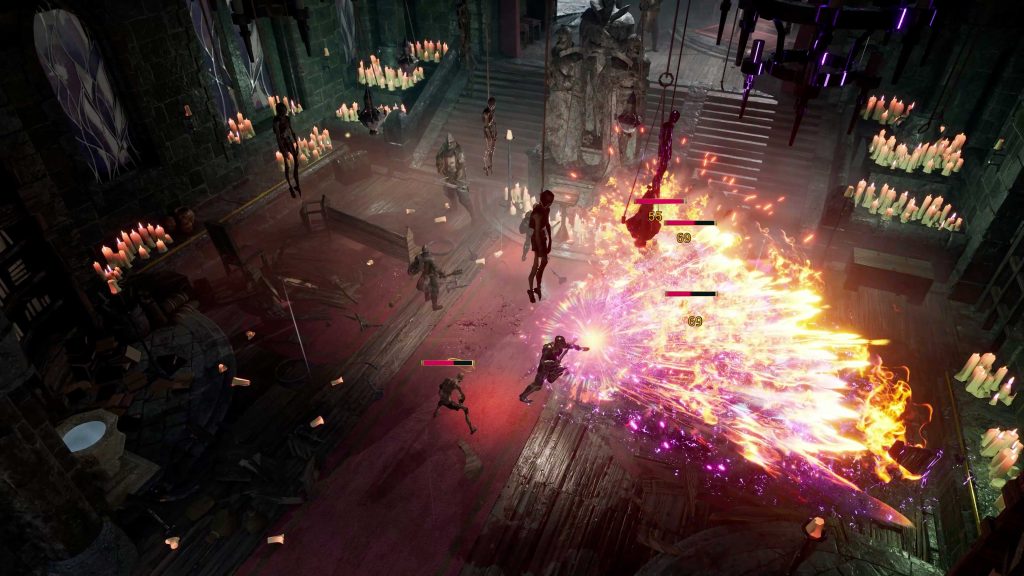
The game uses an isometric perspective and combines action RPG mechanics with a classless progression system, allowing players to experiment with different weapons, equipment and abilities rather than being locked into a traditional character class from the beginning. That freedom should make it possible to develop different builds depending on how you prefer to approach combat, but the game also expects you to actually learn how to use those tools rather than simply throwing increasingly powerful equipment at every problem.
There is a clear Soulslike influence in the way the combat is designed, particularly in the importance of timing, positioning and avoiding attacks, and during the presentation it became apparent that simply rushing into every encounter and attacking everything in sight isn't necessarily going to end well. Some enemies can punish careless play very quickly, which gives the combat a level of tension that works surprisingly well with the game's darker interpretation of Avalon.
I personally like this approach because it makes the world feel more dangerous and gives the player a reason to pay attention to their surroundings and the enemies they're fighting. You're not playing an invincible knight who has arrived in Avalon simply to clean up whatever remains of the kingdom; you're trying to survive in a world that has already been overwhelmed by corruption, and the fact that the game is willing to make you work for your victories makes that premise feel much more believable.
At the same time, I don't get the impression that the developers are trying to turn Wardens of Avalon into a pure Soulslike experience, because the game still puts a significant amount of emphasis on exploration, progression and the rebuilding of your settlement, which gives it a broader identity than simply being an isometric action RPG with difficult enemies.
The Combination Is What Makes It Interesting
This was probably the biggest takeaway I had from the presentation, because the individual mechanics in Wardens of Avalon aren't necessarily things we haven't seen before, but the way they are being combined is something that feels considerably more unusual.
Personally, I can't remember playing a game that combines an isometric action RPG, Soulslike-inspired combat, exploration, crafting and settlement building around an Arthurian setting in quite this way, and that combination was one of the main reasons I found myself enjoying the presentation as much as I did.
At first, when you hear that the game has settlement building, it is very easy to assume that you're going to spend a few minutes collecting resources between combat encounters and then return to a menu where you place a couple of buildings before heading back out again. Wardens of Avalon seems to be approaching the idea from a different direction, however, because the settlement isn't simply there to give you something else to do; it is effectively the visual representation of your progress through the game.
The more successful you are in the outside world, the more you are able to restore at home, and the more you restore, the more your settlement develops and provides you with additional options for your next journey. That creates a natural relationship between the different parts of the game, and it was one of the things that made the concept click for me during the presentation.
I went into the session thinking that the building system would probably be something I could take or leave, but I left Gamescom thinking that it could actually become one of the mechanics that separates Wardens of Avalon from other action RPGs.
Avalon After the Fall
The game's atmosphere also plays an important role in making this concept work, because this isn't the colourful and heroic version of Arthurian mythology that we've seen in countless fantasy games.
Avalon feels like a place that has already lost something important, and there is a noticeable sense of decay throughout the world, with corrupted knights, dangerous creatures and ruined environments replacing the image of the glorious kingdom that we normally associate with Camelot. That darker atmosphere gives the player's mission more weight, because there is a very clear contrast between what Avalon was supposed to be and what it has become.
I particularly like the idea that you're not simply moving from one destroyed location to another without any real connection to what you've seen, but that the game eventually gives you the opportunity to actually restore parts of what has been lost. There's something satisfying about the idea of exploring a ruined kingdom, fighting your way through its dangers, gathering what you need and then returning home to use those resources to rebuild something that was previously destroyed.
It is a simple concept, but it gives the game a sense of purpose that goes beyond the usual “go here, kill this, collect that” structure we see in so many RPGs.
A Game That Surprised Me at Gamescom
There are always games at Gamescom that look interesting during a presentation but don't necessarily stay in your mind once you leave the booth, particularly when you're seeing dozens of different projects over the course of several days. Wardens of Avalon was different for me because I found myself thinking about the concept even after the presentation was over, especially because of how well the different systems seem to support the central idea of restoring a fallen kingdom.
I also genuinely enjoyed the presentation itself, because the developers did a good job of explaining not only what the individual mechanics are, but also why they exist and how they're supposed to connect with each other. That distinction matters more than it might seem, especially in a game that combines so many different systems, because it is very easy for a title like this to become a collection of mechanics that don't really feel connected.
Here, at least from what we saw at Gamescom, there seems to be a clear philosophy behind the design.
The combat exists because Avalon is dangerous, exploration exists because you need to venture into that dangerous world, gathering resources gives you a reason to explore it, and rebuilding gives those resources a purpose once you return home. The result is a gameplay loop that feels considerably more coherent than I expected when I first heard about the game.
And that is probably why the settlement-building aspect ended up being such a pleasant surprise for me.
I normally wouldn't say that a building system is the feature that makes me interested in an action RPG, but in this particular case it feels like the developers have found a genuinely good reason for it to exist. Rebuilding isn't simply something you're doing because the genre expects it; it is directly connected to the story, the setting and the overall progression of your character.
Final Thoughts
There is obviously still plenty that needs to be seen before Wardens of Avalon is ready for release, particularly when it comes to how the progression develops over a longer playthrough, how much variety the world will offer and how well the different systems continue to complement each other once the novelty of the opening hours has worn off.
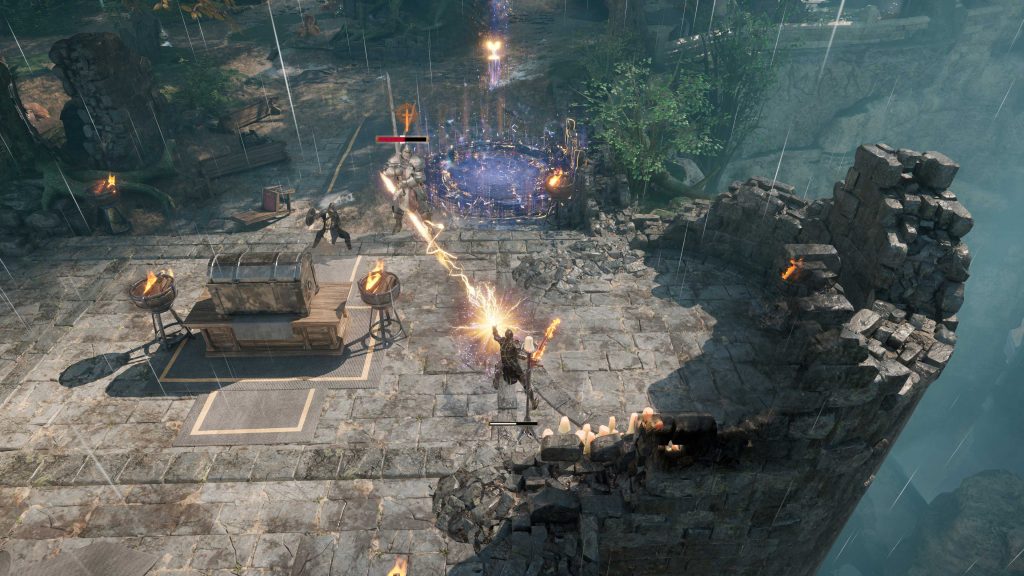
The cooperative side of the game is also something I'm interested in seeing more of, as Wardens of Avalon can be played solo or cooperatively with up to four players, and the combination of challenging combat, exploration and resource gathering could make for a very different experience when you're playing alongside friends.
Still, after spending time with the game at Gamescom 2026, I came away genuinely impressed by what Runes Studio is attempting to do.
Wardens of Avalon isn't necessarily reinventing every individual mechanic it uses, but I don't think it needs to. What makes the game interesting is the way those familiar mechanics are brought together around an idea that gives them a reason to exist, with the ruined state of Avalon providing the foundation for everything from exploration and combat to crafting and settlement building.
Most importantly, the game managed to change my opinion about one of its mechanics before I've even had the chance to play the full version, because I went into the presentation expecting the building system to be something I wouldn't particularly care about, only to leave with the impression that it could become one of the most satisfying parts of the entire experience.
There is something fitting about taking a game built around a fallen Camelot and making the player responsible for bringing it back, because every battle and every expedition can ultimately contribute to restoring something that was lost.
After seeing Wardens of Avalon at Gamescom, I'm genuinely looking forward to finding out whether the full game can deliver on that promise.
Camelot has fallen, but perhaps it isn't too late to rebuild it.