
Story
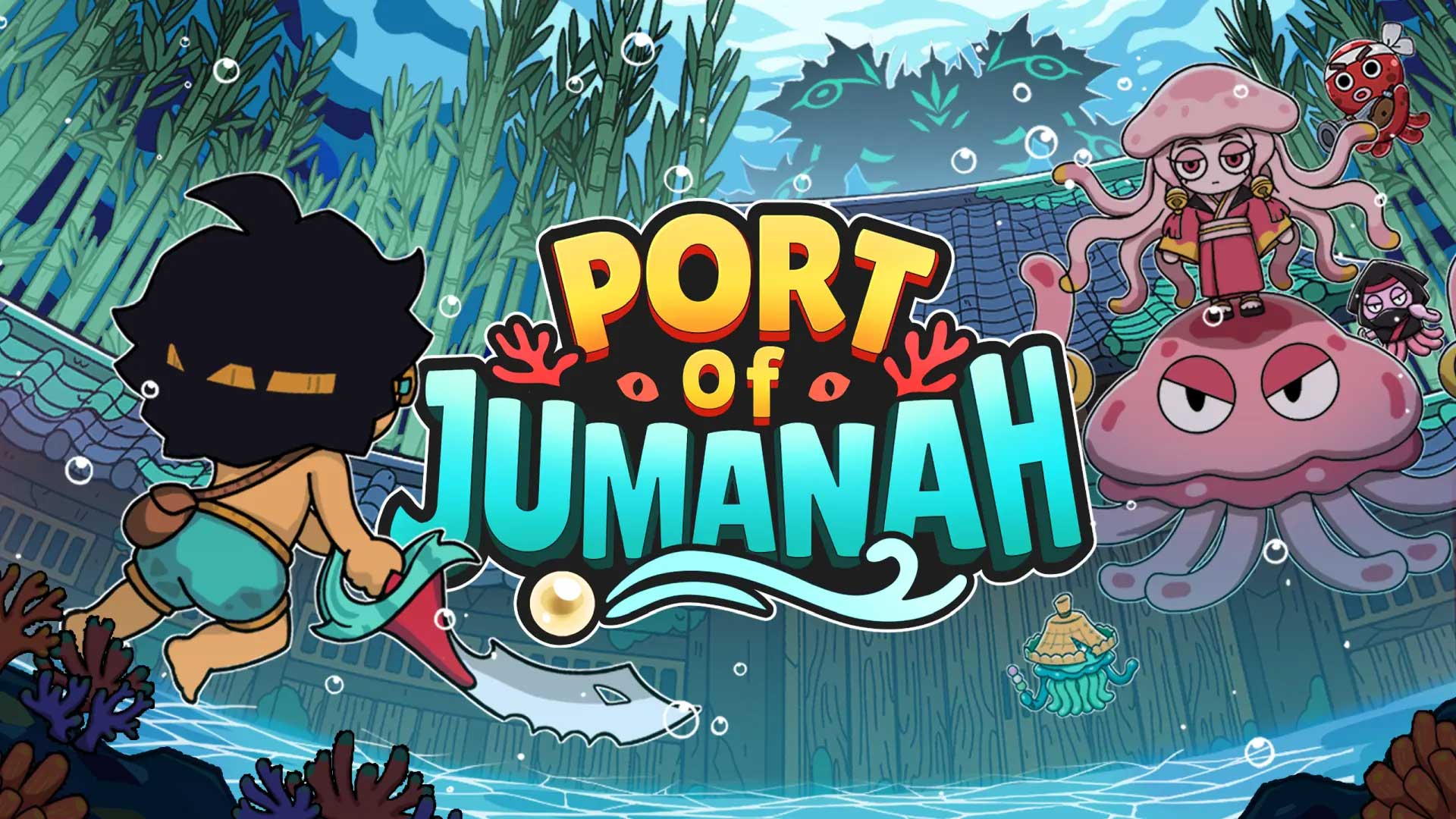
Port of Jumanah is a 2.5D roguelite action adventure that immediately caught my attention with its setting, because unlike many games in the genre, it does not try to throw us into a dark and depressing world filled with blood, destruction, and the constant feeling that we are about to die. Everything here is much more colorful, relaxed, and stylized, while the game draws inspiration from the Arab pearl-diving tradition and Arabian folklore, which is quite refreshing in a sea of titles that often rely on the same fantasy motifs.
At the center of the story is Mansour, a pearl diver who finds himself caught up in a conflict with sea monsters and ancient folkloric threats. I liked the idea precisely because it is not something we see very often in games. The underwater setting, pearl diving, and Arabian folklore give the game an identity that immediately makes it stand out, while the characters are designed in an extremely cartoonish style that further emphasizes its more cheerful personality.
Unfortunately, the story does not fully take advantage of that potential. Although it has its charm and an interesting foundation, it is neither particularly deep nor very well developed, and because the setting itself is so original, I couldn't help feeling that it could have offered much more. There is definitely some charm here, but I would not expect the story to be the main reason you stick with the game, as it is primarily there to introduce you to the world and push you forward through the gameplay.
Gameplay
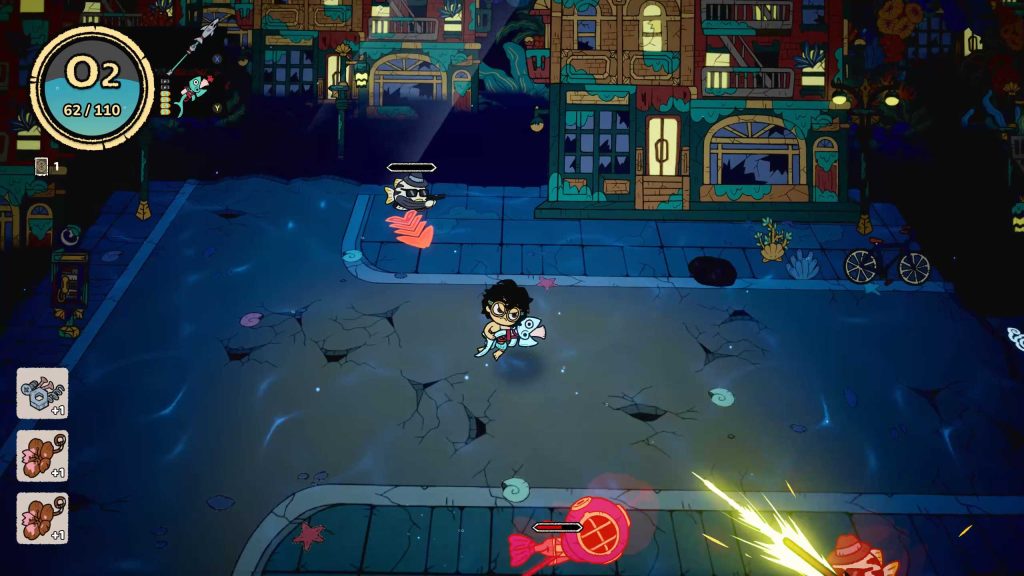
As I mentioned, the gameplay is quite simple, and I think that simplicity is actually one of the reasons why Port of Jumanah can be such a relaxing experience. You progress through blocky levels, with each one offering a certain benefit, so depending on the situation, you choose whichever option suits your needs at that particular moment. As you progress, you gradually develop your upgrade strategy and try to get as much as possible out of each expedition.
The upgrades are varied enough to give you a sense of progression while playing, although I would have liked this part to be a little more extensive. Since repetition is practically an essential part of the roguelite formula, having a larger number of upgrades and different choices could have made each new expedition more interesting.
The map is divided into different regions, each offering its own benefits and challenges, so you have the opportunity to make certain preparations before every expedition. You can choose who will join your crew, provided you have recruited them beforehand, as well as which weapon you want to take with you. I particularly liked this part because it gives you a certain amount of control over what awaits you instead of making every expedition completely dependent on randomness.
There are also the expected systems such as air and HP, which are depleted in pretty much the ways you would expect. However, if you play quickly, which I believe is the intended pace of the game, you should not have too many problems with either one. At first, you might struggle a little while getting used to the pace and figuring out which strategies work best for you, but after that the game becomes quite easy to get into.
At times, Port of Jumanah follows the classic survival formula where you have to clear a level of enemies before you can move forward, then upgrade your character and jump back into the action. However, the boss fights are one of the stronger parts of the experience, as they are challenging enough to make you pay attention without becoming frustrating.
The combat itself was also one of the more pleasant surprises for me. Weapons have a pretty good range when you swing them, and it is particularly satisfying when you find yourself surrounded by a large number of enemies and manage to hit several of them at once. It is not a system that will have you studying every tiny detail for hours, but that is also part of its charm. Port of Jumanah wants to be a game you can launch, play through a few expeditions, and simply enjoy without feeling like you have to be completely focused every second.
Atmosphere
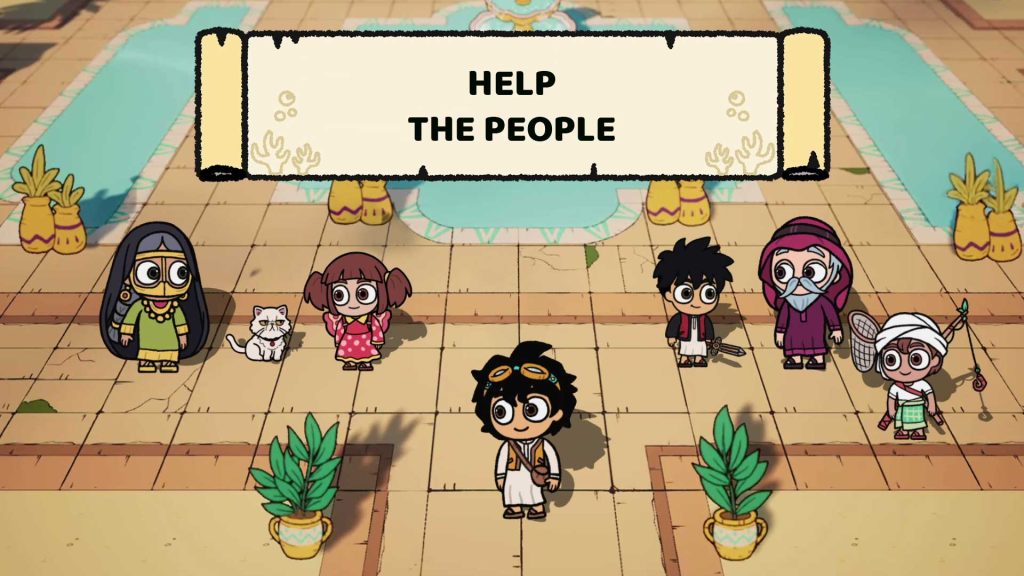
Port of Jumanah is divided between two main areas. The underwater world is where most of the combat and exploration take place, while on land you return between expeditions to talk to NPCs, purchase upgrades, and pick up side quests.
There are quite a lot of NPCs, and their dialogue can occasionally be funny and charming, which fits nicely with the game's overall cartoonish style. However, I felt that they were missing a little more personality to really make them memorable. There are plenty of them, but quantity alone is not enough to make every character interesting.
I had a similar problem with the enemies. They are not particularly varied, which in itself is not a major issue for this type of game, but what bothered me much more was the fact that they barely change their expressions when they get hit. I noticed very quickly how stiff their reactions felt, which occasionally takes away some of the dynamism that the combat itself actually has.
I also have to include the sound when talking about the atmosphere, as it had an impact on my overall experience. The background music is relaxing and fits nicely with the colorful underwater world, so I had no real complaints there. However, after playing for a longer period of time, the characters’ voice sounds started to bother me slightly. I assume they are meant to be a cute addition to the characters and I can understand why some players might enjoy them, but personally, their repetitive and fragmented nature became a little irritating over time.
What I Liked
What I liked most was the original setting and the fact that Port of Jumanah uses the Arab pearl-diving tradition and Arabian folklore as the foundation for its world. That is something we do not often see, while the colorful cartoonish art style helps the game develop its own identity. The combat is also quite satisfying, especially when you find yourself surrounded by larger groups of enemies, while the overall atmosphere is relaxed enough that the game never feels like a chore.
What I Didn't Like
My biggest problem is definitely the story, because I think the setting itself had the potential for a much more interesting and deeper narrative. On top of that, the character voice sounds started to bother me after extended play, while the repetitive nature of the roguelite formula further highlights the fact that the game could use more upgrades, content, and different choices to make each expedition feel fresher.
Conclusion
Port of Jumanah is not a game trying to revolutionize the roguelite genre, but perhaps that was never the goal. Its biggest strengths are its original setting, colorful visual identity, and simple gameplay that allows you to enjoy yourself without requiring too much effort. The combat is satisfying, the bosses are well-balanced in terms of difficulty, and the underwater world has enough character to make you interested in going on another expedition.
At the same time, the game leaves you feeling that it could have gone a few steps further. The story is quite shallow, the NPCs and enemies could use more personality, and because of the roguelite formula, a larger number of upgrades and choices would have helped make each new run feel more different.
Still, if you are looking for a more relaxed roguelite that does not constantly try to frustrate you, Port of Jumanah can be a very pleasant experience. It has its flaws, but there is enough personality here to make it stand out from the crowd.
Score: 7/10
The game was played on: PS5.