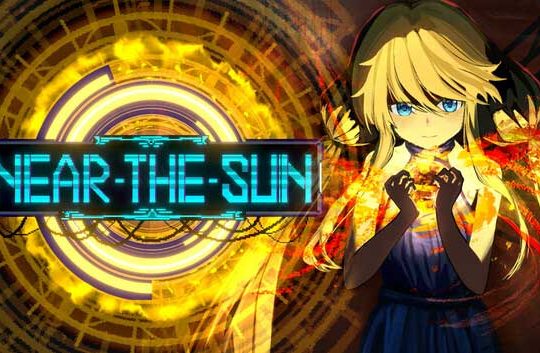

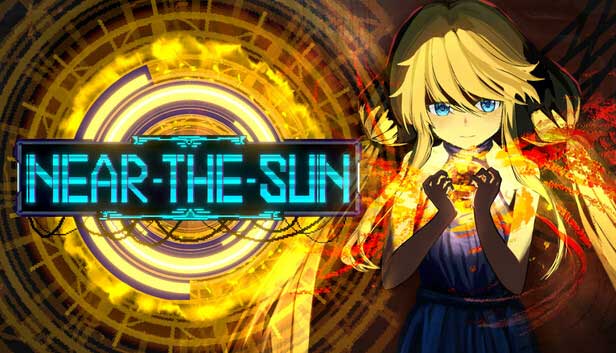
During Gamescom 2026, we had the opportunity to get familiar with Near The Sun, a 2D action-adventure title that at first glance might seem like another game set in a dark, post-apocalyptic world, but quickly shows that it has several interesting ideas that could help it stand out from the crowd. Rather than relying on complicated combat systems and a huge number of abilities, Near The Sun builds its experience around fast movement, exploration and the way the player gradually pieces together the story of the world they are exploring.
The story takes us into an underground world on the verge of complete collapse. A catastrophe that destroyed the surface is now spreading through the underground as well, while the young protagonist carries his sister on his back and tries to find a way to stop the destruction of their world. Along the way, he travels through ruined stations, abandoned mines and other remnants of a previous civilization, while traces of the past gradually reveal what actually happened.
Exploration Is More Than Just a Way to Discover the World
What I found particularly interesting about Near The Sun is the way exploration is directly connected to the story. The game features three different areas of the underground world that you can explore in whatever order you choose, and what you discover first can change the way you understand what happens later.
That is a much more interesting idea than the classic system where you simply explore a map, collect items and wait for the next cutscene. Here, the information you discover has a wider context, meaning the order in which you find it can influence your understanding of the world and its story. The official description even states that the same events can take on completely different meanings depending on where you go first and what information you discover earlier.
This is also one of the ideas that makes me want to see the full game, because a system like this can make the difference between ordinary exploration and a world that genuinely rewards curiosity.

Dash Is Much More Than Simple Evasion
Combat in Near The Sun works quite differently from what you might expect from an action-adventure game. Here, the dash is not simply a tool for jumping across gaps or quickly changing position, but forms the foundation of the entire system.
Instead of complex attack combinations, the player uses quick dashes to move through enemy lines and temporarily disable opponents. This means movement is both your method of attack and your way of surviving. Enemies do not necessarily have to be viewed simply as obstacles that need to be eliminated; their positioning can become part of the route you take through a level.
I particularly like the fact that the game wants you to be aggressive with your movement. Rather than standing back and waiting for the perfect opportunity, Near The Sun encourages you to read enemy movement, move directly into danger and use the dash to break through their defenses. On paper, it is a very simple mechanic, but these kinds of straightforward ideas can often become the most interesting when an entire gameplay system is built around them.
A World That Looks Like It Has Already Fallen Apart
Visually, Near The Sun takes a very interesting direction. The underground world we explore consists of ruined stations, abandoned mines and the remains of a civilization that no longer exists, while futuristic and cyberpunk elements are mixed with much darker themes.
Because of this, the game does not simply try to present its world as another futuristic setting. Everything we see is meant to give the impression of a place that once had a purpose, life and a certain function, but has now been left to decay. That sense of isolation and deterioration gives the world its character.
I particularly like the fact that the mystery is not built only around major events, but also around the things you discover while exploring. Memories and records scattered throughout the underground world serve as pieces of a puzzle that the player has to put together themselves.

A Story About a World That No Longer Has a Future
One of the game's central themes is the relationship between the protagonist and a girl from what is described as the “previous world.” She belongs to a time that has already disappeared, and through her memories, the player tries to understand who she is, why she was left behind and what connection she has to the world's collapse.
I find this approach to storytelling much more interesting than simply explaining the lore through dozens of dialogue sequences. If the game really manages to distribute information in a way that allows players to piece events together themselves and change their understanding of the story depending on the order in which they explore, Near The Sun could have a very interesting narrative structure.
Of course, the full game will ultimately show how well this idea works. It is one thing to have a system where you can explore three areas in different orders, but it is something completely different to write a story that can genuinely support that freedom without making certain pieces of information feel like they arrive too early or too late.
A Simple Idea That Could Make a Big Difference
Near The Sun stayed interesting to me precisely because it does not try to be the biggest or most complicated game in the room. Instead, it takes several relatively simple ideas and tries to connect them.
The dash is the foundation of movement and combat, exploration determines how you discover the world, and the information you uncover can change the way you understand the story. If all of that comes together properly in the final experience, Near The Sun could offer a very well-rounded adventure in which the player is not simply someone moving through levels, but someone who gradually pieces together the story of a world falling apart.
For now, that idea is what attracted me the most. Near The Sun might initially look like another 2D post-apocalyptic adventure, but the more I think about its concept, the more I like the idea that the order in which we explore the world actually changes the way we experience its story.
Near The Sun is currently scheduled for release in 2026 and is being developed and published by Japanese studio Nonlinear. The game is part of the first generation of the TGCA program, and its Steam page also lists awards the project received as part of Game Creator Koshien 2025.
The game was played on: PC.