

Stupid Never Dies: Stupid Never Dies offers an unusual premise, interesting monster transformations, and occasional flashes of absurd humor. However, repetitive combat, clunky controls, and uneven difficulty undermine the experience. It's entertaining in short bursts but struggles to remain engaging over longer sessions. – Miloš Markovic
An Outlandish Premise That Can't Carry the Entire Game
Stupid Never Dies is one of those games that makes it clear from the very beginning that it doesn't take itself too seriously. In a world where monsters have defeated humanity, the remaining survivors are trying to find a way to defeat the King of Monsters and reverse the apocalypse. The plan devised by the eccentric scientist Frank Steiner is relatively simple, at least on paper: find a zombie, make him powerful enough to eat the King of Monsters, and then use his power to restore the world to normal.
That zombie is Davy, and his motivation isn't quite what you'd expect from humanity's last hope. Rather than being primarily driven by the desire to save the human race, Davy is in love with Julia, a girl who froze to death in a freezer during the war. His obsession with her becomes an important part of the story, including the ability to unlock her mobile phone, browse her photos, messages, and videos, and build a kind of shrine that grants him skill points.
This approach clearly demonstrates just how unusual and provocative the game wants to be. Some details manage to raise a smile, and the relationships between the characters provide enough absurd moments to show what the developers were aiming for. However, deliberate weirdness isn't necessarily the same as good humor. Davy's obsession with Julia crosses the line from endearing oddity into rather uncomfortable territory, especially because Julia herself has little opportunity to be anything more than the object of his affection.
Stupid Never Dies clearly wants to leave an impression as a game that isn't afraid to go too far. The problem is that some ideas feel as though they were designed primarily to shock rather than contribute meaningfully to the story. When the humor lands at the right moment, the result can be entertaining. When it misses, the game feels as though it is trying too hard to be weird for the sake of it.
Fighting Through Monsters and Transformations
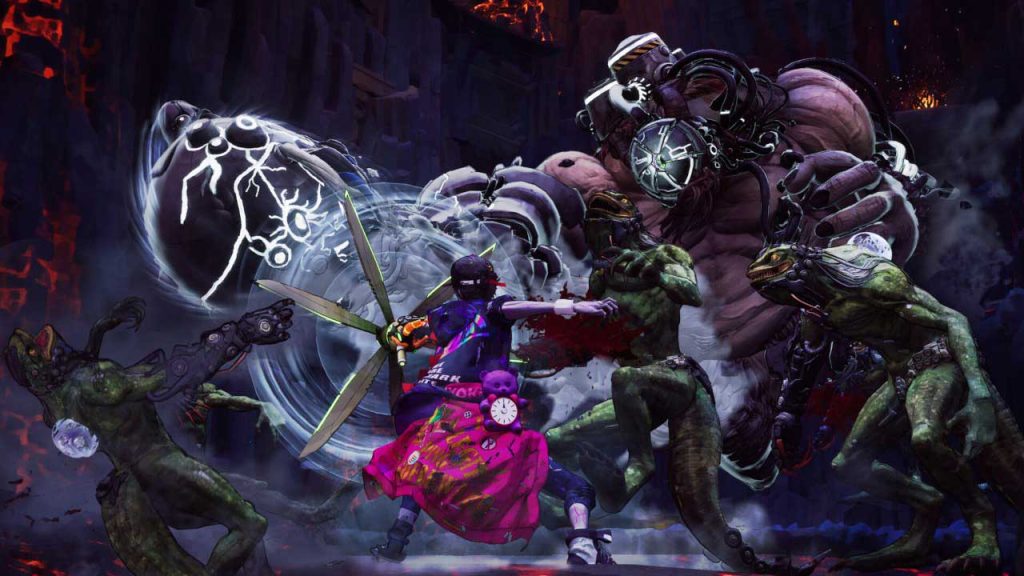
The most interesting part of the game is its combat system. Davy possesses an ability called “Style Eat,” which allows him to consume monsters with a bite and take on their powers and forms. Once the Bite Meter is full, you can activate the ability and use the powers gained from your enemies. Weaker monsters provide smaller abilities, while stronger ones allow Davy to transform completely.
There are ten forms to collect, including werewolves, liches, and merfolk. Each has its own abilities and strengths, so choosing a transformation affects how you approach combat. The idea is interesting enough to make ordinary encounters more varied, particularly when you begin combining different options and adapting to your opponents.
Davy can use simple attack combos, while transformations and special abilities add another layer to the action. There is also a system for collecting body parts from defeated enemies, which can be used to craft equipment through a mechanic called “Overtechnology.” Gear provides various buffs and upgrades, giving you several ways to customize your character to suit your preferred playstyle.
On paper, Stupid Never Dies offers a fairly extensive character progression system. The problem is that its depth doesn't always translate into the actual gameplay experience. Although there are plenty of options for upgrading and combining abilities, the differences between individual upgrades don't always feel significant enough to fundamentally change how combat plays out.
Roguelike Elements and Progression That Loses Momentum
The game is structured around exploring a dungeon located in the world of monsters, accessible through a specially modified toilet created by Dr. Steiner. This detail captures the game's absurd tone, while the exploration itself follows a familiar roguelike approach. During each run, you choose between several available upgrades as you fight your way through dungeon layers and attempt to defeat the bosses that unlock further progress.
Each new attempt allows Davy to grow stronger, and the leveling system accelerates progression as you continue playing. After a certain number of runs, you can move through the layers much faster, including skipping larger sections of the dungeon. At first glance, this seems like a good way to maintain momentum and prevent repetition from becoming too tedious.
Unfortunately, this is where one of the game's biggest problems emerges. Davy progresses quickly, gains levels, and improves his equipment, but this growth doesn't always provide a tangible sense of power. Instead of each new run feeling like a meaningful step forward, you gradually get the impression that you're simply repeating the same activities with slightly better stats.
The progression system has potential, but the game doesn't consistently turn it into an engaging gameplay loop. Different transformations and equipment offer room for experimentation, yet the repetitive environments and similar encounters become increasingly noticeable as you approach the later stages.
Combat That Becomes Repetitive
The beginning of the game makes a fairly good impression. Combat is easy to understand, attacks feel powerful enough to be satisfying, and the ability to transform into different monsters introduces an interesting change of pace. The first few dungeon runs can be entertaining precisely because you're constantly discovering new possibilities and gradually learning the systems.
Unfortunately, that feeling doesn't last as long as it should. As you progress, combat encounters begin to repeat themselves, and the environments offer fewer surprises. A system that initially feels simple and effective becomes less interesting once you realize how often you're expected to go through similar situations.
The controls make matters worse. They don't always respond with sufficient precision, so combat can feel clumsy at exactly the moments when it should be at its most exciting. In a game built around attack combos, transformations, and quick reactions, this lack of responsiveness can easily undermine the fun.
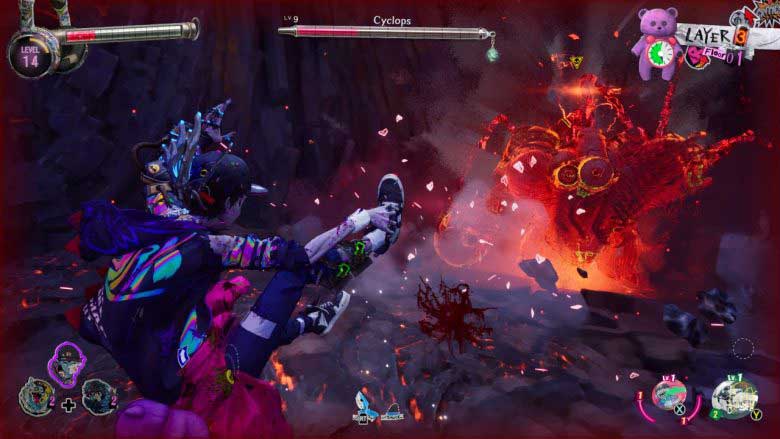
The difficulty is also poorly balanced at times. Some bosses go down with very little resistance, while others can defeat Davy in just a few hits. Rather than gradually increasing the challenge and encouraging players to master the mechanics, these sudden changes in difficulty can feel unfair.
The ten-minute time limit for each run does have its purpose. It encourages a more aggressive playstyle and prevents every encounter from turning into an endless, overly cautious battle of attrition. As a result, the action rarely becomes completely dull during an individual expedition, even when the repetition starts to wear thin over longer sessions.
Humor That Can't Always Save the Experience
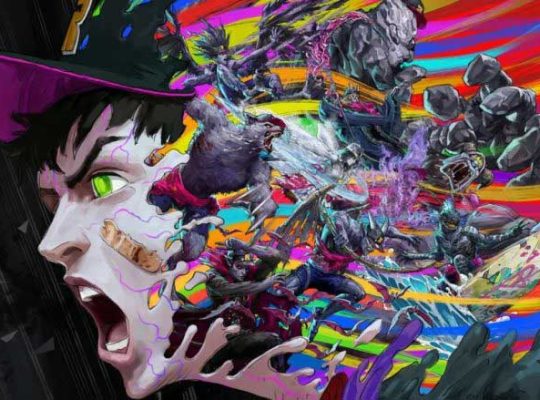
The visual identity, absurd plotlines, and unusual characters are important parts of the game's personality. Stupid Never Dies clearly wants to be chaotic, unpredictable, and unapologetically bizarre, and some moments genuinely leave an impression. Certain character revelations and the way the cast behaves inside the dungeon can be entertaining, especially when the game fully embraces its most outrageous ideas.
However, the humor is very inconsistent. Some jokes work because they are unexpected and completely absurd, while others feel as though they are trying too hard to be provocative. This approach may appeal to players who enjoy games that deliberately push the boundaries of good taste, but it is difficult to ignore how quickly some of these ideas wear thin.
The overall pacing suffers from a similar problem. The game has enough interesting elements to capture your attention, but it doesn't always arrange them in a way that keeps the experience fresh. Humor can help alleviate the monotony, but it cannot fully compensate for repetitive combat and controls that occasionally make the action more frustrating than it should be.
Conclusion
Stupid Never Dies has an unusual premise and interesting mechanics that are enough to grab your attention at first. Davy's ability to absorb monster powers, the variety of transformations, and the equipment system provide a solid foundation for an action roguelike with plenty of room for experimentation. The game also occasionally manages to be genuinely entertaining thanks to its absurd humor and unpredictable ideas.
Unfortunately, repetitive environments and combat, uneven difficulty, and clunky controls prevent it from maintaining that same level of enjoyment over longer sessions. The character progression system looks extensive, but upgrades don't always bring meaningful changes that make returning to the dungeon feel rewarding.
Stupid Never Dies can be fun in short bursts, particularly if you enjoy action games that embrace absurd humor and unusual ideas. However, it is difficult to recommend as a game that deserves long, uninterrupted sessions. There are enough interesting concepts here, but their execution isn't always up to the same standard.
Proposed Score: 6/10
The game was played on: PC.
Ako tražite povoljnije cene za igre, DLC-ove i druge digitalne proizvode, posetite Eneba i pogledajte aktuelnu ponudu.
Pre kupovine obavezno unesite naš promo kod BUFFGAMING i ostvarite dodatnih 5% popusta.
Kupi igre, poklon-kartice i dopune povoljnije