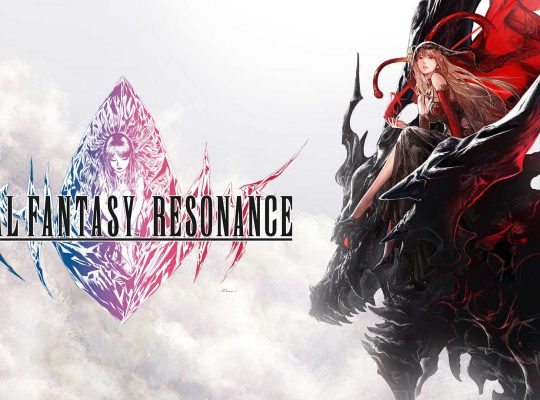

Most of our editorial team grew up playing the older Final Fantasy games, so there is a certain feeling that comes with seeing a new title return to many of the ideas that made those games so memorable. Final Fantasy Resonance immediately gave us that feeling. It is the kind of game that feels familiar from the moment you start playing it, but at the same time, it is clearly trying to bring those classic ideas into a modern RPG.
Square Enix has taken Final Fantasy Brave Exvius and reworked its first major story arc, Lapis, into a traditional single-player RPG experience. On paper, that might not sound like the most exciting starting point, but Resonance feels much more substantial than a simple adaptation or repackaging of a mobile game. It takes familiar characters and concepts and combines them with completely new visuals, music and a redesigned combat system.
A Return to Classic Final Fantasy
The story follows Rain, Lasswell and Fina as they become involved in a conflict surrounding the Crystals after Veritas of the Dark destroys one of them. The basic setup immediately feels like classic Final Fantasy, with crystals, mysterious villains, a group of heroes and a world threatened by a much larger conflict.
What makes Resonance interesting is that it does not simply try to recreate one specific Final Fantasy game. Instead, it takes elements from different eras of the series and combines them into something that feels both nostalgic and modern.
There is a clear connection to the earliest Final Fantasy titles in the way the story and world are structured, while the visual presentation and gameplay feel much closer to the modern HD-2D approach we have seen in games such as Octopath Traveler.
For someone who grew up with the older games, that combination is difficult not to appreciate. There is something genuinely satisfying about seeing Final Fantasy return to a more traditional RPG structure without simply copying the past.
The Combat Is What Surprised Me the Most
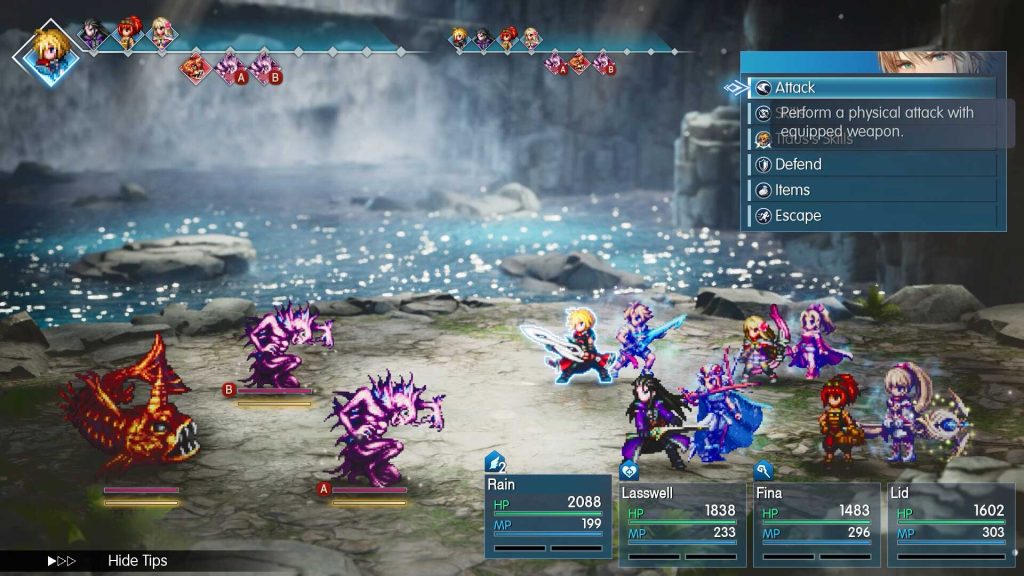
The biggest surprise for me was the combat system. Final Fantasy Resonance uses traditional turn-based battles rather than the real-time or ATB-based systems that have become increasingly common in the series.
You can see the attack order directly on the interface, giving you a clear idea of when each character and enemy will act. This makes the battles immediately understandable, but the system becomes much more interesting once you start paying attention to the Stagger mechanic.
Every attack can contribute to reducing an enemy's stagger gauge, and completely depleting it can leave the opponent vulnerable while also interrupting dangerous attacks. This means that simply choosing the attack that does the most damage is not always the best option.
You need to think about when to focus on damage, when to target the stagger gauge and when to use abilities that apply elemental effects, buffs or debuffs. That gives the combat a surprisingly tactical layer.
Once You Understand the System, Battles Become Much More Interesting
At first, the combat can feel relatively straightforward, especially if you are familiar with traditional turn-based RPGs. Once you start understanding how stamina, stagger, elemental weaknesses and special abilities work together, however, the battles become considerably more engaging.
The system encourages experimentation rather than simply giving you a single optimal way to play. Certain enemies can be exploited through elemental weaknesses, while others require you to manage your resources more carefully before you can safely break their defenses.
This is where Resonance starts to feel like more than a nostalgic throwback. It takes a familiar turn-based foundation and adds enough modern mechanics to make you actually think about your actions.
There is also a satisfying flow that develops once you understand the system. When you manage to break an enemy at the right moment and follow that up with powerful abilities, the combat starts to feel considerably more dynamic than the traditional turn-based structure might initially suggest.
Cloud, Warrior of Light and Noctis Are More Than Just Fan Service
One of the most obvious attractions of Final Fantasy Resonance is the inclusion of iconic characters from across the franchise.
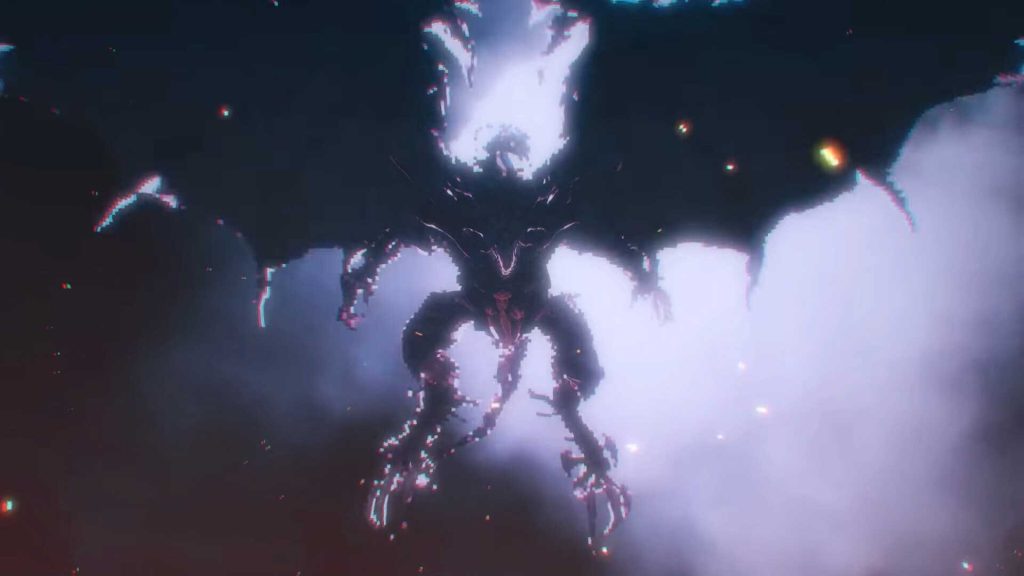
During the experience, characters such as Warrior of Light from Final Fantasy, Cloud from Final Fantasy VII and Noctis from Final Fantasy XV appear through the game's Vision system. At first glance, this could easily feel like an excuse to throw as many famous Final Fantasy characters into one game as possible.
Thankfully, the idea is more integrated into the gameplay.
Visions provide additional abilities that can be used alongside the main characters, giving you another layer of customization during battles. They are not simply there to make longtime fans smile when they recognize a familiar face.
Noctis is particularly interesting because he can be discovered while exploring a dungeon and can then become useful during the boss encounter. That kind of integration makes these appearances feel more meaningful than simple cameos. For longtime Final Fantasy fans, seeing these characters is obviously exciting, but the important thing is that they also have a gameplay purpose.
A Genuine Blast from the Past
This is probably the easiest way for me to describe Final Fantasy Resonance.
It feels like a blast from the past.
Most of our editorial team grew up with classic Final Fantasy games, and there is something about Resonance that brings back that feeling of playing a traditional RPG where turn-based combat, exploration, characters and a fantasy adventure were at the center of the experience.
At the same time, the game does not look like it is trying to recreate a 1990s Final Fantasy game pixel for pixel. Instead, it uses modern technology and the HD-2D visual style to create something that feels much more contemporary. That balance between nostalgia and modernization is probably one of the game's biggest strengths.
HD-2D Has Never Looked Better
The visual presentation is another major highlight. Final Fantasy Resonance is the first proper HD-2D Final Fantasy game, and the combination of detailed characters, beautifully presented environments, lighting and classic-inspired designs works extremely well.
There is a clear connection to the visual language of older Final Fantasy titles, but everything is presented with a level of detail that would have been impossible on the hardware those games originally released on. The result is a world that feels nostalgic without looking outdated.
This is especially noticeable during battles, where the characters and effects have considerably more visual impact than you might expect from a game built around traditional turn-based combat.
More Than Just Fan Service
Perhaps the biggest compliment I can give Final Fantasy Resonance is that it does not feel like it is relying entirely on nostalgia.
Yes, the game clearly knows that players will get excited when they see Cloud, Warrior of Light or Noctis. Yes, the classic Final Fantasy elements are everywhere. But underneath all of that is a combat system that actually wants you to engage with its mechanics. The stagger system, elemental weaknesses, buffs, debuffs, Vision abilities and turn order all work together to create battles that require more thought than simply selecting Attack every turn.
That is important because nostalgia can only take a game so far. Final Fantasy Resonance seems to understand that the best way to honor the older games is not to simply copy them, but to take the ideas that worked and build something new around them.
Conclusion
Final Fantasy Resonance left a very positive impression on me. As someone who grew up with the older Final Fantasy games, I genuinely enjoyed seeing the series return to a more traditional turn-based RPG structure while still introducing modern systems and presentation.
The combat is probably the biggest surprise, especially once the stagger system, elemental weaknesses and Vision abilities start working together. The HD-2D presentation also fits the series remarkably well, while the appearances of iconic Final Fantasy characters add an extra layer of excitement without feeling completely disconnected from the gameplay.
Most importantly, Resonance feels like a blast from the past without being trapped in the past. It takes the spirit of classic Final Fantasy, combines it with modern HD-2D presentation and adds enough new ideas to make the experience feel like its own game.
For fans who have been missing the days when Final Fantasy meant traditional turn-based battles, crystals, memorable characters and a classic JRPG adventure, Final Fantasy Resonance could be a very interesting return to form.
The game was played on: Playstation 5.
Final Fantasy Resonance releases on October 22, 2026, for PC, PlayStation 5, Nintendo Switch 2 and Xbox Series X/S.