

Marvel's Wolverine: Marvel's Wolverine – NemanjaKocica
On the one hand, I find myself staring at the screen and occasionally thinking, “Yes, this is the Wolverine game we’ve been waiting for.” Logan looks brutal, his claws sound great, and the feeling of using them is fantastic. Blood sprays everywhere, the animations are excellent, and some fights genuinely look spectacular. On the other hand, the longer I spend with the controller in my hands, the more I start wondering where all that ambition I expected from Insomniac Games has gone.
Marvel's Wolverine is not a bad game. Technically, it is very well made, production values are through the roof, and as a piece of Marvel fan service, it will probably feel like Christmas for a lot of players. But underneath all of that polish is a surprisingly simple action game that, far too often, seems more interested in telling me what to do than letting me figure things out for myself.
And that is where my biggest problem with Marvel's Wolverine begins.
A Wolverine Who Is Too Nice
Let’s start with Logan himself, because this is probably the most subjective part of my criticism.
I have no problem with Wolverine being gentle, protective, or kind toward younger characters. That is not some new personality trait invented for the game. Logan has been a mentor and almost a father figure to younger mutants throughout the comics.
The problem is that this version of Wolverine often feels like a genuinely nice guy.
What has always made Logan interesting to me is the contrast between the gruff, cynical, withdrawn man who would rather solve everything himself and the tremendous amount of empathy he keeps buried underneath that rough exterior. This game leans much more heavily into the latter side. He can certainly be aggressive when it is time to fight, but between battles he often feels like he is one cup of coffee away from asking everyone how their day is going.
I'm not saying this interpretation is wrong. It is simply not the version of Wolverine I wanted to play.
The Story Wants to Be Serious, But the Dialogue Isn’t Always
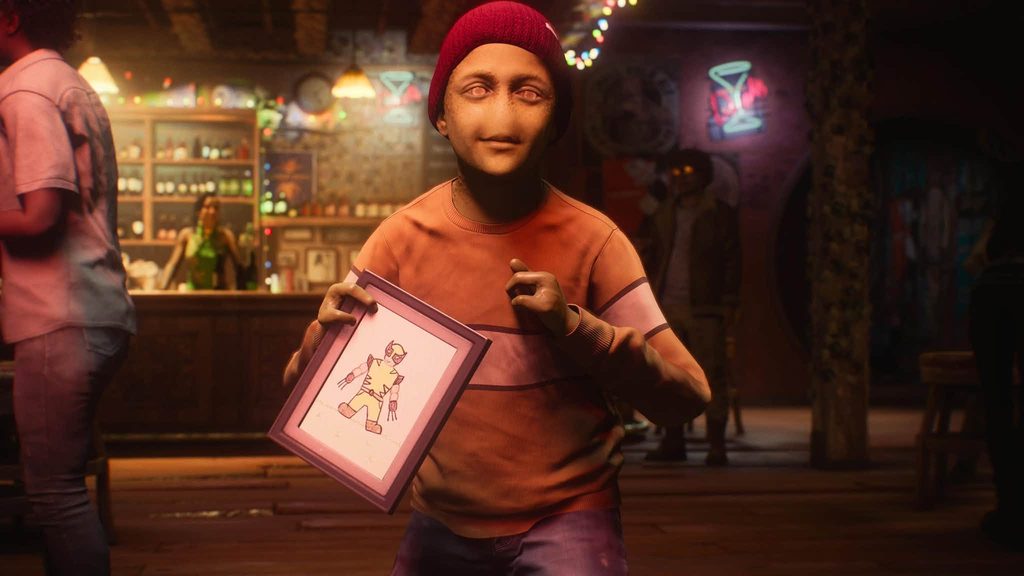
Marvel's Wolverine clearly wants to be a serious superhero story. It deals with trauma, guilt, identity, violence, the past, and Logan’s struggle with his own nature. On paper, that sounds like exactly the kind of material I would want from a Wolverine game.
The problem is that the execution does not always live up to those ideas.
Some scenes work very well, and certain character relationships are genuinely interesting, but the dialogue too often feels like characters explaining things the game should be showing us instead. Some conversations simply do not sound natural, while certain emotional scenes push the melodrama a little too hard.
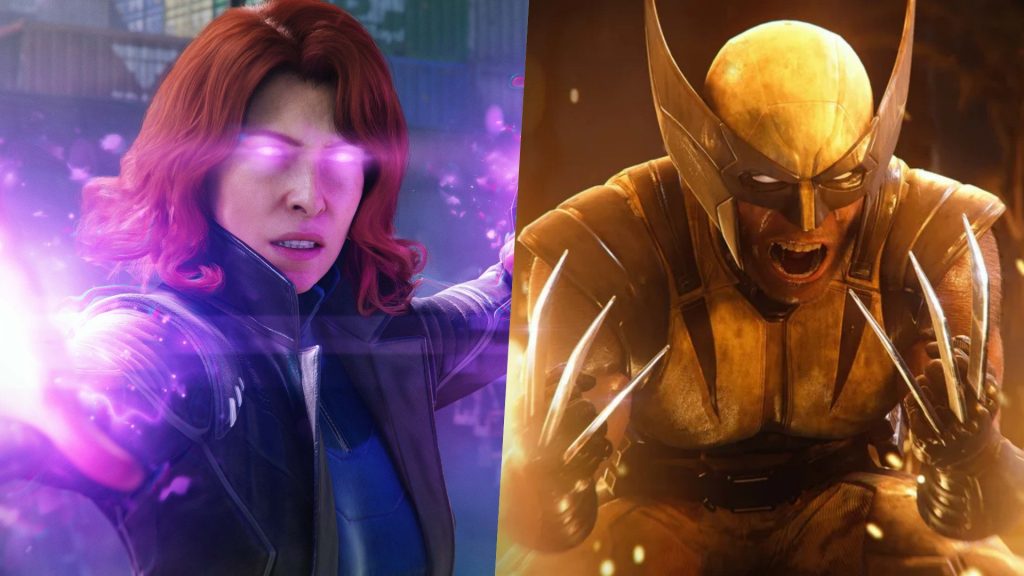
And that brings us to the cast, which is objectively one of the strongest parts of the game. Liam McIntyre is excellent as Logan, Krizia Bajos is great as Jean Grey, and the rest of the cast is filled with experienced performers. The performances are consistently strong, and there is very little to complain about on that front.
I do, however, have a personal problem with how much modern AAA games seem to obsess over famous actors and their faces.
I never really cared who was cast in a game. Give me great voice acting and good character animation and I couldn't care less whether the person behind the microphone is a Hollywood star or someone who recorded a commercial for bottled water yesterday.
Thankfully, the acting in Wolverine is genuinely good. I just wish that same level of effort had been invested even more heavily into the game itself.
The Brutality Is Fantastic, But the Combat Is Shallow
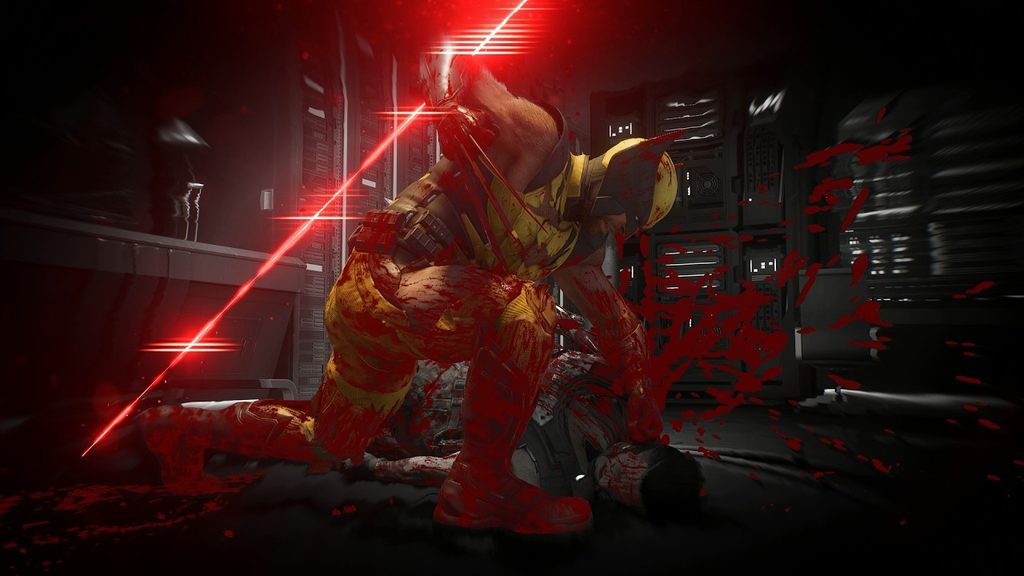
If there is one thing Marvel's Wolverine absolutely gets right, it is the brutality.
The claws look fantastic. The impacts feel great. Enemies bleed, lose limbs, lose their heads, and Logan’s regeneration looks excellent. The game is unapologetically violent, and that is one of its biggest strengths.
The problem is that brutality is not the same thing as depth.
Combat is fun, especially once you unlock enough abilities to start combining them, but the underlying system remains fairly simple. Too many of the abilities you unlock feel less like meaningful additions to Logan’s arsenal and more like things that should have been available from the beginning.
There are enough moves to make the combat look more complex on paper than it actually is, but for much of the game you can get by using a handful of basic attacks, parries and special abilities.
Wolverine doesn't need Devil May Cry.
He doesn't need Spider-Man’s gadgets.
But when your protagonist has adamantium claws, superhuman strength and a healing factor, I expected a little more creativity.
It didn't have to be a Metal Gear Rising-style cutting system, although I certainly wouldn't have complained. Give me a deeper system for targeted cutting. Let me deliberately target specific limbs or parts of an enemy's body. Give enemies more meaningful reactions to injuries. Give me some kind of system that makes me feel like I am actually controlling how Logan uses those claws.
Instead, we get a perfectly decent hack-and-slash formula.
In a game released in 2026.
The Game Doesn’t Trust the Player
This might be my biggest problem with the game's overall design.
Marvel's Wolverine is a linear game, and I have absolutely no issue with that. Not every game needs to be open-world, and I certainly don't need another city covered in icons that I have to clear off the map.
But if you are going to make a tightly controlled, linear game, it is baffling that you would also fill it with so many design conventions that exist primarily because open-world games need them.
The best example is Wolverine’s sense of smell.
The idea of using his enhanced senses is perfect. It is an ability that naturally belongs to the character and could have been a fantastic way of giving the player tools rather than outright solutions.
Instead, we get the now famous “fart gas.”
Logan sniffs the air, a trail appears, and you simply follow the line.
Why?
Why can't the game just let me pay attention to sounds, environmental clues, traces or the direction of a scent? Why does everything have to look like someone on the design team said, “Make sure they don't get confused”?
And then there are the hidden chests.
Hidden.
Except they pulse with such an aggressive blue light that you could probably find them from a helicopter.
That is what bothers me. I don't mind the game helping the player. I mind when the help completely removes the reason for finding something in the first place.
And this is where another missed opportunity appears: the DualSense.
Marvel's Wolverine does use haptic feedback and adaptive triggers, and the game is built exclusively for PS5. So why does a hidden chest need to glow like a Christmas tree? Why couldn't the DualSense subtly pulse when I get close? Why couldn't the vibration grow stronger as I get nearer?
That would make use of Wolverine’s senses, the capabilities of the DualSense, and the actual concept of finding something hidden.
Instead, we get:
BLUE LIGHT. HERE IS THE CHEST. PLEASE DO NOT ACCIDENTALLY MISS IT.
And honestly, I find it hilarious that I have to say this about an 18+ game: the story is supposedly mature, the violence is extreme, the blood is everywhere, yet the gameplay treats me like I just discovered what an analogue stick does.
Traversal Is Almost Completely Automated
The same problem exists with movement.
I understand that Wolverine is not Spider-Man and that Insomniac had to figure out a different way for him to navigate environments. He doesn't have webs, he doesn't swing between skyscrapers, and he shouldn't feel like a Spider-Man clone.
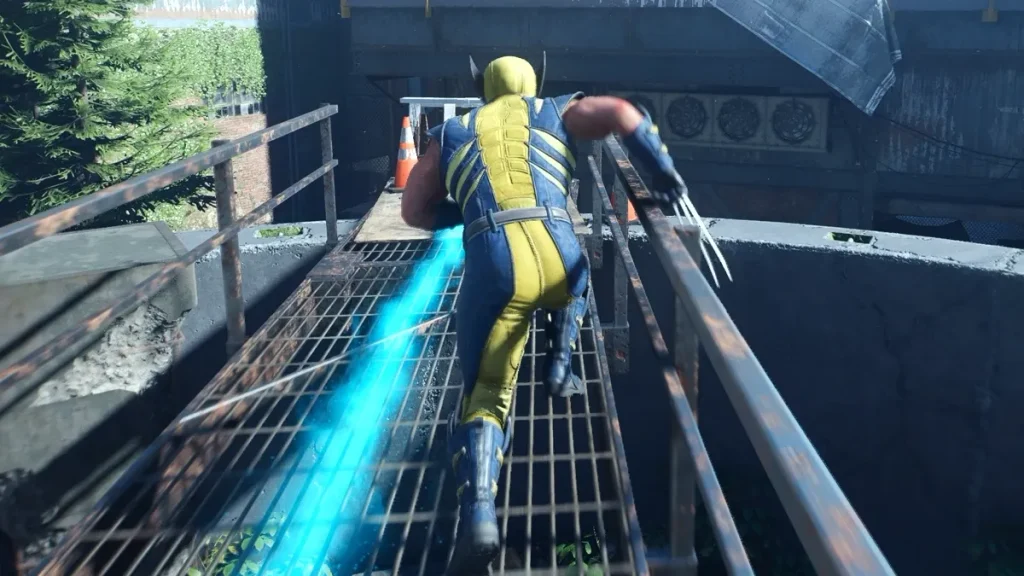
But that doesn't mean his traversal has to be reduced to holding the analogue stick in the right direction and occasionally pressing a button.
Wolverine jumps, climbs, grabs onto certain surfaces, and a lot of the time simply performs the actual movement himself.
This is not the game's biggest flaw. It is simply another example of a lack of ambition.
Especially when the game then throws traversal challenges at you.
Wait, what exactly is the challenge here?
If 90% of the movement consists of holding the stick forward and occasionally pressing a button, what exactly am I being challenged to do?
The game even includes options that further automate certain movement sequences, which only reinforces how much this part of the experience is designed as a guided ride rather than a system the player is actually meant to master.
But the World Can Look Fantastic
Still, I don't want this review to give the impression that everything is bad.
It isn't.
One thing I genuinely liked is the variety of locations.
The Canadian wilderness, Tokyo and Madripoor give the game very different atmospheres and prevent the campaign from turning into twenty hours of identical corridors and laboratories. Tokyo in particular can look fantastic, and some of the action sequences successfully deliver the kind of superhero spectacle you expect from a game like this.
The game is, after all, designed as a linear adventure, and the changing locations help keep the campaign moving.
The problem is that once the spectacle ends, we often return to a very simple gameplay loop.
That feeling keeps coming back to me throughout Wolverine: this could have been so much more.

The Boss Fights Are Fine, But That’s About It
The boss fights are generally solid and can be visually impressive, but they don't do much to set themselves apart from the rest of the combat system.
You are still dealing with fairly simple attack patterns, dodging, parrying and using the abilities you've already unlocked.
There is nothing inherently wrong with a boss fight not being life-changing, but I was hoping for at least a few encounters I would remember because of their mechanics, not simply because there happened to be a lot of explosions on screen.
Marvel's Wolverine on PS5 Pro
On PS5 Pro, Marvel's Wolverine is even more impressive.
The game supports PSSR, along with dedicated Fidelity Pro and Performance Pro modes. Fidelity Pro prioritizes image quality and advanced visual features, while Performance Pro targets 60fps while retaining much of the visual quality. There is also an Advanced Ray Tracing mode that further improves reflections, ambient occlusion and lighting.
If you have a PS5 Pro paired with a 120Hz VRR display, Wolverine can be a very impressive technical showcase. Image quality is cleaner, reflections look better, and the combination of high frame rates and this level of visual fidelity can be genuinely impressive.
But even the PS5 Pro cannot fix what I consider the game's biggest problem.
It can make the game look better.
It can't make it deeper.
The Costumes and Marvel Fan Service Are the Real Treasure
If there is one area where Insomniac deserves enormous credit, it is the costumes and sheer amount of fan service.
The selection is fantastic and covers a huge portion of Wolverine's history. You have classic comic-book versions, different eras, Age of Apocalypse, Old Man Logan, Patch, Weapon X and much more, including references to X-Men: The Animated Series, X-Men ‘97 and Deadpool & Wolverine.
Then you start paying attention to the little details and realize just how much Insomniac wanted to reward Marvel fans.
The game is packed with references to comics, characters and X-Men history. Daily Bugle, Dazzler, Roxxon, Hammer Industries, Weapon X, Incredible Hulk #181, Patch and countless other details are scattered throughout the game.
Some you will spot immediately. Others require a little more attention. And some will probably only register if you've spent years reading these comics.
This is where I genuinely feel Insomniac delivered something special for Marvel fans.
If you are a huge Wolverine or X-Men fan, you could easily get much more out of this game simply because of the amount of attention paid to its source material.
If you're not a Marvel fan, however, you are left with a much simpler game underneath all that fan service.
The Linear Structure Actually Helps the Pacing
Another thing I have to give the game credit for is that it doesn't try to be a Spider-Man clone with an open world.
The campaign is relatively focused and doesn't force you to spend hours clearing a map simply because somebody decided that modern AAA games need 17 different activities.
There are optional challenges, collectibles and side content, while certain activities give you additional reasons to engage with the combat and exploration systems.
None of that is enough to fix the weaker parts of the design, but it does prevent the campaign from feeling artificially padded.
And honestly, I would much rather have a well-paced linear game than another bloated open world with 200 icons on the map.
I just wish that linear game trusted me a little more.
So Where Did All That Money Go?
I have to be careful here, because the figure of roughly $300 million that has been circulating online has not been officially confirmed as the game's final budget.
But if that number is even remotely accurate, it is hard not to wonder where the money went.
Marvel's Wolverine looks expensive.
It sounds expensive.
It has a strong cast, detailed character models, impressive animations, excellent effects and a huge amount of cinematic presentation.
But when I pick up the controller, I don't feel like I'm playing a game that cost several hundred million dollars.
I feel like I'm playing a very well-produced linear action game with fairly simple traversal and a combat system that isn't nearly as deep as it could have been.
And that brings me back to one of my biggest problems with modern AAA games.
Too much money goes into making games look like Hollywood movies.
Not enough goes into thinking about what the player is actually doing.
Verdict
Marvel's Wolverine is a perfectly decent game.
I had problems with it from beginning to end, but I'd be lying if I said there weren't moments when I enjoyed ripping through enemies with Logan's claws, unlocking new costumes and recognizing references to characters and stories I've loved for years.
The cast is excellent. The visuals are fantastic. The audio is great. The blood, animations and overall brutality fit Wolverine perfectly. The variety of locations gives the campaign a good sense of momentum, and the fact that the game doesn't try to become another endless open-world experience actually works in its favor.
But then we get to the gameplay.
The combat is fun, but shallow.
The traversal exists, but is almost completely automated.
Exploration exists, but the game usually tells you exactly where to look.
The story has good ideas, but the dialogue doesn't always live up to them.
And Logan himself is a version of the character I understand, but not really the Wolverine I wanted to spend a game with.
Because of all that, Marvel's Wolverine is not a failure.
But it isn't the kind of major Insomniac game that pushes the genre forward, either.
It is a highly polished, extremely violent and perfectly solid superhero adventure that Marvel fans in particular are likely to get much more out of.
The problem is that I expect more from Insomniac than “perfectly solid.”
I still think that's a fair score, but the full €70–80 asking price is much harder to justify than the game itself.
We played Marvel's Wolverine on PS5 Pro and want to thank PlayStation for a review code.